Now Reading: West India Travel Guide: Goa, Konkan Coast, Mumbai, and Gujarat
-
01
West India Travel Guide: Goa, Konkan Coast, Mumbai, and Gujarat

Plan a journey through West India with this immersive guide to Mumbai, the Konkan Coast, Goa and Gujarat, including routes, seasons, food, costs and practical travel advice.
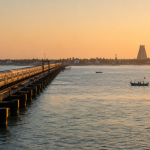
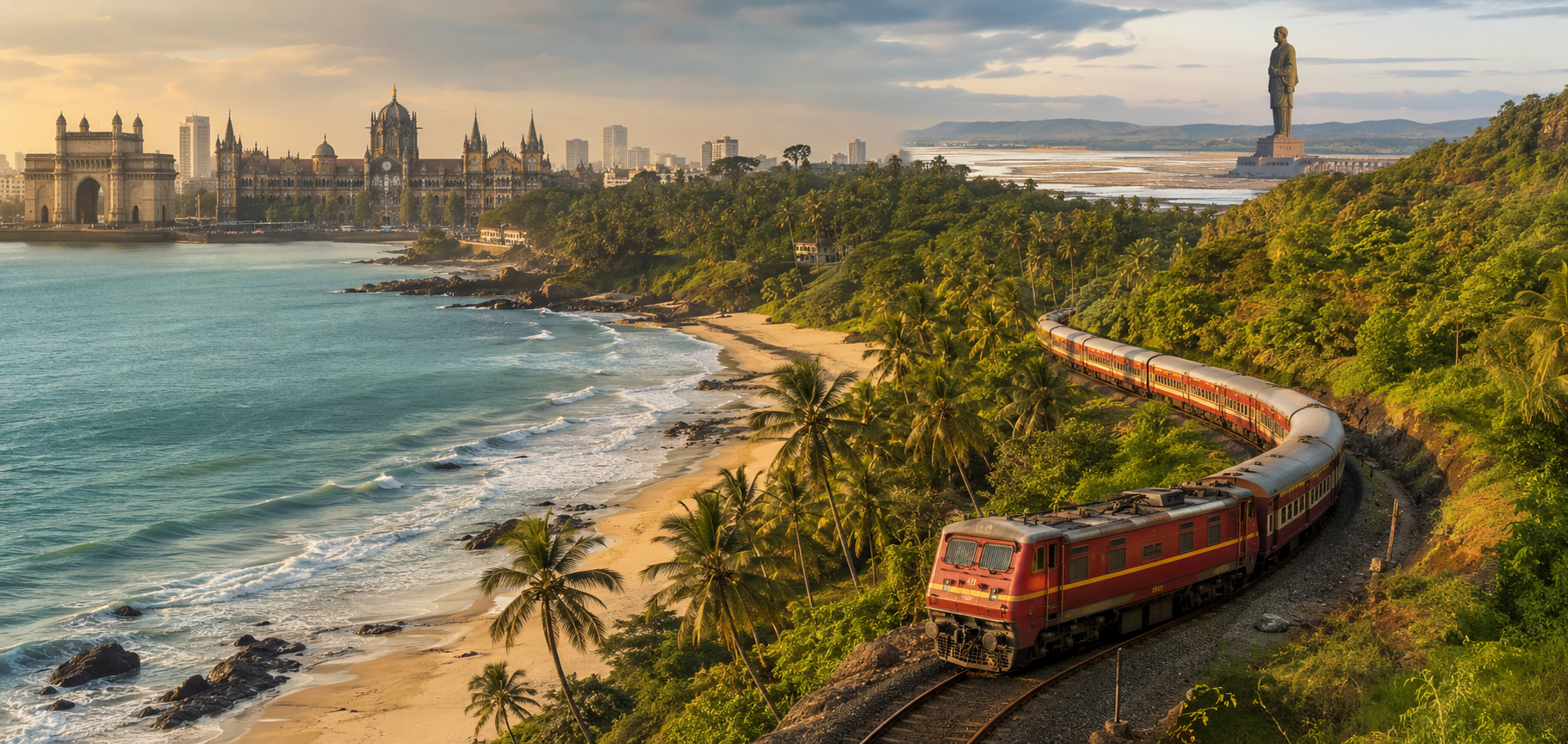
West India begins with the smell of the sea. In Mumbai, salt hangs in the evening air as lights curve around Marine Drive. Farther south, the railway slips between the Arabian Sea and the green wall of the Western Ghats, crossing rivers and disappearing into tunnels. Goa waits with laterite lanes, whitewashed churches and coconut-shaded villages, while beyond the coast Gujarat opens into stepwells, temple towns, lion country and the immense white horizon of Kutch.
The region is often reduced to two familiar images: Mumbai’s skyline and Goa’s beaches. Both deserve their fame, but neither tells the whole story. The old ports of the Konkan still wake to fishing boats. Gujarat’s historic cities hold carved mosques, wooden houses and crowded food lanes. Inland Maharashtra contains some of India’s greatest rock-cut architecture, and the coast changes character with almost every district.
This West India travel guide will help you decide where to go, when to travel and how to connect Mumbai, the Konkan Coast, Goa and Gujarat without turning the journey into a race. It is written for international visitors who want famous places, local life and enough breathing space to feel the landscape change around them.
West India at a glance
| Area | Best known for | Good first stops | Allow at least |
|---|---|---|---|
| Mumbai | Architecture, markets, art, food, cinema and life beside the Arabian Sea | Colaba, Fort, Kala Ghoda, Marine Drive, Bandra | 3 days |
| Konkan Coast | Fishing villages, forts, quiet beaches, mango orchards and a spectacular railway | Murud, Ratnagiri, Ganpatipule, Malvan, Tarkarli | 4–7 days |
| Goa | Beaches, Indo-Portuguese heritage, village life, food and forested hinterland | Panaji, Old Goa, North Goa villages, South Goa beaches | 5–7 days |
| Gujarat | Historic cities, textiles, stepwells, pilgrimage, wildlife and salt desert | Ahmedabad, Patan, Bhuj, Kutch, Gir, Dwarka | 8–14 days |
| Interior Maharashtra | Rock-cut caves, Maratha history, vineyards, cities and hill country | Chhatrapati Sambhajinagar, Ajanta, Ellora, Pune, Nashik | 4–7 days |
The most important planning advice: treat the coast and Gujarat as separate journeys unless you have at least three weeks. Mumbai, the Konkan and Goa form a natural north-to-south route. Gujarat spreads west and north from Ahmedabad, with long distances between Kutch, the Saurashtra coast and Gir. A short flight can join the two halves, but trying to do everything by road will consume much of your holiday.
If this is your first visit to the country, begin with our complete India travel guide, then use this regional guide to shape the western part of your route.
Why travel through West India?
West India is rewarding because its contrasts arrive so quickly. In Mumbai, you move from Gothic arches to Art Deco curves, from crowded suburban trains to a quiet gallery, and from a paper-wrapped vada pav to one of Asia’s most polished dining rooms. Board a southbound train and the metropolis soon gives way to creeks, rice fields, red earth and forested hills.
The coast carries centuries of movement. Arab traders, Portuguese rule, Maratha sea forts, Catholic villages, Hindu temples and fishing communities have all shaped its architecture and cooking. Coconut, kokum, rice and seafood follow you south, but the flavours change between Maharashtrian, Malvani and Goan kitchens.
Gujarat feels different again. The landscape becomes drier and wider. Vegetarian thalis replace many of the coastal fish curries, craft traditions become central to the journey, and some of India’s most intricate architecture appears in stepwells, old neighbourhoods and Jain temples. The pleasure is not in choosing between city, coast, culture or nature. It is in discovering how comfortably West India holds all four.
When is the best time to visit West India?
For a journey combining Mumbai, Goa, the Konkan Coast and Gujarat, November to February is the easiest all-round period. Mumbai is warm but less humid, Goa’s beach season is fully awake, the Konkan is generally dry, and Gujarat is comfortable enough for old-city walks, desert excursions and wildlife safaris. Christmas, New Year and major festivals bring high prices and heavy demand, especially in Goa, so reserve key stays and long-distance transport early.
- March to May: heat and humidity build across the region. Mumbai and Goa can feel tiring by midday, while Gujarat and the interior become extremely hot. Start early, rest during the afternoon and choose air-conditioned transport where possible.
- June to September: the southwest monsoon transforms Mumbai, the Konkan and Goa. Hills turn luminous green and rain drums on tiled roofs, but flooding, rough seas, landslides and transport disruption are possible. Gujarat also receives monsoon rain, although amounts vary considerably across the state.
- October: a transitional month. The land is green and the crowds have not fully arrived, but humidity remains high and late rain is possible. Many seasonal beach businesses are only beginning to reopen.
- November to February: the most comfortable broad window. Kutch and Gujarat’s desert areas can be cold after sunset, so carry a warm layer despite the daytime sun.
Wildlife plans need separate attention. The main Gir Jungle Safari closes during the monsoon, normally from 16 June to 15 October, and permits for popular winter dates can be competitive. Check the current season and book only through the official Gir permit website. For a fuller national overview, read our month-by-month guide to the best time to visit India.
Mumbai: a city that reveals itself in layers
Mumbai does not offer a gentle introduction, but it offers an unforgettable one. Traffic presses forward, local trains carry astonishing numbers of people, and towers rise behind old neighbourhoods and fishing settlements. Then evening comes. Families gather beside the sea, the light softens over the harbour and the city’s intensity begins to feel less like noise and more like momentum.
Colaba, Fort and the harbour
For a first visit, South Mumbai is the clearest place to begin. Walk early from the Gateway of India through Colaba and Kala Ghoda, where museums, galleries, cafés and heritage buildings sit within a relatively compact area. Continue towards the great railway terminus officially called Chhatrapati Shivaji Maharaj Terminus. It is not only a monumental building but a working station, full of the ordinary movement of the city.
Mumbai has several UNESCO-listed places, including the terminus, the Victorian Gothic and Art Deco Ensembles and the Elephanta Caves. The ferry to Elephanta crosses the harbour from near the Gateway of India, weather permitting. Give the excursion most of a day and check current boat and monument schedules before setting out.
Markets, neighbourhoods and the evening sea
The grand buildings are only one layer. Walk through a market with a responsible local guide, explore the food lanes around Mohammed Ali Road at an appropriate hour, or spend an afternoon in Bandra among old village lanes, churches, street art and contemporary cafés. A good guide can help you enter neighbourhoods with context and avoid treating people’s homes or work as spectacle.
Save Marine Drive for late afternoon. As the heat drops, walkers, couples and families fill the promenade. Buy a snack, sit facing the water and let the city come to you. Three full days provide a strong introduction. Four allow time for Elephanta, museums or a slower exploration beyond the southern peninsula.
The Konkan Coast: the slow road between city and sea
The Konkan is the narrow coastal strip held between the Arabian Sea and the Sahyadri, or Western Ghats. Mumbai itself sits on this coast, but south of the city the landscape loosens into estuaries, paddy fields, mango and cashew orchards, fishing villages, temple towns and forts looking out from rocky headlands.
This is not a coast to hurry. Buses and trains connect the main towns, yet many of the most appealing beaches and villages lie beyond the stations. A car with a reliable driver gives the greatest freedom, while the railway offers the most atmospheric long-distance journey. Combine the two if your budget allows: travel south by train, then use local taxis or buses to reach the shore.
Alibaug and Murud
Alibaug is the easiest coastal escape from Mumbai and becomes busy at weekends. Its appeal lies as much in the surrounding villages, farm stays and small beaches as in the town itself. Farther south, Murud brings one of the Konkan’s most striking sights: Janjira, a sea fort rising from the water. Boat access depends on conditions, so listen to local operators and never pressure anyone to sail in unsafe weather.
Ratnagiri and Ganpatipule
Ratnagiri is surrounded by the landscape that produces the prized Alphonso mango. The fruit season is short, but the region’s character remains in its laterite houses, creeks, fishing harbours and orchards. Ganpatipule, north of Ratnagiri town, combines a long beach with an important temple and is popular with domestic pilgrims. Dress and behave with the same respect you would bring to any sacred place, even when the sea makes the setting feel like a holiday resort.
Malvan, Sindhudurg and Tarkarli
The southern Konkan is an excellent final stop before Goa. Malvan is known for its food and for Sindhudurg Fort, built offshore during the Maratha period. Nearby Tarkarli has pale sand, clear-season water and access to the Karli backwaters. Water sports are widely offered, but visibility and sea conditions vary. Choose licensed operators, wear proper safety equipment and accept cancellation when the water is unsafe.
The monsoon makes this coast intensely beautiful, but it also changes how you travel. Some boats stop, swimming becomes dangerous and road journeys can slow dramatically. Come for rain, food and green landscapes rather than a conventional beach holiday.
Goa: beaches, villages and a culture larger than its coastline
Goa is easy to stereotype and difficult to summarise. It can be a busy resort strip, a quiet southern beach, a Catholic village feast, a Hindu temple morning, a forest walk, a contemporary restaurant or an old house shaded by fruit trees. The best visits allow these versions to sit beside one another.
Choosing the right part of Goa
| Area | General character | Best for |
|---|---|---|
| North Goa’s busiest belt | Lively, built-up and well supplied with restaurants, nightlife and activities | Social travellers and those wanting energy and convenience |
| Inland North Goa | Villages, heritage homes, creative spaces and a slower rhythm | Food, design, longer stays and exploring by day |
| Panaji and central Goa | Riverfront city life, Fontainhas, museums and access to Old Goa | History, architecture and travellers without a beach-only focus |
| South Goa | Longer, often quieter beaches with resorts and village guesthouses | Rest, couples, families and a gentler beach stay |
| Goa’s hinterland | Forest, farms, spice country, waterfalls and temples | Nature, community experiences and seeing beyond the coast |
North does not automatically mean noisy and south does not guarantee solitude. Conditions change beach by beach and season by season. Choose according to the atmosphere you want, then stay long enough to know the surrounding area rather than moving accommodation every night.
Panaji, Fontainhas and Old Goa
Panaji is worth more than a quick lunch stop. Walk through Fontainhas early, when coloured façades glow before the streets become hot, then continue to local markets, riverside spaces and small cultural institutions. Remember that the neighbourhood is lived in. Keep voices low, ask before photographing residents and do not use doorsteps as props.
Old Goa holds the state’s best-known historic churches and convents, collectively recognised by UNESCO. Visit with time to notice the scale, silence and continuing religious life of the buildings. Modest clothing is appropriate, and services should never be interrupted for photographs.
Travel beyond the beach
A village homestay, guided heritage walk, local cooking experience or carefully run nature excursion can change your understanding of Goa. The state tourism department now places increasing emphasis on community-based and environmentally responsible travel. Seek experiences that keep money local, limit waste and interpret the landscape rather than simply using it as a backdrop.
Five days is enough for a beach, Panaji and Old Goa. A full week lets you add villages, the hinterland and unplanned afternoons. That slower version of Goa is usually the one travellers remember.
Gujarat: carved cities, sacred coasts and the white desert
Gujarat needs time. Ahmedabad, Kutch and the Saurashtra peninsula point in different directions, and each could fill a journey on its own. With one week, choose one area. With ten to fourteen days, you can combine two without spending every day in a car.
Ahmedabad and the heritage towns
Ahmedabad is the natural gateway. Its historic core contains mosques, temples, markets and traditional pol neighbourhoods of closely built homes and shared courtyards. Explore with a knowledgeable guide who understands that these are living communities, not an open-air museum. Beyond the old city, the Sabarmati Ashram, textile traditions and modern architecture reveal very different chapters of Gujarat’s story.
North of Ahmedabad, the stepwell of Rani-ki-Vav at Patan descends through richly carved levels into the earth. Nearby, Modhera’s Sun Temple rewards a slow visit in angled morning or afternoon light. Champaner-Pavagadh, east of the city, combines archaeology, sacred landscape and living pilgrimage. Ahmedabad, Rani-ki-Vav and Champaner-Pavagadh are all UNESCO-recognised places.
Bhuj and the Great Rann of Kutch
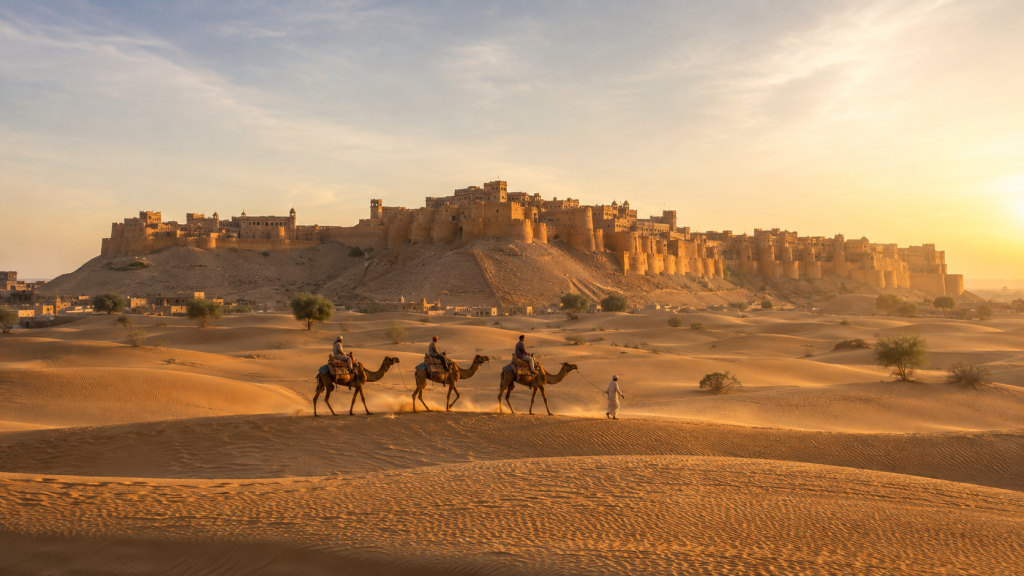
Kutch feels like a horizon rather than a destination. Bhuj is the practical base, but the wider region holds craft villages, pastoral communities, historic towns, wetlands and the salt expanse of the Great Rann. In the dry season, the white ground catches the sun until land and sky seem to dissolve into one another.
Craft visits are most meaningful when makers explain their work and set their own prices. Buy because you value the skill, not because a village has been turned into a shopping stop. Some areas near the international border require permits or identity checks. Rules can change, so confirm them locally before travelling beyond the standard visitor circuit.
Dholavira lies much farther east within Kutch and preserves a major Harappan city. It is a long journey from Bhuj, so give it an overnight stop or include it in a dedicated road circuit rather than forcing it into a rushed day trip.
Saurashtra: Dwarka, Somnath, Junagadh and Gir
The Saurashtra peninsula joins pilgrimage, coast and wildlife. Dwarka faces the Arabian Sea with a devotional energy that rises around Dwarkadhish Temple. Somnath carries another of India’s most important temple traditions. At both, arrive as a respectful visitor: dress modestly, follow security rules and accept that photography or access may be restricted.
Junagadh sits beneath Girnar and makes a useful cultural stop before or after Gir. In the Gir landscape, Asiatic lions are the great attraction, but a safari is not a performance. Sightings are never guaranteed. Book an official permit, follow your guide, keep noise low and never pressure a driver to crowd an animal. The forest, its wildlife and the communities around it matter more than a close photograph.
Maharashtra beyond Mumbai and the coast
If history matters more than beach time, turn inland. Ajanta and Ellora are among India’s most important rock-cut cave complexes and both are UNESCO World Heritage sites. Chhatrapati Sambhajinagar, still familiar to many travellers by its former name Aurangabad, is the usual base. Ajanta and Ellora lie in different directions, so allow at least two full sightseeing days rather than attempting both together.
Pune offers Maratha history, universities, food and a younger cultural energy. Nashik combines pilgrimage with a growing wine region, while the Western Ghats contain hill stations, forts and seasonal waterfalls. These places do not fit neatly into a Mumbai-to-Goa coastal line, but they add depth to a longer Maharashtra journey.
What to eat in West India
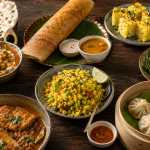
Food is one of the strongest reasons to travel west. The sea, dry interior, farming traditions, faith and trading history have produced cuisines that change dramatically within a few hours.
| Where | Flavours and dishes to seek out |
|---|---|
| Mumbai | Vada pav, pav bhaji, bhel puri, Bombay sandwiches, Parsi cooking, seafood and regional Maharashtrian meals |
| Konkan and Malvan | Fish thali, sol kadhi, coconut curries, kokum, rice breads and seasonal Alphonso mango |
| Goa | Fish curry rice, xacuti, cafreal, vindaloo, sorpotel, poi bread, bebinca and cashew feni |
| Ahmedabad and central Gujarat | Gujarati thali, farsan, dhokla, khandvi, handvo, dal and gently sweet-savoury vegetable dishes |
| Kutch | Bajra rotla, kadhi, garlic chutney, khichdi and pastoral dairy traditions |
| Saurashtra | Kathiyawadi thali, sev tameta, ringan no olo, rotla and robust garlic and chilli flavours |
Vegetarian travellers are exceptionally well served in Gujarat. In Goa and the Konkan, seafood is central but vegetarian home cooking remains easy to find. If you drink alcohol, remember that laws differ by state and Gujarat has strict prohibition rules. Check current official requirements rather than relying on a hotel, driver or old online advice.
Our traveller’s guide to Indian food explains regional dishes, ordering and practical food-safety habits in more detail.
West India itineraries that actually work
The routes below are deliberately selective. They leave room for late trains, long lunches and the moments you cannot schedule. For wider route ideas, see our India itineraries for seven days to one month.
10 days: Mumbai and Goa
Route: Mumbai 3 nights → overnight train or flight → Goa 6 nights
This is the strongest first-time route when you want a major city followed by the coast. Use three days for South Mumbai, neighbourhood life and Elephanta if conditions allow. In Goa, divide your time between a beach base and Panaji or an inland village. The final night provides useful space before an international connection.
Two weeks: Mumbai, the Konkan Coast and Goa
Route: Mumbai 3 nights → Ratnagiri or Ganpatipule 3 nights → Malvan or Tarkarli 3 nights → Goa 5 nights
This route follows the natural line of the coast. It works best with a mixture of train and road transport. Do not add every beach on the map. Two well-chosen Konkan bases create a richer journey than packing and moving each morning.
Two weeks: Gujarat in depth
Route: Ahmedabad 3 nights → Patan and Modhera 1 night → Bhuj and Kutch 4 nights → Dwarka 2 nights → Somnath 1 night → Gir 2 nights → departure buffer 1 night
This is a substantial road-and-rail journey. A private car makes the Saurashtra section easier, while trains can reduce fatigue on longer links. If craft and desert landscapes matter more than pilgrimage, keep extra nights in Kutch and omit Dwarka. If wildlife is central, confirm safari availability before building the rest of the route.
Three weeks: the broad West India journey
Route: Mumbai 3 nights → Konkan Coast 4 nights → Goa 5 nights → fly to Ahmedabad → Ahmedabad 2 nights → Bhuj and Kutch 4 nights → 3 nights for transfers and departure
This route gives you the region’s clearest contrasts without attempting all of Gujarat. The flight between Goa and Ahmedabad protects valuable time. Add Saurashtra only if you have another week, or replace Kutch with a focused Gir and temple circuit.
Getting to and around West India
By air
Mumbai is the region’s largest international gateway. Goa and Ahmedabad have strong domestic connections and some international services, while Bhuj, Rajkot, Surat and other cities can shorten longer overland routes. Check which airport your ticket uses in Goa and Mumbai, then measure the transfer from your actual accommodation rather than from the city name on the booking page.
By train
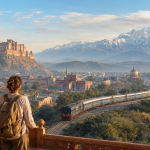
Rail is part of the pleasure here. The 741-kilometre Konkan Railway connects Maharashtra, Goa and Karnataka through rivers, valleys, mountains and long tunnels. Daylight trains reveal more of the landscape, while overnight services save accommodation time. Reserve popular Mumbai-to-Goa trains well in advance during winter, festivals and school holidays.
Gujarat also has an extensive rail network linking Ahmedabad with Bhuj, Vadodara, Surat, Rajkot, Junagadh and the pilgrimage coast. Stations may be some distance from the place you want to visit, so check the final connection before booking. Use the official IRCTC website or a reputable booking service.
By road
State and private buses reach most major towns. A private car is particularly useful for Kutch, Saurashtra and coastal villages away from railway stations. Road distances can be deceptive, and city exits often add hours. Avoid scheduling a flight immediately after a long road transfer.
Local transport
Mumbai’s suburban trains and metro can be efficient, but peak periods are extremely crowded. Use calmer hours until you understand the system. App-based cars, prepaid taxis, auto-rickshaws, local buses and hired scooters vary by destination. If riding a scooter in Goa, wear a proper helmet, carry the required licence and insurance, never drink and ride, and remember that unfamiliar roads become much more difficult after dark or in rain.
How much does West India cost?
West India can suit many budgets, but Mumbai and Goa in peak season are rarely the cheapest parts of the country. The figures below are approximate daily planning ranges per person in US dollars. They exclude international flights and assume some costs are shared. Local prices are paid in Indian rupees.
| Travel style | Indicative daily budget | What it usually covers |
|---|---|---|
| Backpacker | US$30–55 | Dorm or simple guesthouse, local meals, buses or trains and modest sightseeing |
| Comfortable independent | US$70–130 | Good hotel or homestay, varied meals, air-conditioned transport and paid experiences |
| Higher comfort | US$170+ | Boutique or premium stays, private drivers, fine dining and guided experiences |
Mumbai hotels, Christmas and New Year in Goa, private wildlife vehicles and long Gujarat road circuits can push spending well above these ranges. Travel outside peak holiday dates, use trains for long sectors and stay in locally run guesthouses to keep the budget grounded without stripping the journey of comfort.
Where to stay
- Mumbai: choose location before room size. A smaller room near the places you want to explore may save hours in traffic.
- Konkan Coast: homestays and simple resorts often provide the most locally rooted experience. Confirm transport and meal availability before arriving.
- Goa: choose the beach and neighbourhood carefully. A beautiful room cannot compensate for staying in a nightlife area when you wanted silence.
- Gujarat: heritage hotels, city hotels, wildlife lodges and village stays can all work well. In remote areas, ask exactly what meals, heating or cooling and onward transport are included.
- Kutch and Gir: book early for peak winter dates and festivals. Do not reserve a safari lodge until you understand how permits and transfers will work.
Safety and responsible travel
- Use reliable transport after dark and keep your accommodation address available offline.
- On Mumbai’s trains, avoid the most crowded peak periods at first and keep phones away from open doors and windows.
- Swim only where conditions are safe, follow lifeguard flags and treat the Arabian Sea with particular caution during the monsoon.
- Heat can be severe in Gujarat and interior Maharashtra. Start early, carry water and stop before fatigue becomes illness.
- Book wildlife experiences and permits through official channels. Never support baiting, crowding or chasing animals.
- Ask before photographing people, fishing work, religious ceremonies or craft production.
- Keep beaches and villages free of waste, refuse unnecessary single-use plastic and refill water safely where possible.
- Choose locally owned stays, food businesses and guides when they offer good standards. Your spending then remains closer to the place you came to experience.
Weather and local conditions can change quickly during the monsoon. Follow the India Meteorological Department and local authorities rather than relying only on a general travel app.
What to pack for West India
- light, breathable clothes for the coast and city heat
- a modest layer and scarf for temples, mosques and churches
- comfortable shoes for old-city walks and heritage sites
- sandals that are easy to remove at religious places
- sun protection, insect repellent and a refillable bottle
- a warm layer for winter nights in Kutch and air-conditioned trains
- a compact rain jacket and quick-drying clothes during the monsoon
- a dry bag or waterproof pouch for electronics on boats and in heavy rain
- any prescribed medicine plus basic rehydration supplies
Frequently asked questions about West India
How many days do I need for West India?
Ten days is enough for Mumbai and Goa. Two weeks works well for Mumbai, two Konkan bases and Goa, or for a focused Gujarat journey. Allow at least three weeks to combine the coast with Ahmedabad and Kutch at a comfortable pace.
Is West India good for a first trip to India?
Yes. Mumbai provides a vivid urban introduction, Goa is easy to slow down in, and the Konkan adds quieter local travel. Gujarat is equally rewarding but requires more route planning because its major destinations are widely spread.
What is the best month to visit West India?
November and February are excellent broad choices, with generally comfortable weather across Mumbai, Goa, the Konkan and Gujarat. December is also attractive but more expensive and crowded around Goa’s holiday period.
Can I travel around West India during the monsoon?
Yes, if rain and green landscapes are the purpose of the trip and your plans remain flexible. Expect rough seas, interruptions and occasional severe weather along the Konkan and Goa. Wildlife access and boat services may be limited, and a beach holiday will feel very different from winter.
Is the train from Mumbai to Goa worth taking?
Yes. It is one of the most memorable ways to enter Goa, particularly when part of the journey occurs in daylight. Reserve early and choose a service whose arrival time suits your accommodation transfer.
Should I choose Goa or Gujarat?
Choose Goa for beaches, village life, a relaxed base and Indo-Portuguese heritage. Choose Gujarat for architecture, textiles, pilgrimage, wildlife and desert landscapes. With two weeks, one destination explored properly will usually be more satisfying than rushing through both.
Is West India suitable for vegetarian travellers?
Very much so. Gujarat is one of India’s great vegetarian food regions, and Mumbai, Goa and Maharashtra all have extensive vegetarian choices. Vegan travellers should ask specifically about ghee, butter, curd, paneer and coconut preparations that may include dairy.
Final thoughts: follow the western light
A journey through West India often becomes a journey of changing light. It flashes against Mumbai’s stone façades after rain, turns the Konkan’s laterite soil deep red, fades softly behind Goa’s palms and spreads almost without shadow across the salt flats of Kutch.
The famous places will stay with you, but so will smaller moments: breakfast arriving on a metal plate at a station, the sour coolness of sol kadhi after a hot day, a church bell in a Goan village, embroidered cloth taking shape beneath a craftswoman’s hands, or the Arabian Sea appearing suddenly between the trees.
Choose one coherent route. Travel more slowly than the distance suggests. Then allow the west coast and the wide landscapes beyond it to reveal themselves in their own time.
Essential official resources: Incredible India: Mumbai | Maharashtra Tourism | Goa Tourism | Gujarat Tourism | Konkan Railway | UNESCO World Heritage in India
Practical information was checked in August 2026. Transport, monument access, wildlife seasons, permits, prices and local regulations can change. Confirm important details with official sources before booking and again before departure.