Now Reading: Indian Festivals: When and Where to Experience Them
-
01
Indian Festivals: When and Where to Experience Them

From Holi in Mathura and Durga Puja in Kolkata to Onam in Kerala and Hornbill in Nagaland, discover when and where to experience India's most memorable festivals, with practical advice for joining respectfully.
Before you see an Indian festival, you often hear it. A drumbeat rolls through a lane in Kolkata. Temple bells carry across the ghats of Varanasi. In Ahmedabad, wooden dandiya sticks strike in time as dancers whirl beneath strings of lights. Somewhere in Kerala, a banana leaf is being filled with rice, curries, pickles and payasam for an Onam feast.
Festivals in India are not simply events added to the calendar. They change the rhythm of a place. Trains fill, markets stay awake late, families return home and familiar streets become stages for devotion, music, food and extraordinary public art. Planning a journey around one can give you a deeper view of India, but the experience depends greatly on choosing the right festival and the right destination.
This guide brings together the best Indian festivals for travellers, explains when they usually happen and suggests where each celebration feels most distinctive. Exact dates change from year to year, so use the timings below to shape your route, then confirm the final dates on the official Incredible India festival calendar before booking.
Indian festival calendar at a glance
| Festival | Usual timing | Best places to experience it | What makes it special |
|---|---|---|---|
| Pongal, Makar Sankranti and Uttarayan | Mid-January | Tamil Nadu, Ahmedabad and rural Gujarat | Harvest traditions, family food and skies filled with kites |
| Maha Shivaratri | February or March | Varanasi, Ujjain and Mandi | Night-long devotion, temple rituals and processions |
| Holi | February or March | Mathura, Vrindavan and Barsana | Colour, music and the arrival of spring |
| Baisakhi and Bohag Bihu | Mid-April | Amritsar and Assam | Harvest celebrations, dance and regional identity |
| Eid al-Fitr | Moves through the seasons | Old Delhi, Lucknow, Hyderabad and Srinagar | Evening markets, prayer, generosity and celebratory food |
| Rath Yatra | June or July | Puri, Odisha | Monumental chariots and an immense gathering of pilgrims |
| Onam | August or September | Across Kerala | Flower carpets, feasts, performances and harvest traditions |
| Ganesh Chaturthi | August or September | Mumbai and Pune | Neighbourhood shrines, processions and joyous immersion ceremonies |
| Navratri | September or October | Ahmedabad and Vadodara | Nine nights of garba and dandiya dancing |
| Durga Puja | September or October | Kolkata | Immersive art, devotion, food and all-night pandal-hopping |
| Dussehra or Dasara | September or October | Mysuru, Kullu and Delhi | Royal pageantry, mountain traditions or dramatic Ramlila |
| Diwali | October or November | Varanasi, Jaipur, Ayodhya and Udaipur | Lamps, prayers, sweets and glowing evening streets |
| Pushkar Fair | October or November | Pushkar, Rajasthan | Desert life, pilgrimage, trading and fairground energy |
| Guru Nanak Gurpurab | October or November | Amritsar | Illuminated gurdwaras, hymns and community meals |
| Hornbill Festival | 1 to 10 December | Kisama, near Kohima in Nagaland | Naga cultural performances, crafts, food and music |
| Christmas | 24 and 25 December | Goa, Kochi and Kolkata | Midnight Mass, illuminated streets and regional festive food |
Most Hindu, Sikh, Buddhist, Jain and Islamic observances follow lunar or lunisolar calendars, so their Gregorian dates move. Eid also depends on the sighting of the moon and can differ by a day. Build a little flexibility into any festival journey and check local announcements close to departure. Our month-by-month guide to the best time to visit India will help you match the celebrations with regional weather.
Pongal, Makar Sankranti and Uttarayan: India welcomes the harvest
When: Around 13 to 15 January
Where: Tamil Nadu for Pongal; Ahmedabad and rural Gujarat for Uttarayan; Punjab for Lohri
January brings several harvest and seasonal celebrations, each with its own regional character. In Tamil Nadu, Pongal unfolds over several days. Doorways are decorated with intricate rice-flour kolam patterns, sugarcane appears in markets and families prepare the festival’s namesake dish by boiling newly harvested rice with milk. When the pot bubbles over, it represents abundance.
For travellers, Chennai offers cultural programmes and festive menus, but smaller towns such as Thanjavur and Madurai feel closer to the agricultural roots of Pongal. Many of the most meaningful rituals happen at home, so approach the festival as an observer unless you are invited to join a family.
In Gujarat, the same season turns the sky into the spectacle. During Uttarayan, terraces across Ahmedabad fill with families flying brightly coloured kites. The old city is especially atmospheric, while the days before the festival bring frantic activity to the kite markets around Jamalpur and Raipur. Watch from an organised rooftop with a trusted host, and be cautious around roof edges and sharp kite string.
Holi: colour and spring in the land of Krishna
When: February or March
Where: Mathura, Vrindavan and Barsana in Uttar Pradesh
Holi is India’s most instantly recognisable festival. By mid-morning, faces are streaked pink, yellow and green, clouds of powder hang in the sunlight and music spills from courtyards into the street. Yet Holi is not celebrated in exactly the same way everywhere.
The most intense and culturally rooted celebrations take place around Mathura and Vrindavan, places associated with Krishna. Events begin before the main national holiday and may include temple rituals, flower petals, processions and the famous Lathmar Holi of Barsana and Nandgaon. This makes the region rewarding for travellers who can stay for several days instead of arriving only for one burst of colour.
Holi can also be chaotic. Wear clothes you are happy to stain, protect your phone and camera, use glasses rather than contact lenses and apply a layer of coconut oil to your skin and hair. Choose natural colours where possible. Solo travellers, particularly women, should strongly consider a reputable hotel event, a small guided experience or celebrating with people they know. Read our North India travel guide before building Mathura and Vrindavan into a wider route.
Baisakhi and Bohag Bihu: two joyful spring celebrations
When: Around 13 or 14 April
Where: Amritsar in Punjab; Guwahati and communities across Assam
Baisakhi arrives with ripe wheat fields, bhangra rhythms and a special spiritual importance for Sikhs, marking the formation of the Khalsa in 1699. In Amritsar, pilgrims gather at the Golden Temple, where hymns continue through the day and volunteers serve free meals in the vast community kitchen. The mood is celebratory, but the shrine remains a place of worship. Cover your head, remove your shoes, wash your feet at the entrance and move quietly with the flow of visitors.
Far to the east, Bohag Bihu welcomes the Assamese New Year and the beginning of spring. Traditional music, the beat of the dhol and graceful Bihu dancing express the energy of a new agricultural cycle. Guwahati is the easiest base for public programmes, although a community or village celebration offers a more intimate understanding when arranged through a responsible local host.
Eid al-Fitr: evening markets and the warmth of sharing
When: At the end of Ramadan; roughly 10 or 11 days earlier each Gregorian year
Where: Old Delhi, Lucknow, Hyderabad and Srinagar
During Ramadan, some of India’s great food streets come alive after sunset. Near Jama Masjid in Old Delhi, grills smoke, bread emerges hot from tandoors and shops stay busy late into the night. Hyderabad’s old city gathers around Charminar, while Lucknow brings its own refined Awadhi flavours to the season.
Eid al-Fitr itself begins with prayer and continues through family visits, new clothes, gifts, generosity and shared meals. Travellers can enjoy the public atmosphere and festive markets, but private celebrations are not tourist performances. Dress modestly near mosques, avoid obstructing worshippers and never photograph people at prayer without clear permission. If someone welcomes you to share food, receive the invitation with gratitude rather than expectation.
Rath Yatra in Puri: when the deities enter the streets
When: June or July
Where: Puri, Odisha
On the day of Rath Yatra, Puri becomes a sea of people. Three towering wooden chariots carrying Lord Jagannath, Balabhadra and Subhadra move along the Grand Road from the Jagannath Temple towards the Gundicha Temple. Chants rise above the crowd as ropes are pulled and the enormous wheels begin to turn.
The festival has particular meaning for non-Hindu visitors because entry to the Jagannath Temple is restricted, while the chariot procession brings the deities into a shared public space. Odisha Tourism describes the gathering as open across caste, creed and community. It is also extremely crowded. Book accommodation months ahead, expect road closures and watch from a secure position rather than pressing towards the chariots. The official Odisha Tourism Rath Yatra guide is the best place to check the current programme.
Onam in Kerala: flower carpets, feasts and homecoming
When: August or September
Where: Across Kerala, with good bases in Kochi, Thrissur, Thiruvananthapuram and Alappuzha
Onam feels generous. Each morning, fresh petals are arranged into pookalam flower carpets. Shops display cream-and-gold kasavu clothing, stages host traditional performances and kitchens prepare the elaborate vegetarian Onam sadya, served on a banana leaf with a constellation of curries, pickles, crisp pappadam and sweet payasam.
The festival welcomes the mythical King Mahabali back to Kerala and carries strong associations with harvest, prosperity and homecoming. It is celebrated across communities throughout the state. Kochi and Thiruvananthapuram are convenient for public events; Thrissur is known for striking folk traditions, and central Kerala can be paired with vallam kali boat-race season. Do check individual race dates, as not every race falls on the main Onam day.
For many visitors, the most memorable experience is a sadya. Choose a respected local restaurant or a cultural programme rather than trying to enter a private celebration. Eat with your right hand if comfortable, follow the pace of those around you and leave room for payasam. Kerala Tourism’s official Onam guide explains the festival’s major traditions. Our South India travel guide can help you turn the festival into a longer Kerala journey.
Ganesh Chaturthi in Maharashtra: devotion on a grand public stage
When: August or September, lasting up to 11 days
Where: Mumbai and Pune
For Ganesh Chaturthi, neighbourhoods across Maharashtra welcome clay images of the elephant-headed Lord Ganesha into temporary shrines. In Mumbai, some pandals are intimate community spaces while others are monumental productions that attract huge queues. The cry of “Ganpati Bappa Morya” follows processions through the streets, accompanied by drums, dancing and trays of modak sweets.
The final immersion, or visarjan, is spectacular but demanding. Processions move towards the sea for hours, roads close and crowds become dense around places such as Girgaum Chowpatty. Pick one or two neighbourhood pandals during the quieter daytime, then view the main procession from a safe distance. Pune offers a strong historic tradition and can feel more navigable than central Mumbai.
Look for communities using natural clay idols and lower-impact decorations. Plaster idols, paint and discarded offerings can damage waterways, and environmentally conscious celebrations deserve traveller support. Maharashtra Tourism confirms that observances vary in length before the final immersion; its Ganesh Chaturthi guide is a useful planning reference.
Navratri in Gujarat: nine nights made for dancing
When: September or October
Where: Ahmedabad and Vadodara
If your idea of festival travel is to participate rather than stand behind a barrier, Gujarat during Navratri is hard to beat. For nine nights, circles of dancers move around a central lamp or image of the Goddess. Garba begins with relatively simple repeating steps and gathers speed; dandiya adds pairs of decorated sticks that meet in rhythm.
Vadodara hosts some of the largest organised garba grounds, while Ahmedabad combines major ticketed events with smaller neighbourhood celebrations. Buy tickets early, check identification requirements and ask your hotel or host which venues are welcoming to beginners. Traditional dress is part of the pleasure, but buy from local makers if possible rather than treating sacred or regional clothing as costume. Watch one circle first, learn the direction of movement and join at the outer edge without disrupting experienced dancers.
Durga Puja in Kolkata: a city transformed into art
When: September or October, with the final five days the most intense
Where: Kolkata, West Bengal
Kolkata during Durga Puja is one of the world’s great urban cultural experiences. Temporary pandals appear across the city, but “temporary” hardly describes their ambition. A pavilion might evoke a terracotta temple, a forest, a social theme or an imagined world built from bamboo, fabric, clay and light. Inside, the image of Goddess Durga stands at the centre of devotion and artistic attention.
The streets remain lively deep into the night. Families dressed in new clothes walk between pandals, dhaak drums sound through the crowds and food stalls serve kathi rolls, chops, biryani and sweets. North Kolkata offers historic household pujas and traditional artistry; south Kolkata is known for ambitious themed installations. Use the Metro when practical, group nearby pandals into one walk and rest during the hottest afternoon hours.
Durga Puja in Kolkata is inscribed on UNESCO’s Representative List of the Intangible Cultural Heritage of Humanity, recognising the way religion, art, craft and community come together. Remember that a pandal is both an artwork and a sacred space. Follow queue systems, step aside during rituals and ask before taking close portraits.
Dussehra: three very different journeys
When: September or October, immediately after Navratri
Where: Mysuru in Karnataka, Kullu in Himachal Pradesh or Delhi
Dussehra celebrates the victory of good over evil, yet its public form changes dramatically across India. In Delhi, open-air Ramlila performances retell the Ramayana before giant effigies of Ravana are burned. In Mysuru, Dasara carries royal pageantry: the palace glows with thousands of lights and a grand procession fills the city with music, decorated tableaux and ceremonial splendour.
Kullu offers a different mood again. Festivities begin as Dussehra ends elsewhere, when village deities are carried into the valley to gather around Lord Raghunath. The mountain setting and local devotional traditions make this a compelling choice for travellers interested in Himachali culture rather than a single night of spectacle.
Choose Mysuru for visual grandeur, Kullu for a slower regional encounter and Delhi for accessible drama within a broader first-time itinerary. Reserve rooms early in Mysuru and Kullu, where demand can overwhelm the available centre-city accommodation.
Diwali: finding light beyond the fireworks
When: October or November
Where: Varanasi, Jaipur, Ayodhya and Udaipur
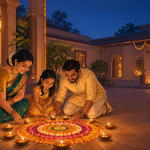
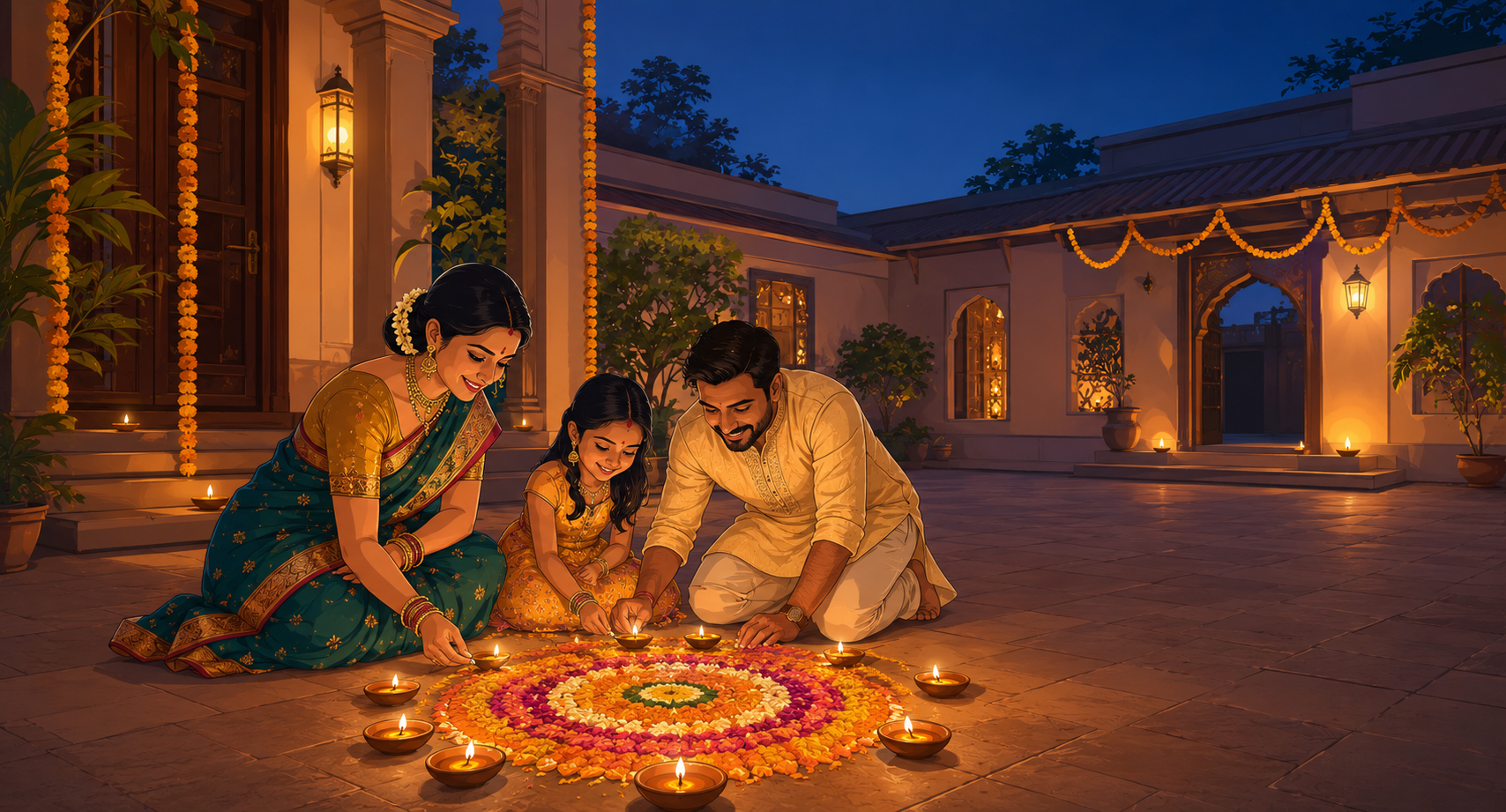
At its most intimate, Diwali is the glow of small oil lamps along a doorstep, the scent of marigolds and incense, a box of sweets carried to a neighbour and a family pausing for Lakshmi Puja. At its largest, entire riverfronts, bazaars and palace façades shine after dark.
Varanasi places the festival beside the Ganges, with lamps reflected in the water and busy evening ghats. Jaipur’s markets and pink façades are elaborately illuminated, while Udaipur adds lakes and palace views. Ayodhya stages celebrations on an enormous scale and becomes exceptionally crowded. Book well ahead and do not assume that a good viewpoint will be available at the last moment.
The challenge is that the most meaningful rituals happen within homes, while the most visible public element may be fireworks. If you can, stay at a small guesthouse or homestay offering a genuine hosted celebration. Never pressure a family for access. Air quality can deteriorate sharply, particularly in north Indian cities, so travellers with asthma or other respiratory conditions should check forecasts, carry medication and consider a quieter destination. Ear protection can help children and noise-sensitive travellers.
Pushkar Fair: Rajasthan’s desert gathering
When: October or November, around Kartik Purnima
Where: Pushkar, Rajasthan
Pushkar’s annual fair brings together two overlapping worlds. On the edge of town, livestock traders, camel herders, vendors and fairground attractions animate the desert. Around the sacred lake, pilgrims bathe at the ghats and visit the Brahma Temple as the full moon approaches.
The atmosphere changes over the course of the fair, so decide what interests you most before choosing dates. Arrive earlier for livestock trading and a more rural character; come closer to Kartik Purnima for pilgrimage and denser crowds around the lake. Dawn is the gentlest time to walk near the fairground, when the air is cool and smoke rises from tea stalls.
Photography needs care. Ask before taking portraits, especially of herders, pilgrims and performers, and agree on any payment before a posed photograph. Avoid attractions that compromise animal welfare. Pushkar is a sacred town as well as a visual feast, so dress modestly near the lake, remove shoes where requested and do not photograph bathing pilgrims.
Guru Nanak Gurpurab in Amritsar: hymns, light and service
When: October or November
Where: Amritsar, Punjab
Guru Nanak Gurpurab commemorates the birth of Guru Nanak, the founder of Sikhism. At Amritsar’s Golden Temple, the water around the sanctum catches thousands of lights while devotional music creates an atmosphere that feels both expansive and calm, even among large crowds.
Processions, recitation of scripture and langar, the free community meal, express central Sikh values of equality and service. Visitors of all faiths are welcome at the gurdwara when they observe its customs. Cover your head, remove shoes, do not carry tobacco or alcohol and sit respectfully during prayer. If you volunteer in the kitchen or dining hall, follow the direction of regular sevadars rather than turning service into a photo opportunity.
Hornbill Festival: a gateway to Nagaland’s living cultures
When: 1 to 10 December
Where: Kisama Heritage Village, near Kohima
Hornbill brings many of Nagaland’s communities together in one organised festival setting. At Kisama, performance arenas, morung-inspired structures, craft stalls and food spaces introduce visitors to distinct Naga traditions. The programme may include ceremonial dances, folk songs, indigenous games, textiles, food events and contemporary music.
It is an accessible introduction, not a complete representation of Naga life. Treat performers and craftspeople as contemporary people sharing living cultures, not as exhibits from the past. Ask questions with genuine curiosity, buy textiles directly from makers and learn which designs carry community-specific meaning before wearing them.
Kohima accommodation fills quickly and December nights are cold. Reserve several months ahead, allow extra time for road travel from Dimapur and check the latest entry or permit requirements for Nagaland. The state tourism department confirms Hornbill as an annual ten-day event and publishes updates through Tourism Nagaland.
Christmas in Goa, Kerala and Kolkata
When: 24 and 25 December, with celebrations throughout Advent
Where: Goa, Kochi and Kolkata
Christmas reveals another layer of India’s religious and cultural variety. In Goa, village churches are illuminated, families prepare sweets such as kulkuls and bebinca, and Midnight Mass remains central to the celebration. Old Goa offers historic church architecture, while neighbourhoods away from the busiest beach belt feel more rooted in local life.
Kochi blends church services with Kerala’s own culinary traditions. Kolkata’s Park Street, meanwhile, becomes a bright public celebration with lights, music, bakeries and crowds strolling late into the evening. Churches are welcoming but active places of worship. Dress respectfully, arrive early if attending a service and avoid walking around or taking photographs during prayer.
Which Indian festival is right for you?
- For colour and high energy: Holi in Mathura and Vrindavan.
- For art and photography: Durga Puja in Kolkata.
- For dancing: Navratri in Ahmedabad or Vadodara.
- For food: Onam in Kerala, Ramadan evenings around Old Delhi or Christmas in Goa.
- For monumental spectacle: Rath Yatra in Puri or Ganesh Chaturthi in Mumbai.
- For spiritual atmosphere: Guru Nanak Gurpurab in Amritsar or Diwali in Varanasi.
- For regional culture: Hornbill in Nagaland, Bohag Bihu in Assam or Kullu Dussehra.
- For a first family festival trip: organised Navratri events, Onam programmes or a hosted Diwali celebration.
Try not to select a festival from photographs alone. Ask whether you want to dance, eat, observe public art, join a pilgrimage atmosphere or spend time with a local host. That answer will lead you to a more meaningful experience than simply chasing the biggest crowd.
How to plan a festival trip in India
Confirm the date before paying for flights
Treat every date based on a religious calendar as provisional until an authoritative source confirms it. Different communities can observe the same festival on slightly different days. For multi-day celebrations, identify the most important day and arrive at least one day earlier.
Book the location, not just the city
A cheap room far from the celebrations can become expensive and frustrating when roads close or taxis disappear. In Kolkata, stay near a Metro line. In Puri, consider walking distance from the Grand Road without choosing a room directly above the noisiest section. In Kohima and Pushkar, availability matters more than luxury, so reserve early.
Expect transport disruption
Festival periods bring full trains, higher airfares, road closures and slow local journeys. Avoid scheduling a flight or long-distance train immediately after a major procession. Keep offline copies of tickets and your accommodation address, and carry water and a charged phone when streets are crowded.
Dress for participation and respect
Light, modest clothing works for most religious settings, with a scarf useful for covering shoulders or your head. Some temples and gurdwaras require shoes to be removed. For Holi, choose old clothes and closed footwear. For garba, comfortable shoes and clothing that allows movement matter more than an elaborate outfit.
Know when to put the camera away
Public processions are usually photographed freely, but prayer, bathing, grief, trance, private homes and close portraits require greater sensitivity. A person wearing beautiful festival clothing has not automatically consented to become a photograph. Ask, accept a refusal warmly and experience some moments without a screen.
Responsible festival travel
A festival can be joyful for a visitor while placing real pressure on the host city. Waste increases, water sources receive painted idols and offerings, animals may be used for entertainment, and residents can find their neighbourhoods treated like open-air sets. Small choices help:
- Use plant-based Holi powders and never throw colour at someone who says no.
- Support natural-clay Ganesh idols and community efforts to reduce waste.
- Carry a refillable bottle where safe drinking-water stations are available.
- Choose local guides, family-run stays, craftspeople and food businesses.
- Avoid staged animal rides or performances where welfare looks questionable.
- Do not fly drones over crowds or sacred places without explicit legal permission.
- Respect barricades, queues and instructions from organisers, police and volunteers.
India’s festivals are generous, but that generosity should never be mistaken for unlimited access. Arrive curious, follow local cues and let participation be offered rather than demanded. For more cultural guidance, start with our guide to Indian culture and etiquette.
Frequently asked questions about Indian festivals
What is the best Indian festival for a first-time visitor?
Durga Puja in Kolkata is one of the easiest major festivals to experience independently because much of its art and celebration occupies public space. Navratri in Gujarat is excellent for active participation, while Diwali can be especially meaningful when experienced through a reputable homestay or local invitation.
Are international visitors welcome at Indian festivals?
Visitors are welcome at most public processions, fairs, performances and community displays. Access to temple interiors, private homes and particular rituals may be restricted. Observe signs, follow local instructions and ask before entering or photographing.
How far ahead should I book?
For Hornbill, Rath Yatra, Durga Puja, Pushkar Fair and Mysuru Dasara, booking three to six months ahead is sensible. For ordinary city travel during Diwali, Holi or Christmas, one to three months may be enough, but trains open well ahead and popular routes sell quickly.
Is Holi safe for tourists?
It can be, but the atmosphere ranges from warm community celebration to uncomfortable crowd behaviour. Celebrate with trusted people, a reputable guide or an organised venue; avoid intoxicated crowds; protect your eyes and belongings; and leave immediately if a situation feels wrong. Solo women should be particularly selective about the location and group.
Will shops and transport close during festivals?
Some banks, public offices, attractions and local businesses close on major holidays, while markets may extend their hours in the days beforehand. Public transport usually continues but can be crowded or diverted. Confirm long-distance journeys and attraction opening times individually.
Let the festival shape the journey
The best festival trips leave space for more than the headline event. Come early enough to see clay artists finishing a Durga image, flower sellers preparing for Onam or kite makers working late before Uttarayan. Stay long enough for the street to quieten and the city to return to itself.
That is when a festival becomes more than a photograph. It becomes a doorway into the family bonds, regional identities, food traditions and living faiths that make India so endlessly layered. Begin with our complete India travel guide, choose the celebration that genuinely speaks to you and build the route around it slowly.