Now Reading: India Visa and e-Visa Guide: Entry Requirements Explained
-
01
India Visa and e-Visa Guide: Entry Requirements Explained
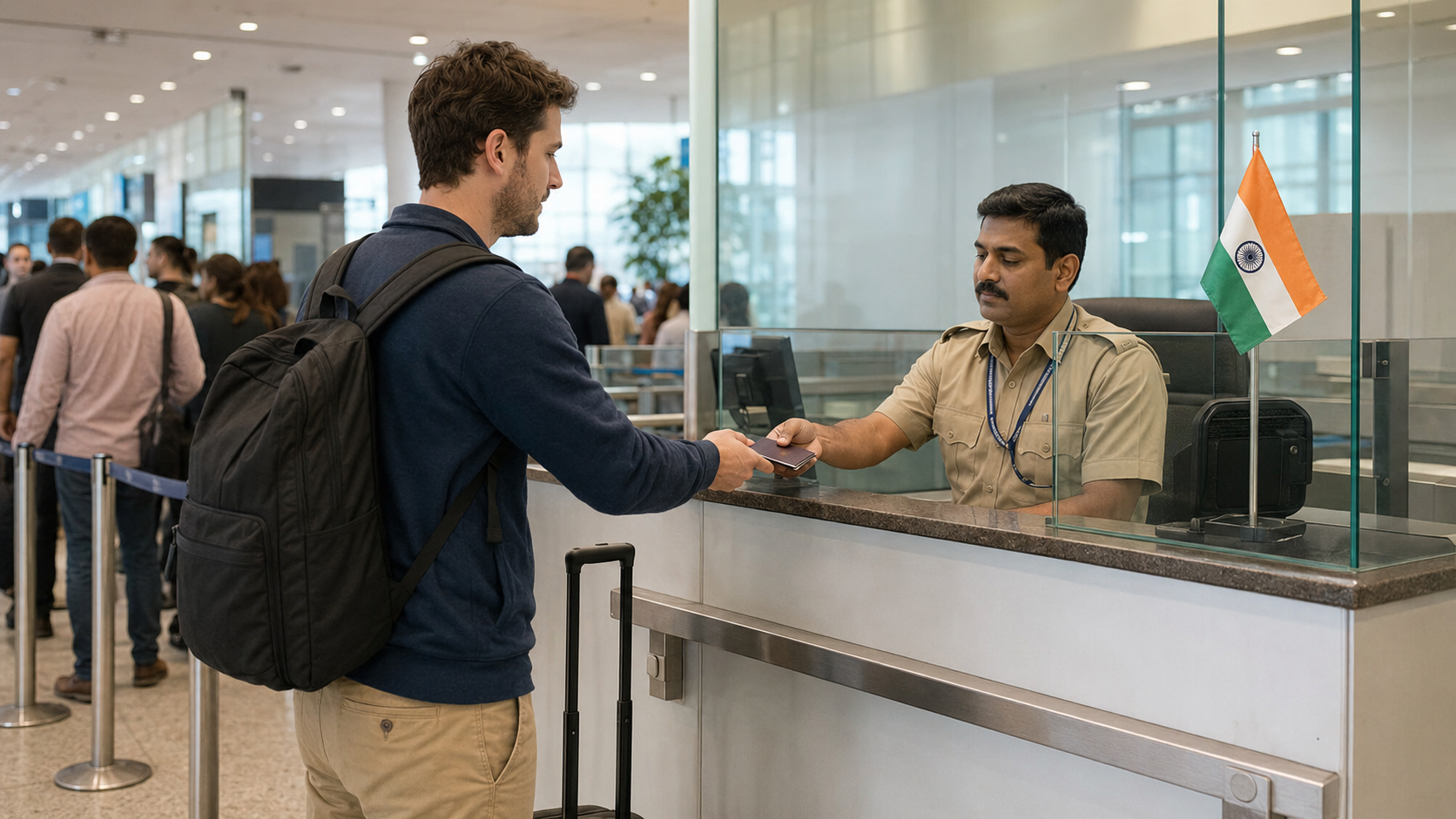

Planning a trip to India? This clear 2026 guide explains tourist e-Visas, passport rules, fees, documents, entry points, yellow fever requirements and what to expect on arrival.
Last verified: 8 August 2026
The visa form is not the part of an India trip that makes anyone
dream of spice markets, Himalayan roads or a first plate of dosa. Yet it
is one of the few details that can stop the journey before it
begins.
For most visitors from the UK, United States, Canada, Australia, New
Zealand and Europe, India’s e-Tourist Visa is the simplest route. The
application is completed online, the approval arrives by email, and the
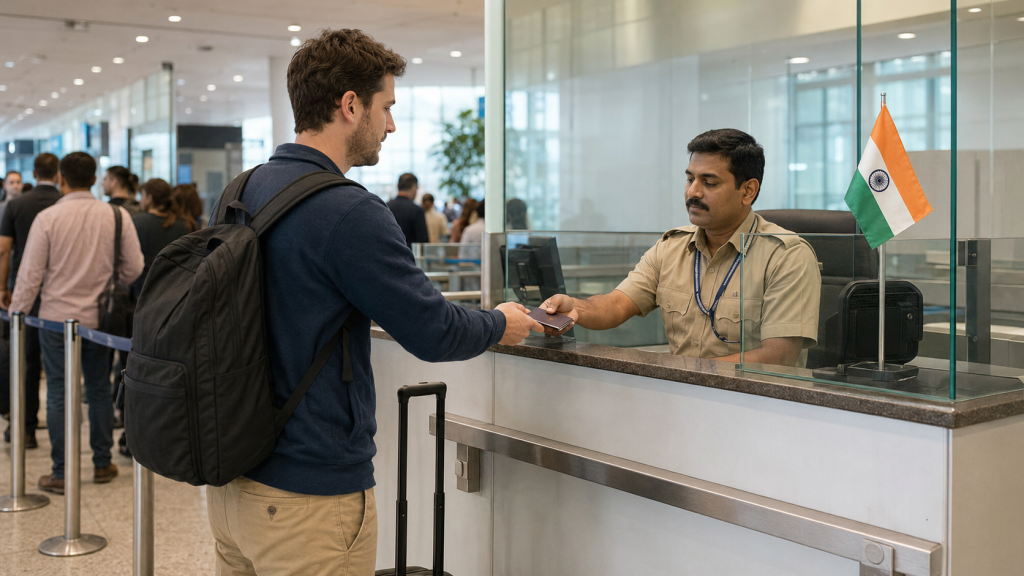
final visa is stamped into your passport after immigration checks in
India. The process is manageable once you understand which visa to
choose, when its validity begins and which entry points you may use.
This guide explains those details in plain English, including the
official fees introduced in the July 2026 fee table.
Important: Visa rules can change and individual
applications may be treated differently. Always make a final check on
the Government of India’s
official visa portal before paying or travelling.
India entry requirements
at a glance
Most international tourists should be ready to show or carry the
following:
| Requirement | What it means |
|---|---|
| Passport | Normally valid for at least six months when applying for an e-Visa, with at least two blank pages |
| Visa or e-Visa | Required for most foreign nationals before travel |
| Granted ETA | Carry a printed or saved copy of your Electronic Travel Authorization and confirm that its status says GRANTED |
| Return or onward ticket | The official e-Visa rules say travellers should hold proof of onward travel |
| Sufficient funds | You may be asked to show that you can support yourself during the trip |
| e-Arrival card | Foreign travellers and OCI cardholders can submit the free online arrival card within 72 hours before arrival. It is separate from the visa |
| Yellow fever certificate | Required in certain cases if you have recently arrived from or transited through a yellow fever endemic country |
| Correct entry point | e-Visa holders must enter through an authorised immigration checkpost |
Biometric details are normally captured at immigration when you
arrive.
Do you need a visa for India?
Most foreign passport holders need either a valid visa issued by an
Indian mission or a valid e-Visa before entering India.
There are limited exceptions. Citizens of Nepal and Bhutan have
visa-free access in many circumstances, although exceptions apply when
entering from certain countries or using particular travel documents.
Overseas Citizen of India cardholders normally travel with a valid
passport and OCI card rather than applying for a tourist visa.
Diplomatic and official passport exemptions are governed by separate
agreements.
If none of those situations applies to you, assume that you need a
visa and verify the rule for the passport you will actually use.
e-Visa or
regular visa: which should you choose?
| Choose an e-Tourist Visa when… | Choose a regular or paper visa when… |
|---|---|
| Your nationality appears on the official e-Visa eligibility list | Your nationality or circumstances are not eligible for an e-Visa |
| You are visiting for tourism, sightseeing or a casual visit to friends or relatives | You plan to work, undertake journalism or carry out activities outside the permitted tourist purposes |
| Your trip fits the available 30-day, one-year or five-year option | You need a category, duration or flexibility unavailable through the e-Visa system |
| You will enter through an authorised e-Visa airport, seaport or land checkpost | Your planned entry point does not accept e-Visas |
| You have an ordinary passport and no disqualifying professional or travel-document issue | You hold a diplomatic, official or non-passport travel document, or fall into another special case |
The e-Visa list currently includes the UK, USA, Canada, Australia,
New Zealand and most European countries. It also includes many countries
across Asia, Africa, the Middle East, the Caribbean and Latin America.
Check the live list instead of relying on an old blog post.
What can you do on an
e-Tourist Visa?
The official rules cover recreation, sightseeing and casual visits to
friends or relatives. They also allow certain short yoga programmes,
informal courses and unpaid voluntary work, subject to conditions.
Informal courses must not exceed six months or lead to a qualifying
certificate or diploma. Permitted voluntary work is limited to one month
and must not involve payment or consideration.
A tourist e-Visa is not permission to take employment. It is also not
the correct category for journalism or general NGO activity. Travellers
planning formal study, paid work, professional filming or another
specialist activity should use the visa category that matches the real
purpose of the visit. Do not assume that calling a trip “tourism” makes
unrelated work lawful.
India e-Tourist Visa options
India currently offers three main e-Tourist Visa lengths:
| Option | Validity | Entries | Best suited to |
|---|---|---|---|
| 30-day e-Tourist Visa | 30 days from first arrival, with the first arrival made within the ETA window | The live category page describes it as multiple-entry. Follow the conditions printed on your granted ETA and immigration stamp | A single short holiday or a brief itinerary that includes a neighbouring country |
| One-year e-Tourist Visa | 365 days from the date the ETA is granted | Multiple | Travellers likely to return to India within a year |
| Five-year e-Tourist Visa | Five years from the date the ETA is granted | Multiple | Regular visitors who want long-term convenience |
For the one-year and five-year tourist e-Visas, the official portal
currently limits total time in India to 180 days in a calendar year.
Visa validity and permitted stay are not the same thing. A five-year
visa does not allow someone to remain in India continuously for five
years.
The 30-day visa is different in another important way. Its 30-day
stay period begins with your first arrival, but that first arrival must
take place within the validity window shown on the ETA. Read the dates
on the approval carefully before booking a tight connection or regional
side trip.
All three tourist e-Visas are described as non-extendable and
non-convertible.
India e-Tourist Visa fees in
2026
The Government of India’s fee table dated 9 July 2026 lists fees in
US dollars. The amount depends on nationality, visa length and, for the
30-day visa, the season of travel.
| Passport | 30 days, April to June | 30 days, July to March | One year | Five years |
|---|---|---|---|---|
| United Kingdom | US$10 | US$25 | US$40 | US$484 |
| United States | US$10 | US$25 | US$40 | US$160 |
| Canada | US$10 | US$25 | US$40 | US$200 |
| Australia | US$10 | US$25 | US$40 | US$200 |
| New Zealand | US$10 | US$25 | US$40 | US$200 |
| Many EU passports, including France, Germany, Ireland, Italy, the Netherlands and Spain | US$10 | US$25 | US$40 | US$200 |
An additional payment or bank charge applies. The July 2026 official
fee sheet states 3%. Fees are processing charges and are generally
non-refundable even if the application is refused, withdrawn or granted
for a different period.
Some nationalities have reduced or zero fees, while a few have
different five-year charges. Always use the official
country-by-country e-Tourist Visa fee table for the passport in your
hand.
For UK travellers, the five-year option is dramatically more
expensive than the one-year visa. Unless you expect to return repeatedly
over several years, renewing a one-year e-Visa may make more financial
sense. Convenience, future rule changes and repeated application effort
are the trade-offs.
When should you apply?
The official e-Visa guidance allows eligible tourist applicants to
apply from 120 days before the proposed travel date and requires an
application at least four days before arrival.
Four days is a minimum, not a comfortable plan. Applying roughly two
to four weeks before departure gives you time to correct an image,
respond to a request to re-upload a document or resolve a payment
problem. Avoid applying before your dates and first accommodation are
reasonably settled, since the form asks for travel and contact
information.
Do not fly based only on an application confirmation. Check the visa
portal and make sure the ETA status is GRANTED before
leaving for the airport.
What you need
for an e-Tourist Visa application
Prepare the following before opening the form:
- A passport valid for at least six months, with at least two blank
pages - A clear scan of the passport biography page
- A recent, front-facing digital photograph against a plain light or
white background - Your intended arrival date and entry point
- An address in India, usually your first hotel or host’s address
- Details of previous visits to India and any previous Indian visa,
where applicable - Travel history, occupation and family information requested on the
form - A payment card or another accepted payment method
- An email address you check regularly
Each traveller needs a separate application. Children, including
infants, need their own passport and e-Visa.
Official upload
specifications
The current portal states that the photograph should be:
- JPEG format
- Between 10 KB and 1 MB
- Square, with equal height and width
- Full face and front view, with eyes open
- Without spectacles, shadows or borders
- Against a plain light-coloured or white background
The scanned passport biography page should be a PDF between 10 KB and
300 KB. Blurry, cropped or incorrectly sized uploads are a common cause
of delay or re-upload requests.
How to apply for an India
e-Visa
1. Use only the official
website
Go directly to indianvisaonline.gov.in/evisa/.
The Government of India warns that it has not authorised agents to offer
emergency or express e-Visa approval for an extra fee.
Copycat sites often look official, appear in advertisements and
charge large service fees. Check the domain carefully before entering
passport or card details.
2. Choose the
correct visa category and duration
Select e-Tourist only if tourism is the genuine purpose of the trip.
Then choose 30 days, one year or five years based on the journey you are
actually planning.
3. Enter
your details exactly as shown in the passport
Names, passport number, nationality and date of birth must match the
passport. A small typo can create a large problem at airline check-in or
immigration. Review every field before final submission, because the
applicant remains responsible for discrepancies even if an ETA is
issued.
4. Upload the
photograph and passport page
Do not use a casual cropped holiday photo. Make sure the face is
evenly lit and the passport scan is sharp enough to read at normal
size.
5. Pay the fee and
save the application ID
Keep the application ID, payment receipt and confirmation email. If
the payment page appears to fail after your card has been charged, check
the payment status before immediately trying again.
6. Monitor your
email and application status
The authorities may ask you to re-upload a document. Check spam and
junk folders as well as your main inbox. Use the official status tool
rather than treating a payment receipt as permission to travel.
7. Print the granted ETA
The official process tells travellers to present a printed ETA at
immigration. A digital backup on your phone and cloud storage is useful,
but carry paper as well. Confirm the name, nationality, passport number,
date of birth, photograph and visa dates before departure.
The e-Arrival card is not
your visa
India now provides a free online e-Arrival card for foreign
travellers and OCI cardholders. It can be completed through the official
visa or Bureau of Immigration channels within 72 hours before
arrival.
This arrival card records arrival information. It does not replace a
visa, e-Visa, passport or OCI card. If anyone offers to sell you an
“arrival visa” through this form, stop and return to the official
portal.
Where can you enter
India with an e-Visa?
You must arrive through an authorised immigration checkpost. The
official portal’s current list includes major international airports
such as Delhi, Mumbai, Bengaluru, Chennai, Kolkata, Hyderabad, Kochi,
Ahmedabad, Amritsar, Jaipur, Goa, Guwahati, Varanasi and Port Blair, as
well as additional airports and designated seaports.
One of the most useful recent changes for overland travellers is the
appearance of authorised land entry points. The current list
includes:
- Raxaul
- Rupaidiha
- Darranga
- Jogbani
This makes many older statements that “an Indian e-Visa can never be
used at a land border” outdated. It does not mean every
land border accepts an e-Visa. If your route crosses from Nepal, Bhutan
or Bangladesh, verify the exact checkpost on the live authorised-entry
list before committing to transport.
The portal allows e-Visa holders to leave through authorised Indian
Immigration Check Posts, with a wider range of airports, land crossings,
seaports and rail checkposts listed for departure.
Yellow fever and health
documentation
Travellers arriving within six days of leaving a yellow fever endemic
country must carry the original valid yellow fever vaccination
certificate. This can also affect passengers who transited through an
endemic country, particularly if they left the airport transit area.
India’s health authorities warn that travellers without acceptable
proof may be quarantined. A certificate can also be rejected if the
vaccination was given less than 10 days before arrival, personal details
are wrong, required signatures or batch information are missing, or only
a photocopy or digital scan is presented.
Check the latest endemic-country list and the Government of
India yellow fever guidance if your route includes Africa or Central
or South America.
Can you get a visa on
arrival in India?
Most visitors cannot simply arrive and obtain a tourist visa at the
airport.
India’s limited Visa-on-Arrival scheme is currently available to
citizens of Japan and South Korea, plus UAE citizens who previously held
an Indian e-Visa or regular visa. It is offered only at designated
airports and is subject to further eligibility conditions. For almost
everyone else, a visa or granted ETA must be arranged before travel.
When a regular visa may be
necessary
Apply through the regular visa route if the e-Visa rules do not cover
your situation. Important examples include:
- Employment in India
- Journalism or media work
- General NGO activities beyond the narrowly permitted short unpaid
volunteering provision - A formal course or long-term study that needs the appropriate
student category - Entry through a border or checkpost not authorised for your
e-Visa - A Pakistani passport or Pakistani-origin case requiring mission
processing - A diplomatic or official passport
- A laissez-passer or another travel document that is not an ordinary
national passport - A serving or former defence, military, security or police
background, which the current e-Visa instructions direct to the regular
visa process
The regular application begins online, but supporting documents and
the passport are normally submitted through the relevant Indian mission
or its authorised application centre. The central portal says an Indian
mission requires a minimum of three working days after receiving the
application, depending on nationality and excluding special cases. In
practice, allow longer and check your local mission’s appointment and
processing guidance.
Protected and restricted
areas
An Indian visa does not automatically permit travel everywhere in the
country. Some border, island, Himalayan, military and tribal regions
require a Protected Area Permit, Restricted Area Permit or other local
permission.
The e-Visa itself is not valid as permission to enter protected,
restricted or cantonment areas. Check permit requirements while planning
places such as sensitive border districts, parts of the Northeast and
certain islands. Obtain the relevant approval before setting off rather
than hoping to arrange it at a roadside checkpoint.
Common e-Visa mistakes to
avoid
Applying through a copycat
website
The authorised domain is indianvisaonline.gov.in. A
professional-looking logo or a top search result does not make another
site official.
Confusing
the ETA with the final permission to enter
The ETA must show GRANTED, and the immigration
process is completed on arrival. Carry the same passport used in the
application.
Using a different or
renewed passport
If an ETA was issued against an old passport, official guidance says
entry may be allowed with the new passport provided you also carry the
old passport on which the ETA was issued. The safest option is to renew
an expiring passport before applying whenever time allows.
Choosing the wrong entry
point
A valid e-Visa does not make every border, small airport or port an
authorised entry point. Check the exact place where you will first cross
Indian immigration.
Misunderstanding visa
validity
For one-year and five-year e-Visas, validity begins when the ETA is
granted, not on the day you eventually arrive. Applying very early uses
up part of the validity before the trip starts.
Forgetting a
separate application for a child
Every traveller must have an individual passport and visa or other
valid status. A child cannot be added to a parent’s e-Visa.
Booking a
non-refundable flight before approval
An application receipt is not a granted visa. If you must book early,
understand the fare’s change and cancellation conditions.
Frequently asked questions
How long does an India
e-Visa take?
The official system requires tourist e-Visa applications at least
four days before arrival, but this is not a guaranteed four-day
turnaround. Apply around two to four weeks before travel when
possible.
Do I need to print my India
e-Visa?
Yes. The official process instructs travellers to print the granted
ETA and present it at immigration. Keep a digital copy as a backup.
Can I extend a tourist
e-Visa in India?
The standard tourist e-Visa is described as non-extendable and
non-convertible. Do not plan a trip around receiving an extension.
Can I visit
Nepal or Sri Lanka and re-enter India?
You may do so if your visa allows another entry, remains valid on the
date of return and you re-enter through an authorised checkpost. Read
the entry conditions and dates on the granted ETA and passport
stamp.
Do I need a
confirmed hotel for the application?
The form asks for an Indian address and local contact information.
Travellers commonly use their first confirmed hotel or host. Keep the
booking details available during the journey.
Is
an e-Visa enough for Sikkim, Arunachal Pradesh or restricted border
areas?
Not necessarily. The visa permits entry to India, while separate
regional permits may control access to protected or restricted
areas.
Can I work
online from India on a tourist e-Visa?
India’s tourist e-Visa is designed for specified tourism and
short-visit purposes, not employment. The rules do not present it as a
general digital-nomad visa. If work is a material purpose of your stay,
seek category-specific advice from the relevant Indian mission before
travelling.
Final advice
The easiest visa application is the one completed slowly. Use the
official website, match every detail to your passport, upload clean
files and read the granted ETA line by line. Then keep the ETA,
first-night address, onward ticket and any health certificate together
in one travel folder.
Once those pages are in order, the paperwork quickly recedes. The
first real impression of India will not be an application number. It
will be the warmth outside the terminal, the sudden chorus of horns, a
tea stall pouring the first glass of chai, and the feeling that the
journey has finally begun.