Now Reading: The Best Beaches in Goa and Who Each One Suits
-
01
The Best Beaches in Goa and Who Each One Suits
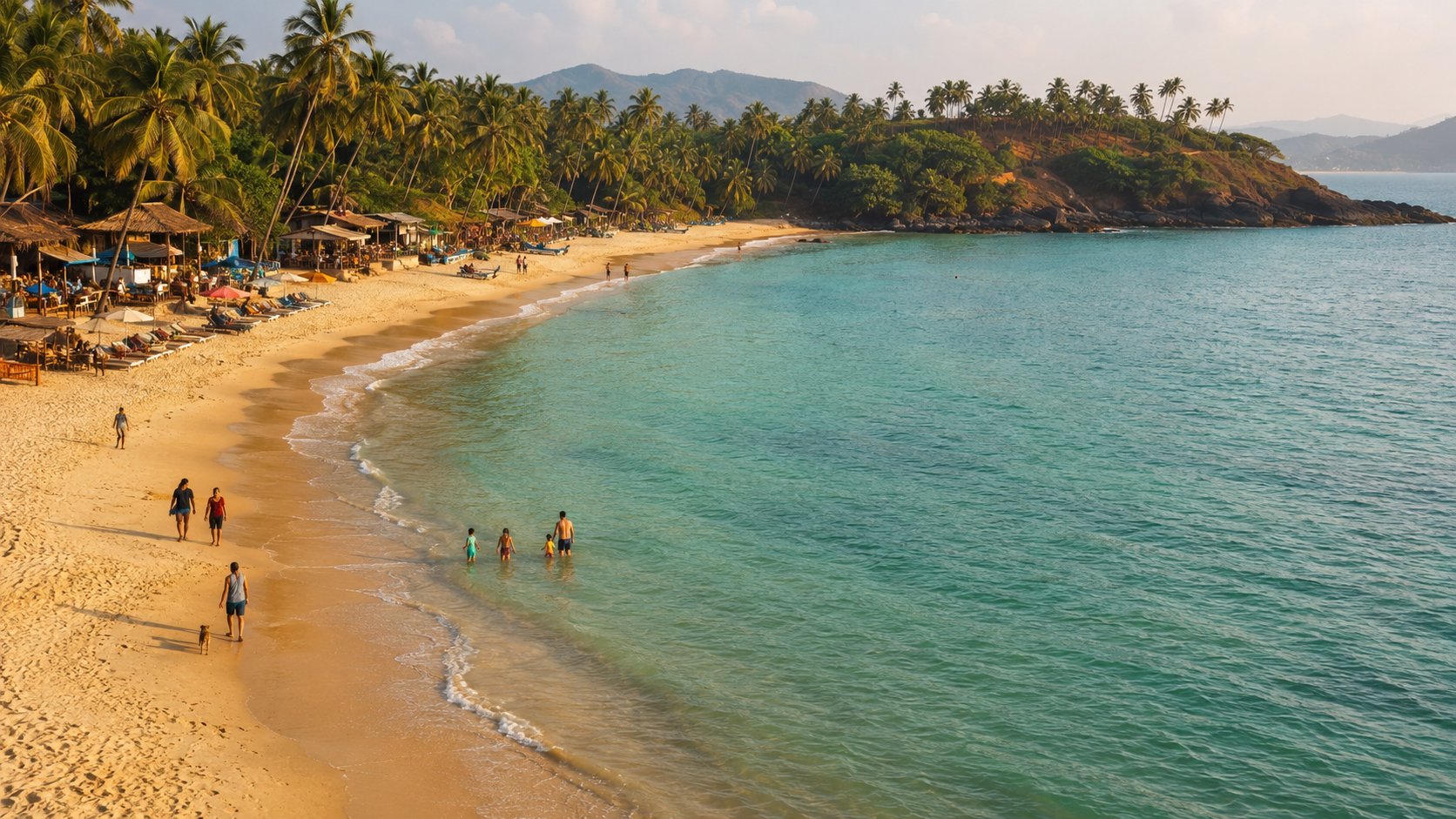

Find the Goa beach that fits your trip, from nightlife in Baga and boutique Ashwem to peaceful Agonda, family-friendly Benaulim and sociable Palolem.
Goa begins with a simple promise: warm sand, coconut palms and the Arabian Sea glowing gold at the end of the day. Choosing where to stay, however, is not quite so simple. A beach that feels perfect to a solo backpacker looking for company may feel exhausting to a couple hoping for silence. A family may value lifeguards, restaurants and easy transport far more than an empty sweep of sand.
There is no single best beach in Goa. There is only the beach that best matches the trip you want. Some places wake slowly with yoga classes and fruit bowls. Others gather speed after sunset, when music drifts from bars and scooters fill the lanes. Farther south, long stretches of sand can feel almost meditative, with little between you and the horizon.
This guide compares the best beaches in Goa by atmosphere, budget and traveller type. It covers the coast’s best-known bases as well as quieter alternatives, so you can choose with confidence rather than booking the first familiar name you see.
The best Goa beach for every kind of trip
| What you want | Best match | Why it works |
|---|---|---|
| A first visit to North Goa | Candolim | Plenty of choice without placing you at the centre of Baga’s intensity |
| Nightlife and action | Baga | Bars, clubs, restaurants and water sports close together |
| A sociable backpacker base | Arambol or Palolem | Affordable stays, cafés and an easy-going traveller scene |
| A romantic, slower escape | Agonda | Space, sunsets and a calm village rhythm |
| A family beach holiday | Benaulim or Candolim | Useful facilities, varied food and straightforward access |
| Boutique comfort | Ashwem | Stylish stays and restaurants in a quieter northern setting |
| A resort holiday | Varca or Cavelossim | Long beaches and a strong choice of higher-comfort properties |
| Yoga and a gentle reset | Mandrem | A softer pace with wellness-focused stays and cafés |
| Quiet near Palolem | Patnem | The appeal of Canacona with less bustle |
| Nature and minimal development | Galgibaga | A remote, nesting-sensitive beach with few distractions |
If you are still shaping the wider route, place Goa within the coast, cities and landscapes covered in our West India travel guide.
North Goa beaches: energy, variety and easy social life
North Goa offers the greatest concentration of cafés, bars, markets, hostels and things to do. That does not mean every northern beach is loud. The atmosphere gradually loosens as you travel north from Candolim and Calangute towards Mandrem and Arambol. The trade-off is that the quieter northern beaches are farther from Panaji and often more spread out.
Calangute: best for maximum convenience
Calangute is one of Goa’s busiest beach towns. Its appeal is not solitude but sheer convenience. Hotels cover most budgets, restaurants serve everything from Goan fish curry to familiar international food, and taxis, shops and activities are rarely far away.
Who it suits: First-time visitors who want abundant choice, groups with different budgets and travellers who prefer a busy resort town to an isolated beach.
Think twice if: Your idea of Goa is an empty shore and the sound of palm leaves. Calangute can feel crowded and commercial, particularly around the main beach entrance and during holiday periods. Staying towards the quieter edges can soften the experience.
Baga: best for nightlife and non-stop activity
Baga is where Goa turns up the volume. The beach, restaurant lanes and nightlife venues make it an obvious choice for travellers who want entertainment within easy reach. Days can be filled with water sports and busy beach shacks, while evenings move from dinner to bars and clubs.
Who it suits: Friends travelling together, younger visitors, short-stay travellers who want action and anyone who would rather walk to nightlife than arrange a late taxi.
Think twice if: You are a light sleeper, dislike persistent crowds or want a restorative beach retreat. Baga is fun when its energy is the reason you came. It is less appealing when you merely tolerate it.
Candolim: best all-round base for first-time visitors
Candolim strikes one of North Goa’s most useful balances. It has a wide choice of accommodation and food, good access towards Panaji and Fort Aguada, and enough life to make evenings easy. Yet much of it feels more settled than central Calangute or Baga.
Who it suits: Couples, families, mature travellers and first-time visitors who want comfort and convenience without staying at the heart of the party scene.
Think twice if: You want the bohemian cafés of the far north or the seclusion of South Goa. Candolim is a practical compromise, and that practicality is precisely its strength.
Sinquerim: best for a polished short break
At the southern end of the Candolim stretch, Sinquerim sits beneath the presence of Fort Aguada. The setting feels more contained than Goa’s long open beaches, with established resorts and easy access to organised activities.
Who it suits: Travellers who want a comfortable resort, fort views and a convenient base for a short North Goa holiday.
Think twice if: Independent guesthouses, budget cafés and a large backpacker community are central to your trip.
Anjuna: best for cafés, markets and creative energy
Anjuna’s reputation was shaped by generations of overland travellers, flea markets and late nights. The modern version is more polished and more expensive in places, but it still attracts people drawn to music, design, café culture and an international social scene.
The shore is attractive, especially near sunset, although rocky sections mean Anjuna is not always the best choice for travellers whose entire holiday revolves around easy sea bathing.
Who it suits: Solo travellers, digital nomads, café lovers, shoppers and people who want interesting evenings without staying directly in Baga.
Think twice if: You want an uninterrupted sandy beach immediately outside your room or a very quiet village atmosphere.
Vagator: best for dramatic sunsets and clifftop views
Vagator has a more sculpted landscape than many Goan beaches. Rust-red cliffs, rocky coves and Chapora Fort give the coastline a visual drama that becomes particularly beautiful in late afternoon. Its restaurants and nightlife have grown more sophisticated, but the area remains less densely packed than Baga.
Who it suits: Couples, photographers, sunset seekers and travellers who enjoy stylish restaurants and music alongside natural scenery.
Think twice if: You have limited mobility or want a flat, endlessly walkable resort beach. Some coves involve steps or uneven approaches.
Morjim: best for long walks and a slower northern stay
Morjim opens into a broad stretch of sand near the Chapora River. It offers more breathing room than Goa’s central northern beaches, while still providing enough cafés and accommodation for a comfortable stay. Its coastal environment is also associated with Olive Ridley turtle nesting, so sensitive behaviour matters.
Who it suits: Long-stay travellers, couples, morning walkers and people who want North Goa’s food and social life at a gentler volume.
Think twice if: You want to walk to Baga’s nightlife or explore South Goa on day trips. Distances that look modest on a map can become tiring in traffic.
Ashwem: best for boutique stays and quiet comfort
Ashwem has evolved into one of North Goa’s most appealing choices for travellers who like their beach time peaceful but not basic. The mood is understated, with design-conscious hotels, appealing restaurants and a long sandy shore.
Who it suits: Couples, honeymooners, food-focused travellers and visitors willing to pay more for atmosphere and comfort.
Think twice if: You are travelling on a very tight budget or want a dense concentration of cheap nightlife.
Mandrem: best for wellness and an unhurried rhythm
Mandrem feels soft around the edges. Mornings begin with walkers on the sand, cafés ease into breakfast service and the day rarely seems in a hurry. Yoga, wellness and longer stays fit naturally here, yet Arambol and Ashwem are close enough when you want more choice.
Who it suits: Wellness travellers, couples, families seeking space and anyone planning to slow down for several days.
Think twice if: You need a compact town centre or want clubs and major sights on your doorstep.
Arambol: best for budget travellers and instant community
Arambol remains one of Goa’s easiest places to meet other travellers. The narrow lane leading towards the beach is full of small shops, cafés and guesthouses, and the sands draw musicians, performers, wellness practitioners and long-term visitors from around the world.
Who it suits: Backpackers, solo travellers, budget-conscious visitors and people who enjoy an informal, alternative scene.
Think twice if: You imagine Arambol as a hidden countercultural village. It is well known and can become busy. Choose accommodation away from the main approach if you value quiet nights.
South Goa beaches: space, slower days and softer evenings
South Goa generally offers longer beaches, lower-density development and quieter nights, but it still has several distinct personalities. Colva supplies local energy and convenience. Palolem has a sociable traveller scene. Agonda and Patnem slow the pace, while Varca and Cavelossim serve travellers seeking resort comfort.
Colva: best for convenience and local holiday energy
Colva is one of South Goa’s best-known beaches and an easy option from Margao. The main entrance can be lively, especially at weekends and during Indian holidays, but the sand stretches far enough for quieter walks once you move away from the central cluster.
Who it suits: Travellers relying on public transport or taxis, visitors who enjoy a mixed local and tourist atmosphere, and families who value plentiful services.
Think twice if: You want a secluded beach-village mood from the moment you arrive.
Benaulim: best balance for families and couples
Just south of Colva, Benaulim feels noticeably calmer while retaining restaurants, guesthouses and practical connections. The beach is broad and made for long evening walks, when fishing boats rest on the sand and the heat begins to lift.
Who it suits: Families, couples, older travellers and first-time South Goa visitors who want calm without isolation.
Think twice if: Nightlife or a dense backpacker scene matters to you. Evenings here are usually about dinner, conversation and an early start the next morning.
Varca: best for quiet resort days and long walks
Varca’s pale sand and open horizon give it an uncluttered feeling. Larger resorts sit along this part of the coast, yet the beach itself often feels remarkably spacious once you leave the main access points.
Who it suits: Couples, families, resort guests and travellers who want to read, swim when conditions permit and walk for miles.
Think twice if: You prefer exploring on foot. Restaurants and village life can be spread out, making your accommodation choice especially important.
Cavelossim and Mobor: best for higher comfort
Where the Sal River approaches the sea, Cavelossim and Mobor combine a beautiful coastal setting with some of South Goa’s most comfortable hotels. Boat trips, polished resorts and a compact selection of shops and restaurants make this an easy place to settle into holiday mode.
Who it suits: Honeymooners, multigenerational families and travellers who want facilities arranged with minimal effort.
Think twice if: You want hostel life, bargain beach huts or a strong independent backpacker culture.
Agonda: best for couples and genuine rest
Agonda has the kind of beach that encourages you to cancel plans. A long curve of sand, a low-rise village and a line of relaxed places to eat create a rhythm that is calm without feeling empty. Mornings are for walking. Afternoons disappear beneath a shaded veranda. Sunsets become the day’s main event.
Who it suits: Couples, solo travellers seeking quiet, readers, slow travellers and anyone recovering from a busy Indian itinerary.
Think twice if: You want a different club every night, extensive shopping or effortless access to North Goa.
Palolem: best first taste of South Goa
Palolem’s palm-framed crescent is one of Goa’s most recognisable coastal scenes. It is no longer a secret, but it remains an excellent base. Beach huts, guesthouses, restaurants, yoga and a friendly traveller community make it easy to arrive without a complicated plan.
Who it suits: First-time South Goa visitors, backpackers, solo travellers and couples who want beauty with a little social life.
Think twice if: You want complete seclusion. Central Palolem is compact and active in the main season, so look towards the quieter ends of the bay or consider Patnem.
Patnem: best for Palolem without the bustle
Patnem is close enough to Palolem for an easy change of scene, yet the atmosphere is more subdued. Its smaller community of huts, guesthouses, yoga spaces and restaurants suits travellers who like having choices without feeling surrounded by them.
Who it suits: Couples, repeat Goa visitors, wellness travellers and people who want peaceful evenings with Palolem nearby.
Think twice if: You need a wide range of shops, nightlife or transport immediately outside your door.
Galgibaga: best for nature and near-total quiet
Galgibaga feels different from Goa’s resort beaches. Development is limited, the approach is quieter and the coast is known as a turtle-nesting environment. Come for the landscape and the absence of entertainment, not despite it.
Who it suits: Nature-conscious travellers, photographers and independent visitors comfortable with minimal facilities.
Think twice if: You expect abundant accommodation, beach service or organised nightlife. Follow local restrictions, keep noise and artificial light low, and never disturb marked nesting areas.
North Goa or South Goa: which should you choose?
Choose North Goa if your ideal day mixes beach time with cafés, markets, nightlife and spontaneous plans. It is particularly useful for solo travellers and groups who want variety. Candolim is the most balanced introduction, Baga delivers the party, and the Morjim to Arambol stretch offers a slower, more contemporary northern experience.
Choose South Goa if spacious sand, quiet evenings and a resort or village rhythm matter more. Benaulim is an easy all-rounder, Agonda is made for slowing down, and Palolem offers the south’s most accessible blend of scenery and social life.
With seven nights or more, a split stay is often the best answer. Spend three or four nights around Candolim, Vagator or Mandrem, then move south for three or four nights in Agonda, Palolem or Benaulim. This is much more satisfying than trying to cross Goa repeatedly on day trips.
How to choose the right part of a beach
The beach name is only half the decision. On long coastal stretches, the exact location of your accommodation can completely change the experience.
- Near the main access road: Best for restaurants, taxis and convenience, but usually busiest.
- At the far end of the beach: Quieter and often more attractive, though you may walk farther at night.
- On an inland village lane: Better value and more local atmosphere, but check the actual walking route to the sand.
- Directly on the beach: Atmospheric in the dry season, although simple huts may offer less soundproofing, storage and comfort than a conventional hotel.
Before booking, read recent reviews for noise, construction and road access. A property described as “near the beach” may be a pleasant five-minute walk or an awkward journey along a busy road.
When to visit Goa’s beaches
November to February is the easiest period for a classic beach holiday, with drier weather and cooler evenings. It is also the most popular season, so Christmas, New Year and major holiday weekends bring higher prices and greater demand.
October and March can offer a useful compromise between atmosphere and value, although heat, humidity and occasional rain vary. April and May are much hotter. The southwest monsoon, broadly from June into September, turns Goa green and dramatic, but rough seas, strong currents and reduced beach-shack activity change the nature of the trip. Visit for monsoon landscapes and slow days, not for guaranteed swimming and sunbathing.
For a wider regional picture, see our month-by-month guide to the best time to visit India.
Getting to the right Goa beach
Goa has two airports. Manohar International Airport, also called Mopa and identified by the code GOX, is generally the more convenient arrival point for far North Goa. Dabolim Airport, code GOI, is often more practical for central and southern areas. The exact difference depends on traffic, so compare the full transfer rather than the straight-line distance.
Madgaon, also called Margao, is the main rail gateway for much of South Goa. Thivim is useful for several northern beaches, while Karmali can work well for Panaji and central Goa. Pre-arrange a transfer if arriving late, and confirm whether your hotel quote includes airport parking or other additional charges.
Scooters offer flexibility but should only be considered if you are legally licensed, properly insured and confident in Indian traffic. Wear a helmet, avoid riding after drinking and do not let the relaxed beach atmosphere soften normal road-safety judgement.
Beach safety and responsible travel
The Arabian Sea can look inviting while hiding strong currents. Swim only in designated lifeguarded areas, follow the flags and instructions on the day, and never assume that a beach described as calm is always safe. Conditions change with tides, weather and season. Avoid swimming after drinking alcohol, at night or where lifeguards advise against entering the water. Before your trip, read the current Goa beach safety rules published by the state’s lifesaving service.
Give fishing boats and working communities space. Carry reusable water bottles where practical, refuse unnecessary plastic and take litter away. At turtle-sensitive beaches such as Morjim and Galgibaga, obey barriers and local directions, keep dogs away from nesting areas and avoid bright lights or flash photography near the sand at night. Goa’s beauty is not merely a backdrop for a holiday. It is a living coast shared with residents and wildlife.
Frequently asked questions
Which is the best beach in Goa for a first-time visitor?
Candolim is the best-balanced North Goa base for many first-time visitors because it combines accommodation, restaurants and access without the full intensity of Baga. In South Goa, Palolem is the easiest introduction if you want scenery plus a sociable traveller atmosphere, while Benaulim is better for a calmer, more comfortable stay.
Which Goa beach is best for nightlife?
Baga is the straightforward choice for concentrated mainstream nightlife. Anjuna and Vagator suit travellers interested in music events, creative venues and a more dispersed evening scene. Events and opening patterns change, so check current listings close to your trip.
Which Goa beach is best for couples?
Agonda is a lovely choice for couples who value quiet, long walks and slow dinners. Ashwem offers a more boutique version of romance in North Goa, while Cavelossim suits couples looking for resort comfort.
Which Goa beach is best for families?
Benaulim and Candolim both offer a strong balance of accommodation, food and practical facilities. Mandrem may appeal to families wanting a quieter setting. Whichever beach you choose, judge swimming conditions from lifeguard advice each day rather than from the beach’s general reputation.
What is the quietest beach in Goa?
Galgibaga is among the quietest well-known options, but its limited facilities will not suit everyone. Agonda and Patnem provide a better balance between peace and places to stay and eat. Varca also offers plenty of space, particularly away from resort access points.
How many days do you need in Goa?
Four or five days are enough for one beach area with a few nearby outings. Seven to ten days allow a rewarding split between North and South Goa without spending the entire trip in transit.
The final choice
If you want one dependable answer, choose Candolim for a varied first trip, Agonda for stillness, Palolem for sociable beauty, Baga for nightlife, Ashwem for boutique comfort or Benaulim for a relaxed family holiday.
Then make the decision personal. Think about how you want mornings to feel, how far you are willing to travel for dinner and whether silence or social life matters more after sunset. The right Goa beach is the one that lets your days settle into their natural rhythm, until footwear feels unnecessary and the sea begins to keep time.
If this is part of your first journey across the country, our complete India travel guide will help with routes, transport, budgeting and the bigger decisions beyond Goa.