Now Reading: South India Travel Guide: Temples, Backwaters, Beaches and Hill Country
-
01
South India Travel Guide: Temples, Backwaters, Beaches and Hill Country
South India Travel Guide: Temples, Backwaters, Beaches and Hill Country

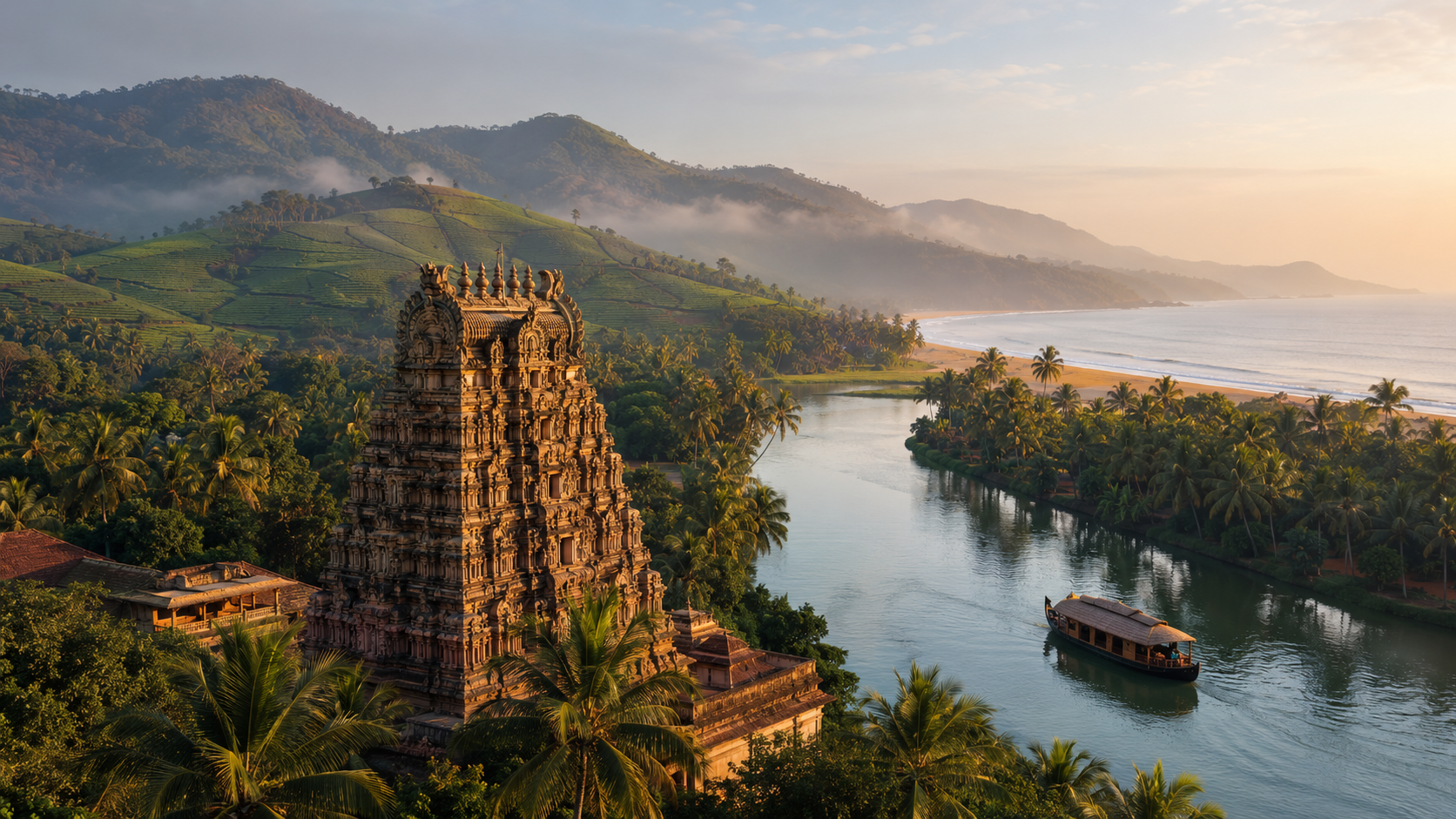
Plan an unforgettable journey through South India, from Tamil Nadu's living temple cities and Kerala's backwaters to Karnataka's ruins, tropical beaches and the tea and coffee hills of the Western Ghats.
Morning arrives softly in South India. A temple bell carries above the roofs, a tea seller lifts a steel tumbler high to cool the milky chai, and the first sunlight catches the bright towers of a gopuram. By evening, you might be drifting through a Kerala canal under leaning coconut palms, watching fishermen pull in their nets while dinner simmers somewhere beyond the rice fields.
This is a region of remarkable shifts. Granite temple towns give way to spice gardens, coffee estates and rainforest. Modern cities hum beside centuries-old bazaars. The Arabian Sea and Bay of Bengal shape two very different coastlines, while the Western Ghats rise between them in folds of tea-green hill country.
This South India travel guide will help you decide where to go, when to travel and how to join the region’s temples, backwaters, beaches and hills into a journey that feels generous rather than rushed. It is designed for first-time visitors, independent travellers and anyone who wants to experience more than a quick circuit of famous sights.
South India at a glance
| Area | Best known for | Good first stops | Allow at least |
|---|---|---|---|
| Tamil Nadu | Great temple cities, classical arts, long coast and Nilgiri hills | Chennai, Mamallapuram, Thanjavur, Madurai, Ooty | 7–10 days |
| Kerala | Backwaters, tropical coast, spice country and tea hills | Kochi, Munnar, Alappuzha, Thekkady, Varkala | 7–10 days |
| Karnataka | Royal cities, Hampi, coffee country and quieter beaches | Bengaluru, Mysuru, Hampi, Coorg, Gokarna | 7–10 days |
| Andhra Pradesh | Pilgrimage, Buddhist heritage, dramatic valleys and Bay of Bengal beaches | Tirupati, Visakhapatnam, Araku Valley | 4–7 days |
| Telangana | Deccani culture, food, forts and Kakatiya heritage | Hyderabad, Warangal, Ramappa | 4–6 days |
| Puducherry | Tamil and French heritage beside the sea | White Town, Tamil Quarter, Auroville | 2–3 days |
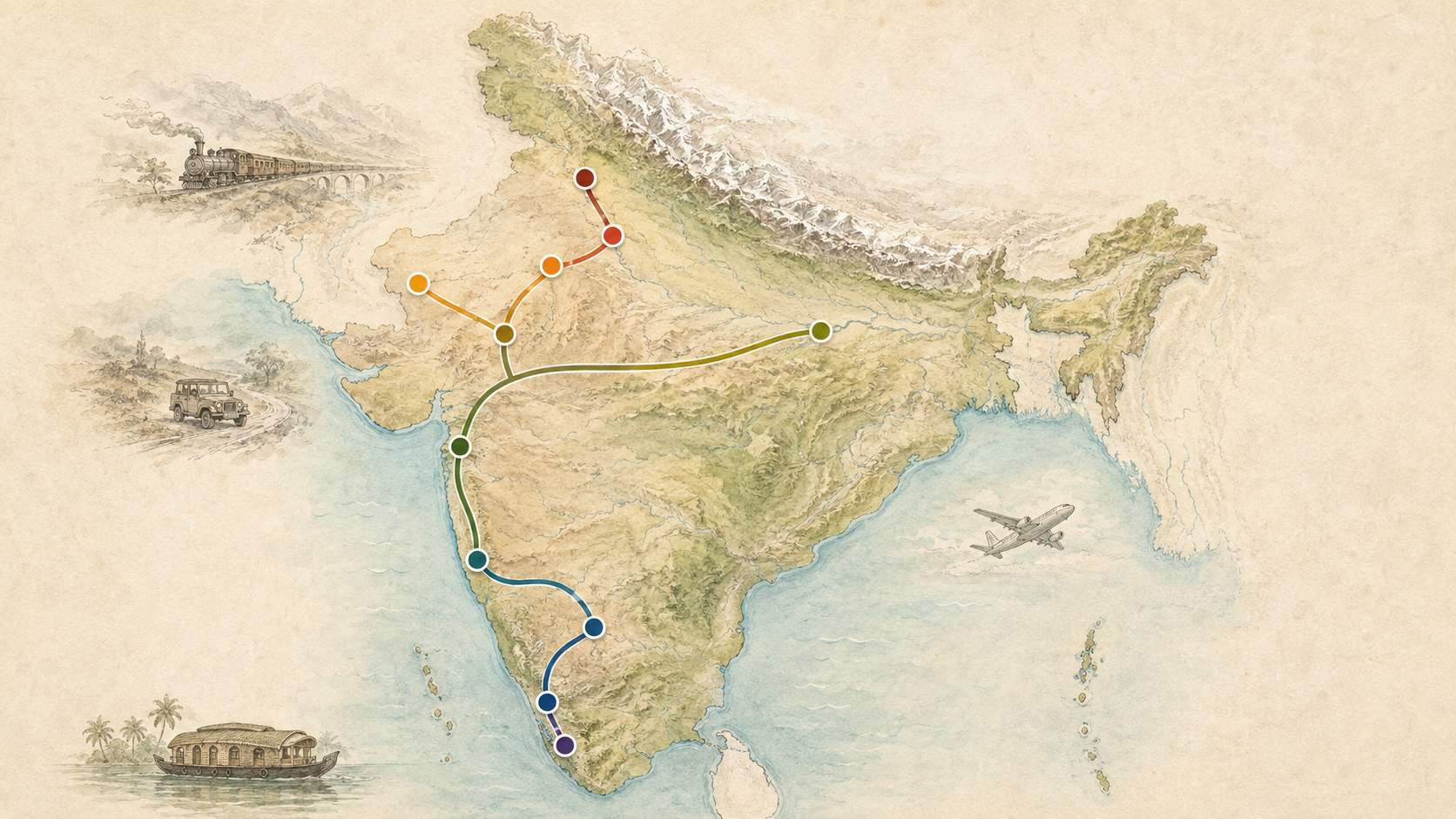
The most important planning advice: do not try to cover all of South India in one short holiday. The distances are substantial and each state has its own language, cooking, architecture and rhythm. With two weeks, choose two neighbouring states. With three or four weeks, you can build a wider journey without spending every other day in transit.
Why travel through South India?
Travellers often speak about South India as though it were a quieter alternative to the north. It can feel calmer in places, but that description is far too small. The south is not simply India with the volume turned down. It has its own histories, faiths, languages and landscapes, and they change noticeably as you cross each state border.
Tamil Nadu offers some of the country’s most extraordinary living temple traditions. Kerala folds everyday life around water, coconut, spice and the monsoon. Karnataka moves between Bengaluru’s technology districts, Mysuru’s royal elegance, the boulder-strewn ruins of Hampi and the coffee hills of the Western Ghats. Andhra Pradesh stretches from the great pilgrimage centre of Tirupati to the beaches and wooded valleys around Visakhapatnam. Telangana carries the flavours and architecture of the Deccan, with Hyderabad at its magnetic centre.
The pleasure lies in the contrasts. You can listen to devotional music at dawn, eat lunch from a banana leaf, climb into cool hills scented with eucalyptus and finish the week barefoot on a beach. South India rewards travellers who leave room for those transitions.
When is the best time to visit South India?
For a broad journey across the region, November to February is usually the easiest period. Much of the coast is warm rather than fiercely hot, hill stations can feel cool in the mornings, and long days of sightseeing are more comfortable. This is also the busiest season in Kerala, Goa’s southern approaches, Hampi and the popular beach towns, so reserve key stays and long-distance trains in advance.
- March to May: hot and increasingly humid across the plains and coast. It can still be a rewarding time for hill country such as Ooty, Kodaikanal, Munnar, Coorg and Chikkamagaluru, although domestic holiday periods bring crowds.
- June to September: the southwest monsoon transforms Kerala and the western side of Karnataka into an intensely green landscape. Rain can be beautiful and atmospheric, but it may interrupt beach time, trekking, road journeys and backwater plans.
- October to December: Tamil Nadu and parts of the southeast receive much of their rain from the northeast monsoon. Chennai, Puducherry and the Coromandel Coast can experience heavy downpours and occasional severe weather, so keep plans flexible and follow local forecasts.
- December to February: the most comfortable all-round window for temple cities, Hampi, Hyderabad and the coasts. Nights in higher hill stations can feel surprisingly chilly.
Festivals can transform a visit, but dates often follow religious calendars and change each year. Pongal brings harvest celebrations to Tamil Nadu in January. Onam fills Kerala with floral decorations, feasts and cultural events, usually in August or September. Mysuru Dasara creates a magnificent but extremely busy period in Karnataka. Check current dates before booking and expect transport and accommodation to fill early.
Tamil Nadu: where temple towers rise above everyday life
Tamil Nadu is the place to begin if temples are at the heart of your journey. Its sacred sites are not silent archaeological remains. They are living places where families arrive with flowers, priests move between pools of lamplight and the scent of camphor hangs in pillared halls.
Chennai and the Coromandel Coast
Chennai is busy, humid and often underestimated. Give it time. Start early at Kapaleeshwarar Temple, wander through the lanes of Mylapore, pause for filter coffee and a crisp dosa, then watch the city gather along Marina Beach as the heat softens. Chennai is also one of the region’s most useful transport hubs and a natural gateway to the coast.
About 60 kilometres south, Mamallapuram, also called Mahabalipuram, brings ancient stonework to the edge of the sea. The Shore Temple, cave sanctuaries, carved reliefs and monolithic rathas form a UNESCO World Heritage site. Stay overnight if you can. After the day visitors leave, the small town feels gentler, with sculptors’ workshops, sandy lanes and the sound of the Bay of Bengal beyond the palms.
Puducherry lies farther down the same coast. Its sea-facing promenade and mustard-coloured colonial buildings receive most of the attention, but the Tamil Quarter, markets, temples and old family houses give the town its fuller character. It works best as a slow two-night stop rather than a checklist day trip.
The Chola heartland
Thanjavur is the centre of one of South India’s richest cultural landscapes. Brihadisvara Temple changes with the light, its warm stone glowing softly in the late afternoon. Together with temples at Gangaikondacholapuram and Darasuram, it forms the UNESCO-listed Great Living Chola Temples. The word living matters: these are historic masterpieces, but devotion continues within them.
Nearby Kumbakonam is dense with temples, brass shops and coffee houses. Chettinad, farther south, reveals another side of Tamil heritage through vast merchant mansions, patterned tiles and a cuisine fragrant with pepper, fennel and stone flower. A heritage homestay here can become one of the most memorable nights of the journey.
Madurai and Rameswaram
Madurai feels ancient and immediate at once. Streets radiate from Meenakshi Amman Temple through flower markets, textile stalls and restaurants serving meals on banana leaves. Visit the temple once in daylight to see the sculpture and again toward evening, when lamps glow and worship gathers intensity. Some inner areas may be restricted to Hindus, and rules can change, so follow signs and local instructions without argument.
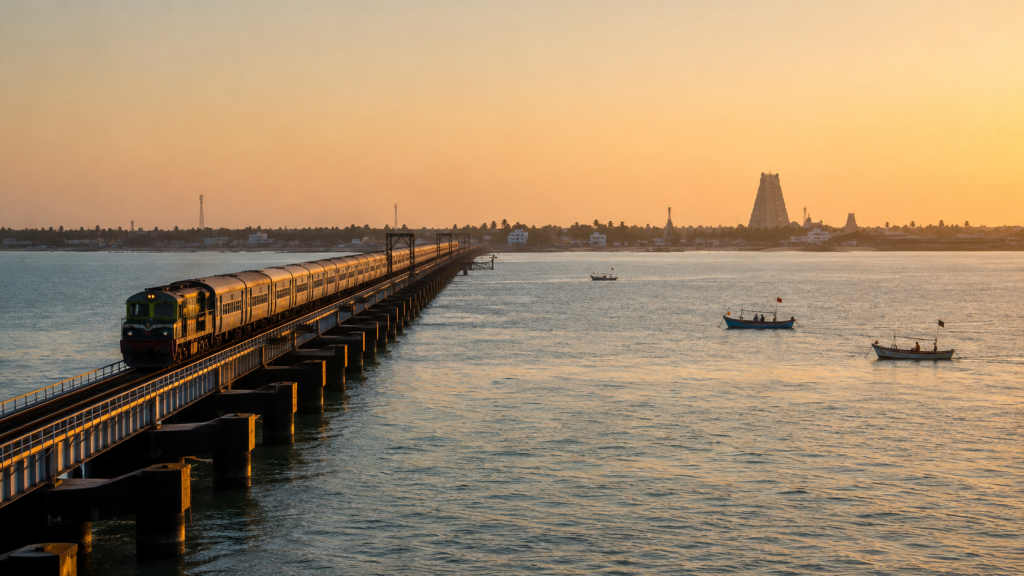
Rameswaram sits on an island close to the tip of India. Ramanathaswamy Temple is known for its long, vividly painted corridors, while the road and rail approaches cross a seascape of shallow blue water. Beyond the pilgrimage town, the remains of Dhanushkodi stand among sand, wind and ocean. It is a striking excursion, but the exposed coast demands respect during rough weather.
Ooty and Kodaikanal
When the plains become too hot, the hills offer relief. Ooty, officially Udhagamandalam, sits among the Nilgiris with tea gardens, eucalyptus, old cottages and the much-loved Nilgiri Mountain Railway. It is popular and often crowded, but the wider Nilgiris hold quieter stays around Coonoor, Kotagiri and smaller tea-growing settlements.
Kodaikanal has wooded slopes, misty viewpoints and a lake at its centre. Look beyond the busiest promenade and you will find forest walks, small farms and cooler air scented by pine. In both hill stations, travel time is longer than the map suggests. Winding roads and mountain railways are part of the experience, not merely a transfer.
Kerala: backwaters, spice gardens and a softer tropical rhythm
Kerala is narrow on the map but remarkably varied. The Arabian Sea runs along one side, the Western Ghats rise on the other, and between them lie canals, lagoons, towns, paddy fields and millions of coconut palms. The distances look modest, yet slow roads mean it is wise to choose fewer stops.
Kochi
Kochi is the best opening chapter. In Fort Kochi and Mattancherry, layers of maritime history sit close together: churches, mosques, a synagogue, spice warehouses, tiled roofs and lanes where pepper once travelled toward distant ports. Watch the Chinese fishing nets at the water’s edge, but spend equal time inland, where cafés occupy old buildings and the scent of cardamom escapes from wholesalers’ sacks.
A Kathakali performance can be deeply rewarding, especially if you arrive early enough to watch the elaborate make-up. Responsible cultural centres explain the gestures, stories and music rather than presenting the dance as a quick photo opportunity.
Munnar and the Western Ghats
The road to Munnar climbs away from the coast through rubber, spice and forest before opening onto sculpted tea slopes. The town itself is busy, so consider a plantation stay or homestay outside the centre. Walk with a knowledgeable local guide, learn how tea is picked and processed, and leave time simply to watch clouds move through the valleys.
Thekkady and the Periyar landscape lie south of Munnar. Wildlife sightings are never guaranteed, but guided walks, bamboo-rafting programmes and spice-garden visits can reveal far more than a rushed search for elephants. Choose operators carefully and avoid any experience offering captive-elephant rides or forced close contact.
Alappuzha, Kumarakom and the backwaters
Kerala’s backwaters are a network of lakes, rivers, canals and inlets woven through village life. Alappuzha, still widely called Alleppey, is the best-known starting point. Kumarakom, on the edge of Vembanad Lake, offers a quieter and often more spacious alternative.
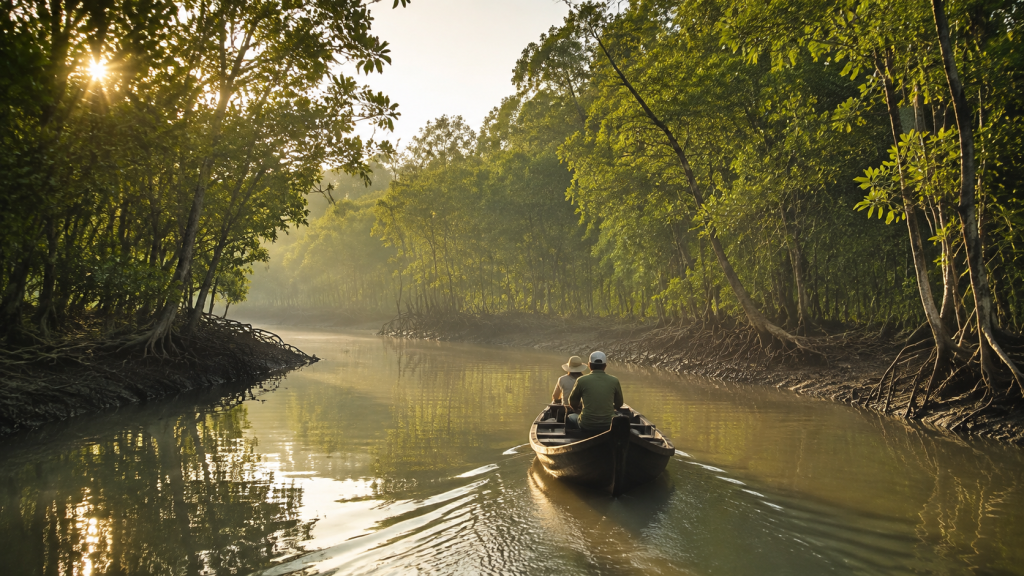
An overnight houseboat is romantic, but it is not the only way to experience the water. Large boats remain mainly on wider channels and often moor before dark. A public ferry, small canoe, kayak or village homestay can take you closer to the narrow waterways where children travel to school, ducks scatter across the water and daily life unfolds along the banks. The most satisfying plan is often one night on a carefully chosen houseboat followed by one night on land.
Ask how a boat handles waste, limits plastic and treats its crew. The backwaters are a living ecosystem and home, not a scenic stage set. Smaller locally run experiences usually keep more of your spending within the community.
Varkala, Kovalam and the northern coast
Varkala’s red cliff rises above a long sweep of sand, with cafés and guesthouses along the top. It is sociable and easy for independent travellers, although currents can be powerful and cliff erosion requires care. Kovalam, close to Thiruvananthapuram, has a more established resort atmosphere and convenient access to the capital.
For a quieter coast, look north. Kannur, Bekal and the backwaters around Kasaragod see fewer international visitors. Kerala Tourism highlights northern waterways such as Valiyaparamba and Kavvayi, where a slower, less commercial journey is still possible. Northern Kerala also opens the door to Theyyam, a powerful ritual tradition that should be approached with humility rather than treated as a staged show.
Karnataka: ruined empires, royal cities, coffee hills and wild coast
Karnataka is large enough to be a journey in itself. Bengaluru gives you contemporary urban India, Mysuru adds royal heritage, Hampi supplies one of the great landscapes of the subcontinent, and the Western Ghats descend toward a coast of temple towns and beaches.
Bengaluru and Mysuru
Bengaluru is more than an airport stop. Its parks, markets, restaurants, independent cultural spaces and craft-beer scene make it a lively introduction to modern southern India. Traffic is the city’s great complication, so group each day’s sights by neighbourhood and use the metro where it is convenient.
Mysuru is easier to hold in your hands. The illuminated palace is the headline, but the city’s pleasures also include Devaraja Market, sandalwood and silk traditions, old neighbourhoods, yoga schools and breakfasts of soft idli with fragrant sambar. Climb Chamundi Hill early, before the road and viewpoints become busy.
Hampi, Badami and Pattadakal
Hampi does not reveal itself all at once. Temples, market streets, waterworks and royal enclosures are scattered through a surreal landscape of granite boulders, banana plantations and the Tungabhadra River. The UNESCO-listed remains belonged to Vijayanagara, one of South India’s most powerful empires. Allow at least two full days, hire a knowledgeable guide for one of them and keep a slow morning or evening for exploring by bicycle or on foot.
Farther north, Badami, Aihole and Pattadakal trace an earlier chapter of Deccan architecture through cave temples, experimental shrines and finely composed temple groups. They require an additional loop, but reward travellers who want to understand how southern temple forms evolved rather than only admire their final grandeur.
Coorg, Chikkamagaluru and the Karnataka coast
Coorg, or Kodagu, is coffee country: rolling estates, forest, rain, homestays and meals with a distinct local identity. Chikkamagaluru offers another green highland landscape and access to the peaks and trails around the Mullayanagiri range. In either region, choose a stay that can introduce you to plantation life rather than treating the hills as a backdrop for a resort.
Gokarna combines an important pilgrimage town with coves and beaches reached by road or coastal paths. It is often described as a quieter alternative to Goa, although its most popular beaches are no longer secret. Udupi and the coast farther south bring together temple cuisine, fishing communities, surf, forest and the strong flavours of coastal Karnataka.
Andhra Pradesh: sacred journeys and the Eastern Ghats
Andhra Pradesh receives fewer first-time international visitors than Kerala or Tamil Nadu, which is precisely why it can feel so rewarding. Tirupati is one of India’s great pilgrimage centres. A visit demands planning, patience and respect for the systems created to manage enormous numbers of devotees. Confirm current entry and booking arrangements through official channels before travelling.
On the coast, Visakhapatnam spreads between hills and the Bay of Bengal. It is a useful base for beaches and for the climb into Araku Valley, where coffee plantations, forested slopes and Indigenous communities shape the landscape. The rail journey toward Araku, when operating on a suitable schedule, passes through tunnels and green hill country. Borra Caves are commonly paired with the valley.
Andhra also holds Buddhist sites, river landscapes and lesser-known natural formations such as Gandikota. These places are widely separated, so add them because they match a particular interest, not simply to increase the number of pins on your map.
Telangana: Hyderabad and the heritage of the Deccan
Hyderabad changes the flavour of a South India journey. Around the Charminar, bangles flash in the markets, perfume shops release clouds of attar and kitchens prepare biryani, haleem, kebabs and slow-cooked dishes shaped by the city’s Deccani history. Golconda Fort, the Qutb Shahi tombs, museums and old neighbourhoods deserve at least three days.
Warangal reveals the legacy of the Kakatiya dynasty through fort remains, gateways and temples. Ramappa Temple, around 70 kilometres beyond Warangal, is a UNESCO World Heritage site known for its refined sculpture and Kakatiya architecture. An organised day tour or hired car makes the heritage circuit easier, but an overnight stay gives the region more breathing space.
The four great South India experiences
1. Temples that are still alive
The scale of South Indian temples can be overwhelming, but the quiet details stay with you: a family tying flowers into a child’s hair, oil lamps reflected on stone, a sculpted column smoothed by generations of hands. Visit early in the morning or toward evening, when worship is active and the heat is less intense.
- Dress modestly, covering shoulders and knees.
- Remove shoes before entering the temple area and leave them at the designated counter.
- Ask before photographing people, rituals or shrine interiors. Many temples prohibit cameras and phones in particular areas.
- Walk clockwise around shrines when local practice indicates it.
- Do not assume every inner sanctum is open to non-Hindus.
- Carry small notes for shoe counters or offerings, but never feel pressured by unofficial guides.
2. Backwaters beyond the houseboat
The iconic houseboat view is only one layer of Kerala’s waterways. For a richer experience, combine different scales: cross a lake by public ferry, enter a narrow canal by canoe, walk through a waterside village and sleep in a family-run homestay. Dawn is especially beautiful, when the air is cooler and boats begin to move between homes, farms and markets.
3. Beaches with different personalities
South India’s coasts are not interchangeable. Mamallapuram brings stone heritage beside the Bay of Bengal. Varkala combines a sociable cliff-top strip with a broad beach. Gokarna mixes pilgrimage and backpacker life. Northern Kerala feels quieter, while the Karnataka coast pairs beaches with estuaries, forest and temple towns.
Swimming conditions can change quickly, and lifeguard coverage is uneven. Pay attention to flags, warnings and local advice. Avoid isolated stretches after dark, keep valuables out of sight and remember that dress norms away from resort beaches are usually conservative.
4. Hill country shaped by tea, coffee and rain
The Western Ghats and Nilgiris bring cool air and a completely different pace. Munnar and the Nilgiris are strongly associated with tea; Coorg and Chikkamagaluru with coffee. Yet these are not empty green landscapes. They are working regions with layered colonial histories, forest ecosystems and communities whose stories are often missing from the standard viewpoint tour.
Choose locally guided walks, stay on functioning estates where conditions are transparent, and do not enter plantations or photograph workers without permission. During the monsoon, ask about landslide risk and road conditions before travelling into the hills.
What to eat in South India
There is no single South Indian cuisine. Rice, lentils, coconut, tamarind, curry leaves and spices appear widely, but the results shift from one district to the next. The familiar dosa is only an opening sentence.
- Tamil Nadu: idli, dosa, pongal, sambar, Chettinad dishes, Kothu parotta and deeply aromatic filter coffee.
- Kerala: appam with stew, puttu with kadala curry, fish curry, parotta, thali-style meals and the many dishes of a festive sadya.
- Karnataka: bisi bele bath, ragi mudde, Mysuru masala dosa, Mangalorean seafood, Udupi vegetarian cooking and Coorg’s distinctive pandi curry.
- Andhra Pradesh: bold pickles, tangy pulusu, gongura, chilli-rich curries and coastal seafood.
- Telangana and Hyderabad: Hyderabadi biryani, haleem in season, kebabs, mirchi ka salan, khubani ka meetha and Irani chai with Osmania biscuits.
Traditional meals may arrive on a banana leaf. Wash your hands, eat with the right hand if comfortable, and follow the pace of people around you. Busy restaurants with high turnover are often a safer choice than an empty dining room with an enormous menu. Drink purified water and be cautious with raw garnishes until your stomach has adjusted.
Food-motivated travellers should also read our traveller’s guide to Indian food for a wider regional picture.
A balanced two-week South India itinerary
This classic route connects Tamil Nadu and Kerala. It works well for a first visit because it includes temple heritage, hill country, wildlife landscapes, backwaters, the coast and two very different cities.
| Days | Base | Focus |
|---|---|---|
| 1–2 | Chennai | Mylapore, city culture, food and recovery from arrival |
| 3 | Mamallapuram | Shore Temple, rock-cut monuments and the coast |
| 4–5 | Madurai | Meenakshi Temple, markets and evening worship |
| 6–7 | Thekkady | Western Ghats, guided nature experience and spices |
| 8–9 | Munnar | Tea country, walking and cooler air |
| 10–11 | Kochi | Fort Kochi, Mattancherry and a cultural performance |
| 12 | Alappuzha or Kumarakom | Backwaters by small boat, ferry or houseboat |
| 13–14 | Varkala | Beach time and a slower finish |
Fly into Chennai and out of Thiruvananthapuram if fares and schedules work. If you dislike frequent transfers, remove Thekkady or Varkala and add those nights to the remaining stops. A better holiday is not measured by how many hotel check-ins you complete.
A three-week South India itinerary
Three weeks allows you to add Karnataka without turning every day into a race. This route uses major rail and road corridors but still requires several long travel days.
- Bengaluru, 2 nights: settle in, explore a park, market and neighbourhood food scene.
- Mysuru, 2 nights: palace, market, Chamundi Hill and a slower city day.
- Hampi, 3 nights: two full days among the ruins and boulder landscape.
- Chennai, 2 nights: fly or travel by train, then explore Mylapore and the seafront.
- Mamallapuram or Puducherry, 2 nights: choose concentrated heritage or a slower coastal town.
- Thanjavur, 2 nights: Brihadisvara Temple and the Chola heartland.
- Madurai, 2 nights: temple life, markets and Tamil food.
- Kochi, 2 nights: maritime heritage and cultural performance.
- Munnar, 2 nights: tea hills and guided walking.
- Backwaters, 1 night: Alappuzha or Kumarakom.
- Varkala, 1 night: a brief coastal finish before departure from Thiruvananthapuram.
If beaches matter more than cities, replace Bengaluru and Mysuru with Gokarna and coastal Karnataka. If temple architecture is your main interest, skip Hampi only with regret and add Kumbakonam, Chettinad and Rameswaram to the Tamil Nadu section.
For routes of different lengths across the country, use our India itinerary guide alongside this regional plan.
Getting around South India
Trains
Trains are ideal for major city pairs and overnight journeys, including routes linking Chennai, Madurai, Bengaluru, Mysuru, Hyderabad, Kochi and Thiruvananthapuram. Popular services and comfortable classes can sell out, especially around holidays. Book through official Indian Railways channels or a reputable authorised service, and treat wait-listed tickets cautiously unless you understand the confirmation system.
Buses
State and private buses reach far more places than trains. Air-conditioned coaches are useful between cities; ordinary local buses make short journeys inexpensive and memorable. Night buses save time but road quality, driving style and sleep comfort vary. Keep valuables with you rather than in an unattended overhead rack.
Cars and local transport
A car with driver can be excellent for temple circuits, hill stations and rural Kerala, especially for two or more travellers. Agree what the quote includes, such as fuel, tolls, parking, the driver’s allowance and interstate charges. In cities, app-based taxis, auto-rickshaws, metros and local buses are usually more practical than keeping a car all day.
Scooters are widely rented in beach towns, but traffic conditions can be demanding and insurance exclusions are common. Only ride if properly licensed, insured and experienced. Wear a good helmet even when local practice appears casual.
Flights
Domestic flights are valuable when joining distant corners, such as Hyderabad to Kochi or Bengaluru to Visakhapatnam. They make less sense for short routes once airport transfers and check-in time are included. An open-jaw international ticket, arriving in one city and leaving from another, can save an entire day of backtracking.
Where to stay
South India has everything from hostel dorms to palace hotels, plantation bungalows and family homestays. The most characterful choice changes with the landscape.
- Temple towns: stay within walking distance of the historic centre, but check whether bells, processions and traffic will affect light sleepers.
- Kerala backwaters: combine a village homestay with a responsibly operated boat rather than spending the entire visit inside a resort.
- Hill country: choose a plantation stay outside the congested town centre and confirm how you will reach walks, restaurants and onward transport.
- Beach towns: check the exact map location. “Near the beach” can mean a long walk on an unlit road.
- Big cities: prioritise neighbourhood and transport connections. A cheaper room across the city can cost you hours in traffic.
How much does a South India trip cost?
Costs vary sharply by season and travel style. Kerala beach resorts, private cars and premium houseboats can raise the daily total quickly, while local meals, trains and simple guesthouses remain good value. The following planning ranges are per person, per day, based on two people sharing private transport and rooms where relevant. They exclude international flights and major shopping.
| Travel style | Indicative daily budget | What it usually covers |
|---|---|---|
| Backpacker | $20–$40 | Dorm or simple room, local meals, buses or sleeper trains, modest sightseeing |
| Comfortable independent | $45–$85 | Good guesthouse or hotel, varied meals, air-conditioned transport and paid experiences |
| Higher comfort | $105+ | Boutique stays, private driver, premium activities and occasional resort or houseboat |
These are planning figures rather than fixed prices. Holiday periods, single occupancy and last-minute bookings can push costs much higher. Always check current rates before setting a final budget.
Language and communication
Tamil, Malayalam, Kannada, Telugu and Urdu are among the languages you will hear across the region. Hindi is not universally spoken, and assuming it should be can feel dismissive. English is widely useful in cities, hotels and tourism, but less reliable in rural areas.
Learn a greeting and thank-you in the language of each state. Even when pronunciation is imperfect, the effort changes the tone of an encounter. Keep addresses written in the local script, download offline maps and save the phone number of your accommodation for drivers.
Health, safety and comfort
- Use reliable drinking water and carry a refillable bottle with an effective filter where refill stations are unavailable.
- Protect yourself from heat. Start early, rest during the hottest hours and carry electrolytes on long sightseeing days.
- Mosquito-borne illness occurs in parts of the region. Use repellent, wear long sleeves around dusk and seek current medical advice before travel.
- Road traffic is usually the greatest everyday risk. Use seat belts where fitted and avoid drivers who appear exhausted or reckless.
- Keep passport copies and emergency contacts separate from the originals.
- Check beach warnings, monsoon forecasts and hill-road conditions locally.
Solo women travel throughout South India, but unwanted attention and harassment can occur. Choose well-reviewed central accommodation, avoid arriving alone at isolated stations late at night where possible, share vehicle details with someone you trust and move away firmly from any situation that feels wrong. Local women and accommodation staff are often the best source of neighbourhood-specific advice.
What to pack
- Light, breathable clothing that covers shoulders and knees for temples
- A thin scarf or shawl for sacred spaces, air-conditioned transport and cool hill mornings
- Easy-to-remove sandals plus supportive walking shoes
- Sun hat, high-factor sunscreen and a compact umbrella
- Insect repellent and a small personal medical kit
- Dry bag or waterproof pouch during the monsoon and on boat trips
- Reusable bottle, tote bag and basic cutlery to reduce disposable plastic
- Warm layer for Ooty, Munnar, Kodaikanal, Coorg and overnight hill travel
Travelling with respect
South India’s most beautiful places are also homes, workplaces and sacred landscapes. Travel improves when you recognise that from the beginning.
- Ask before photographing people, ceremonies, homes or workers.
- Choose family-run stays, local guides and independent restaurants where possible.
- Refuse captive-wildlife rides, performances or close-contact experiences.
- Carry your waste out of beaches, forests and hill viewpoints.
- Use water carefully, especially in dry-season hill stations and coastal areas.
- Do not treat ritual traditions as costumes arranged for visitors.
- Buy crafts from makers or credible cooperatives rather than bargaining every price to its absolute minimum.
Frequently asked questions
Is South India good for a first trip to India?
Yes. South India offers strong transport links, varied accommodation and an exceptional mix of culture and nature. It can be an approachable first region, but cities remain intense, travel times are long and the climate requires planning.
How many days do I need for South India?
Two weeks is enough for a satisfying journey through two neighbouring states, most commonly Tamil Nadu and Kerala. Three weeks allows you to add part of Karnataka. To cover the wider south with Andhra Pradesh and Telangana, allow at least five or six weeks or plan separate trips.
Which is better for a first visit, Kerala or Tamil Nadu?
Choose Kerala for backwaters, tropical scenery, hill country and a gentler nature-focused route. Choose Tamil Nadu for monumental temples, pilgrimage culture, classical heritage and a deeper concentration of historic towns. Combining both gives the most balanced first journey.
Can I travel around South India without a tour?
Yes. Trains and buses connect most major destinations, and local guides can be hired only where they add value. A private car is helpful for some hill, temple and backwater circuits but is not necessary for the entire trip.
Is one night on a Kerala houseboat worth it?
It can be, especially with a responsible operator, a good crew and a quieter route. However, a small canoe, public ferry or village homestay often provides closer contact with backwater life. Combine them if time and budget allow.
The journey to take slowly
South India does not need to be conquered in a single route. It is better absorbed in fragments: the cool stone beneath your feet in a temple corridor, pepper vines climbing through a spice garden, coffee poured between two steel cups, rain moving across a backwater lake, or the Arabian Sea turning copper at the end of the day.
Choose two or three landscapes that call to you and let the road between them become part of the experience. The south will still feel vast when you leave. That is not a failure of planning. It is the reason to return.