Now Reading: India Itineraries: Routes for 7 Days, 2 Weeks, 3 Weeks and One Month
-
01
India Itineraries: Routes for 7 Days, 2 Weeks, 3 Weeks and One Month
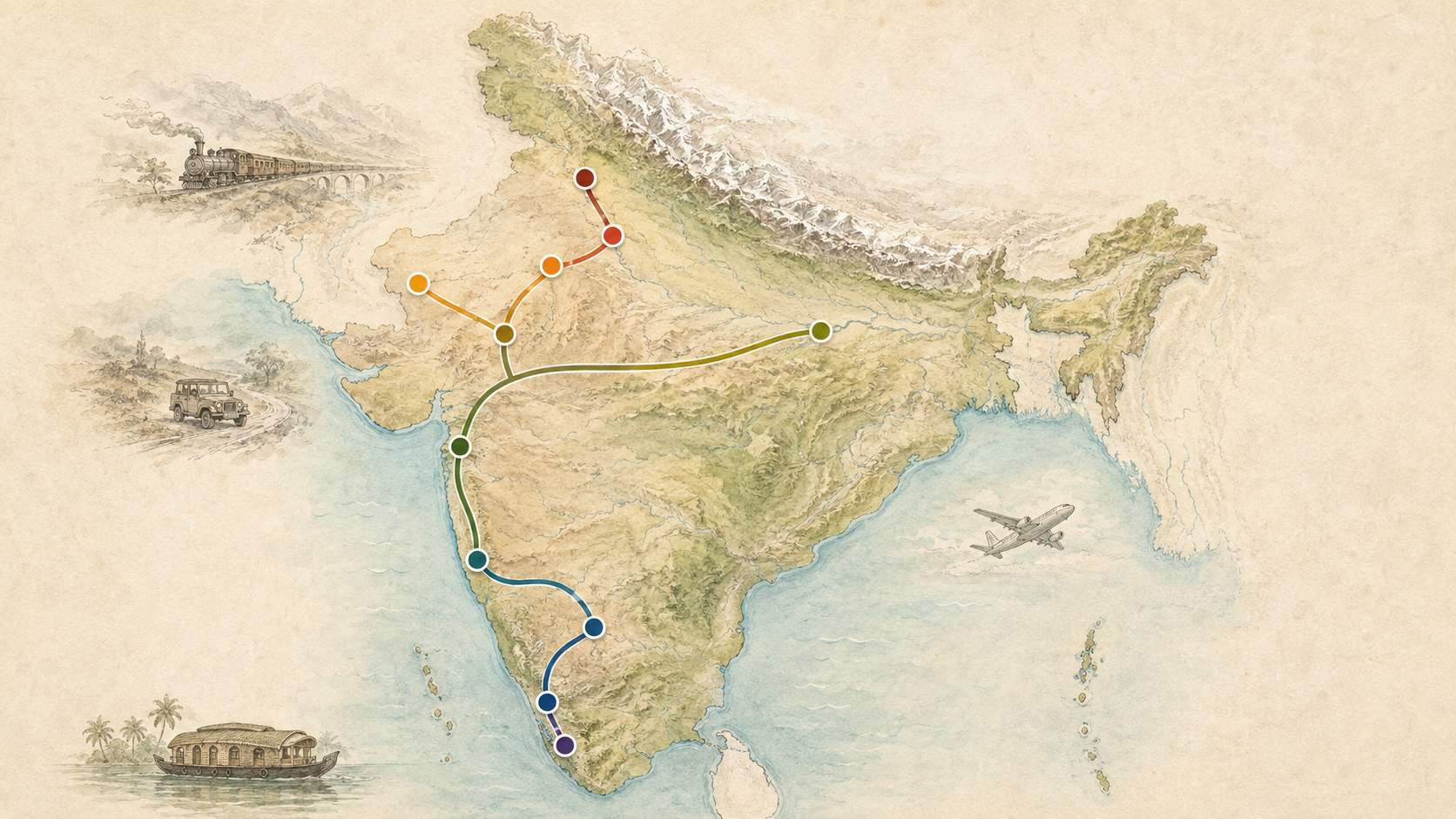

Plan a realistic first trip to India with detailed routes for 7 days, 2 weeks, 3 weeks or one month, including transport, pacing, seasonal advice and practical tips.
India rarely rewards the traveller who tries to conquer it. It rewards the one who gives it room.
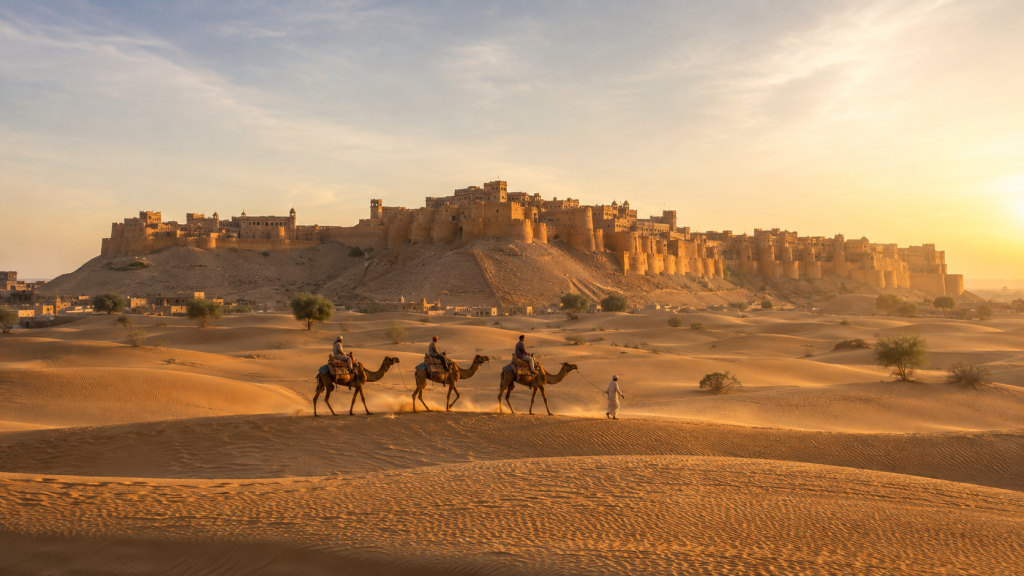
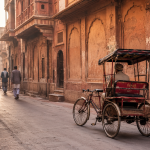
On a map, Delhi, Agra and Jaipur appear close enough to stitch together in a few hurried days. On the ground, every move carries its own texture: the first call of a chai seller on a railway platform, traffic curling around a roadside shrine, the warm dust outside a fort and the sudden calm of a courtyard hidden behind a crowded lane. Travel in India is not empty time between attractions. It is part of the experience.
That is why the best India itinerary is not the one that covers the most states. It is the one that lets you arrive properly.
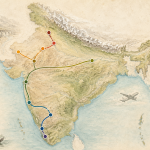
This guide gives you four realistic routes for a first trip to India: 7 days, 2 weeks, 3 weeks and one month. Each itinerary balances famous sights with time to eat, wander, rest and absorb the country beyond a checklist. You can follow a route exactly or use it as a backbone for your own journey.
India itineraries at a glance
| Time in India | Recommended route | Best for | Pace |
|---|---|---|---|
| 7 days | Delhi → Agra → Jaipur | First-time visitors and iconic sights | Full but manageable |
| 2 weeks | Delhi → Agra → Jaipur → Jodhpur → Udaipur | History, food, forts and Rajasthan | Balanced |
| 3 weeks | Delhi → Agra → Jaipur → Jodhpur → Udaipur → Mumbai → Goa | North Indian culture with a coastal finish | Varied and comfortable |
| One month | Delhi → Agra → Jaipur → Jodhpur → Udaipur → Varanasi → Mumbai → Goa → Hampi → Kochi → Alappuzha | A broad first journey across North, West and South India | Ambitious but realistic |
Short answer: If this is your first visit, seven days is enough for one compact region, two weeks gives you a satisfying Rajasthan journey, three weeks allows contrasting landscapes, and one month offers a meaningful cross-country introduction.
How to choose the right India itinerary
Choose by experience first and duration second. If forts, old cities, bazaars and Mughal architecture pull you in, begin in North India and Rajasthan. If you dream of palms, spice-scented food and quiet waterways, build your trip around Kerala. If spiritual India matters most, make space for Varanasi, Rishikesh or Haridwar rather than squeezing all three into an already full route.
For most first-time travellers, the routes below work best from roughly October to March, when much of North and West India is cooler. December and January can bring cold mornings and fog to Delhi, Agra and Varanasi. April and May are intensely hot across much of the northern plains and Rajasthan. The monsoon reaches different regions at different times, so always check the seasonal pattern for every stop, not just for “India” as a whole.
Before choosing dates, read our complete India travel guide for first-time visitors. It will help you match your route to the weather, entry requirements, transport and the kind of journey you actually want.
7-day India itinerary: the Golden Triangle
Route: Delhi → Agra → Jaipur → Delhi or onward departure
Ideal arrival: Delhi
Ideal departure: Jaipur if your flights allow it, otherwise Delhi
Best for: A first taste of India without domestic flights
The Golden Triangle is popular for a reason. Delhi, Agra and Jaipur bring together several layers of Indian history within a relatively compact circuit. The route is also recognised by Incredible India as one of the country’s classic journeys.
Seven days will not show you all of India, but it can give you a vivid, coherent introduction. You will move from the Mughal lanes of Old Delhi to the pale marble of the Taj Mahal and the rose-coloured walls of Jaipur. The key is to resist adding another distant city.
Days 1 and 2: Delhi
Use your first day to land gently. Long-haul travel, unfamiliar heat and the sheer intensity of Delhi can make an ambitious sightseeing list feel punishing. Check in, walk around your immediate neighbourhood and have an early dinner. Let the city approach you gradually.
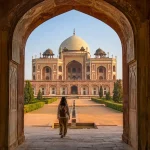
On day two, explore Old Delhi in the morning. Walk around Jama Masjid and Chandni Chowk, pause for chai and watch the narrow lanes wake beneath tangles of wire and faded balconies. Later, choose two or three major sights in New Delhi, such as Humayun’s Tomb, India Gate, Lodhi Garden or Qutub Minar. Delhi is not a city to “finish” in a day, so leave something for your return.
Day 3: Delhi to Agra
Take a morning train to Agra. The fastest services can complete the journey in around two hours, but allow extra time for reaching the station, security and finding your platform. After checking in, visit Agra Fort and look across the Yamuna towards the Taj Mahal from one of the fort’s quiet marble rooms.
Spend sunset at Mehtab Bagh or beside the river if local access and conditions allow. The Taj appears softer from across the water, almost weightless in the evening haze.
Day 4: Taj Mahal and onward to Jaipur
Visit the Taj Mahal near opening time, when the light is gentle and the marble changes from cool grey to cream and pale gold. The monument is normally closed to general visitors on Fridays, so shape your route around that closure and confirm current details before travelling.
Continue to Jaipur after breakfast or lunch. A private car is convenient and lets you stop at Fatehpur Sikri, while train and bus options suit tighter budgets. Expect the overland journey to take much of the afternoon once stops and city traffic are included.
Days 5 and 6: Jaipur
Begin with Amber Fort before the midday heat gathers on the hills. Later, return to the old city for the City Palace, Jantar Mantar and the latticed façade of Hawa Mahal. Jaipur’s real pleasure, however, often comes between its monuments: marigold sellers, metalworkers, fabric shops and the smell of kachori drifting from a busy corner.
Use the second day more slowly. Visit a craft workshop, browse the bazaars without turning the morning into a shopping mission, or take a food walk with a knowledgeable local guide. This is also a useful buffer if your previous train or road journey runs late.
Day 7: Departure
Fly out of Jaipur if you have a suitable connection. Otherwise, return to Delhi by train or car. If your international flight leaves Delhi, the safest choice is to travel back the previous evening and stay near the airport. Do not depend on a same-day intercity journey before a long-haul departure.
Smart alternative: If you prefer nature and water to monuments, spend the full week in Kerala with Kochi, Munnar and Alappuzha. A focused Kerala journey is far better than trying to combine Delhi and the far south in seven days.
2-week India itinerary: Delhi and Rajasthan
Route: Delhi → Agra → Jaipur → Jodhpur → Udaipur
Ideal arrival: Delhi
Ideal departure: Udaipur, connecting through Delhi or Mumbai
Best for: A rich first trip with trains, forts, markets and room to breathe
Two weeks is where an India itinerary begins to feel like a journey rather than a highlight reel. This route extends the Golden Triangle west through Rajasthan, moving from Jaipur’s busy pink lanes to Jodhpur’s blue old town and Udaipur’s reflective lakes.
Days 1 and 2: Delhi
Follow the slower Delhi opening described above. Spend one day between Old Delhi and New Delhi, then use your second evening for a calm meal rather than another monument. Your body may still be finding its rhythm.
Day 3: Delhi to Agra
Travel by morning train, visit Agra Fort and watch the evening light settle around the Taj from across the Yamuna.
Day 4: Taj Mahal and Agra to Jaipur
See the Taj at dawn, then continue towards Jaipur. Stop at Fatehpur Sikri if you are travelling by road and still have the energy. If you would rather arrive before dark, save the stop for another trip.
Days 5 to 7: Jaipur
Three nights let Jaipur become more than Amber Fort and Hawa Mahal. Give one day to the major historic sights, one to the old city and its food, and one to crafts, a cooking experience or a day trip. The extra night also protects the rest of your itinerary from transport delays.
Our North India travel guide offers more context on Delhi, Rajasthan and the practical realities of travelling through this part of the country.
Days 8 to 10: Jodhpur
Take a train or car from Jaipur to Jodhpur, usually a journey of around five to six hours. When Mehrangarh Fort first rises above the city, it seems less built than carved from the cliff itself.
Give the fort a full morning. Its ramparts open onto a wash of blue houses, flat roofs and distant desert light. Later, wander around the Clock Tower and Sardar Market, then escape into the quieter lanes beyond the busiest stalls. On your second full day, visit Jaswant Thada, explore local food or take a gentle village excursion outside the city.
Days 11 to 14: Udaipur
Travel by road from Jodhpur to Udaipur. A private car offers the easiest opportunity to stop at the extraordinary Jain temple at Ranakpur, but buses are available for budget travellers. Treat this as a travel day rather than promising yourself a full afternoon of sightseeing.
Udaipur is where this itinerary exhales. Walk through the City Palace, take a boat ride when conditions permit and sit beside Lake Pichola as evening gathers around the ghats. The city is famous for its palaces, but its quieter pleasures are just as memorable: a rooftop breakfast, temple bells carrying across the water and the pale Aravalli hills beyond the roofs.
Use the final day as a flexible departure day. If your flight leaves early, keep the previous evening free. If you have a late connection, enjoy one last unhurried breakfast rather than adding another excursion.
Smart alternative: If spiritual culture matters more to you than Rajasthan’s desert cities, replace Jodhpur and Udaipur with three nights in Varanasi and three nights split between Rishikesh and Haridwar. Read our guide to Rishikesh and Haridwar along the Ganges before deciding.
3-week India itinerary: North India, Mumbai and Goa
Route: Delhi → Agra → Jaipur → Jodhpur → Udaipur → Mumbai → Goa
Ideal arrival: Delhi
Ideal departure: Goa, or Mumbai after a short connection
Best for: Travellers who want historic cities, modern urban India and a restful coast
Three weeks allows India to change mood around you. The route begins among imperial capitals and Rajasthan’s forts, moves into Mumbai’s restless coastal energy and ends with several days in Goa. That final pause is deliberate. By the third week, a slow breakfast and an afternoon without a monument can feel like the wisest part of the plan.
Days 1 to 3: Delhi
Spend three nights in Delhi. Explore Old Delhi, choose a few of New Delhi’s major sites and leave time for one neighbourhood at walking pace. The extra day also creates a cushion after your international arrival.
Day 4: Agra
Take an early train, visit Agra Fort and stay overnight. See the Taj Mahal at sunrise the following morning before continuing west.
Days 5 to 7: Jaipur
Allow three nights for Amber Fort, the old city, markets and a slower cultural or food experience. Jaipur can feel relentless if reduced to a single sightseeing day. With more time, its details begin to emerge.
Days 8 to 10: Jodhpur
Travel from Jaipur by train or road. Give one full day to Mehrangarh Fort and the old city, then use the next morning for Jaswant Thada, Rao Jodha Desert Rock Park or an excursion beyond town.
Days 11 to 13: Udaipur
Make the overland journey via Ranakpur if your budget and energy allow. Spend two full days around the City Palace, Lake Pichola and the old lanes. Udaipur is also a good place to do laundry, catch up on sleep and reclaim an unscheduled afternoon.
Days 14 to 16: Mumbai
Fly from Udaipur to Mumbai to avoid consuming a full day and night on the train. Mumbai’s first impression is movement: local trains surging into stations, taxis flowing past art deco façades and the Arabian Sea flashing between buildings.
Walk around Colaba and the Gateway of India, explore the heritage precincts of South Mumbai and eat beyond the hotel restaurant. Try a local café, a trusted street-food tour or a regional thali. On the second full day, choose between Elephanta Island, a neighbourhood walk, museums or simply following the waterfront as evening cools the city.
Days 17 to 21: Goa
Travel to Goa by flight for speed or train for scenery and a stronger sense of distance. Choose your base carefully. North Goa generally suits travellers seeking busier beaches, markets and nightlife. South Goa tends to feel quieter and more spacious. Panjim and the Latin Quarter of Fontainhas work well if architecture, local life and food matter more than staying directly on the sand.
Do not fill every day. Visit Old Goa, spend time in Panjim, eat a proper Goan meal and leave at least one day for the beach or a village road with no agenda. India can be overwhelming in the most exhilarating way. Goa gives all those impressions somewhere to settle.
One-month India itinerary: a first journey across the country
Route: Delhi → Agra → Jaipur → Jodhpur → Udaipur → Varanasi → Mumbai → Goa → Hampi → Kochi → Alappuzha
Ideal arrival: Delhi
Ideal departure: Kochi
Best for: Travellers who want meaningful regional contrast without pretending to see everything
One month in India sounds generous until you begin placing pins on the map. The country is vast, and every region could occupy the full four weeks. This route is therefore selective. It connects North India’s great historic cities with Varanasi, Mumbai, the Konkan coast, Hampi’s ruins and Kerala’s backwaters.
It uses a few flights to protect your time, but it keeps enough train and road travel for you to feel the landscape changing. It is ambitious, so the suggested nights are minimums rather than targets to beat.
Days 1 to 3: Delhi
Arrive, recover and explore both Old and New Delhi. Three nights give you a proper first meeting with the city and a margin for jet lag.
Day 4: Agra
Take a morning train, visit Agra Fort and sleep in Agra. See the Taj around sunrise on day five before travelling onward.
Days 5 to 7: Jaipur
Spend three nights among Amber Fort, the City Palace, Jantar Mantar, bazaars and neighbourhood food. Keep one half-day deliberately loose.
Days 8 and 9: Jodhpur
Travel from Jaipur, then devote your full day to Mehrangarh Fort and the blue old city. Two nights is enough for the essentials, though a third would make the stay gentler.
Days 10 to 12: Udaipur
Go by road, stopping at Ranakpur if practical. Slow down beside Lake Pichola, explore the palace complex and take an easy afternoon. You will appreciate the pause before the longest transfer in the route.
Days 13 to 15: Varanasi
Fly from Udaipur to Varanasi, normally with a connection, and accept day 13 as a travel day. Airline schedules change, so search the whole journey rather than building a fragile self-connection from separate tickets.
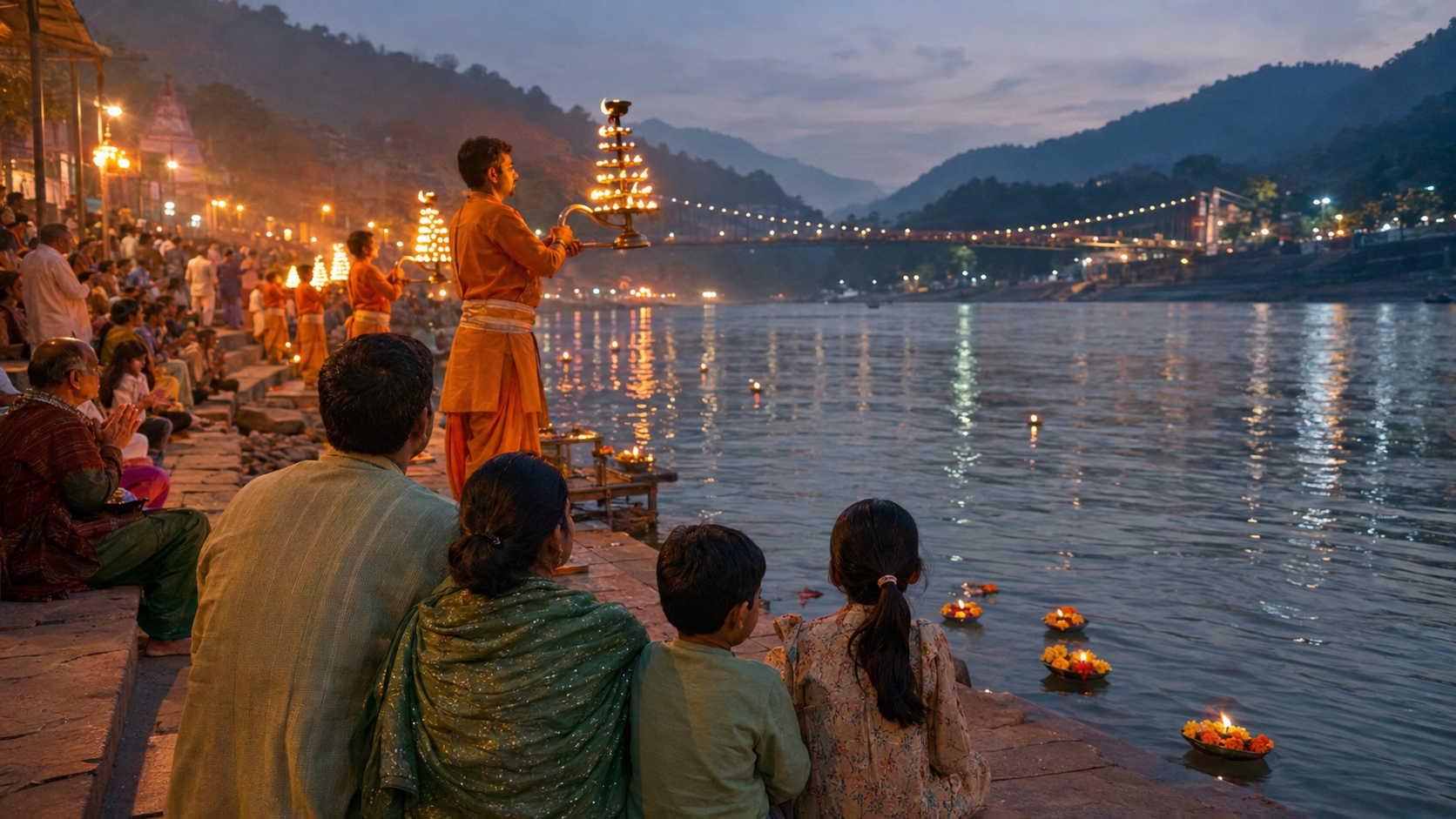
Varanasi is not simply another stop. Before sunrise, boats move quietly along the Ganges while lamps flicker on the ghats and the city begins its daily rituals. Later, the lanes tighten into a maze of shrines, workshops, cows, scooters and tiny places serving kachori or lassi.
Approach the city with humility. The riverfront is a living sacred landscape, and some ghats are associated with cremation. Observe local guidance, dress respectfully and never photograph intimate rituals or grieving families without clear permission.
Days 16 to 18: Mumbai
Fly to Mumbai. Spend two full days exploring the city’s heritage architecture, markets, cafés, waterfront and neighbourhoods. Mumbai is not a rest stop, but its confidence and coastal rhythm provide a striking counterpoint to Varanasi.
Days 19 to 22: Goa
Take the train if you want a rewarding journey down the Konkan coast, or fly if you need to conserve energy. Use four nights to combine Old Goa or Panjim with the coast. Choose one part of Goa rather than changing beaches every night.
Days 23 to 25: Hampi
Travel from Goa to Hampi by bus, car or a rail connection to Hosapete. Services and journey times vary, so treat day 23 as a transfer day.
Hampi feels otherworldly at first light. Temple towers and fragments of an imperial city rise between rounded boulders, banana fields and the broad Tungabhadra River. Spend one day around the Sacred Centre and another exploring the Royal Centre and quieter outlying ruins. Avoid racing between monuments in the hottest part of the day.
Days 26 and 27: Kochi
Reaching Kochi from Hampi will consume much of day 26 and may require a road or rail connection through Hubballi or Bengaluru before a flight. Check current schedules before locking in accommodation, and consider adding an extra night if you dislike complex travel days.
In Fort Kochi, walk between old trading houses, churches, galleries and the waterfront. The city carries layers of Arab, Chinese, Portuguese, Dutch, British, Jewish and Malayali history, but it is not a museum. Fishing boats still cross the harbour, ferries carry commuters and cafés sit beside spice warehouses.
Days 28 and 29: Alappuzha and the Kerala backwaters
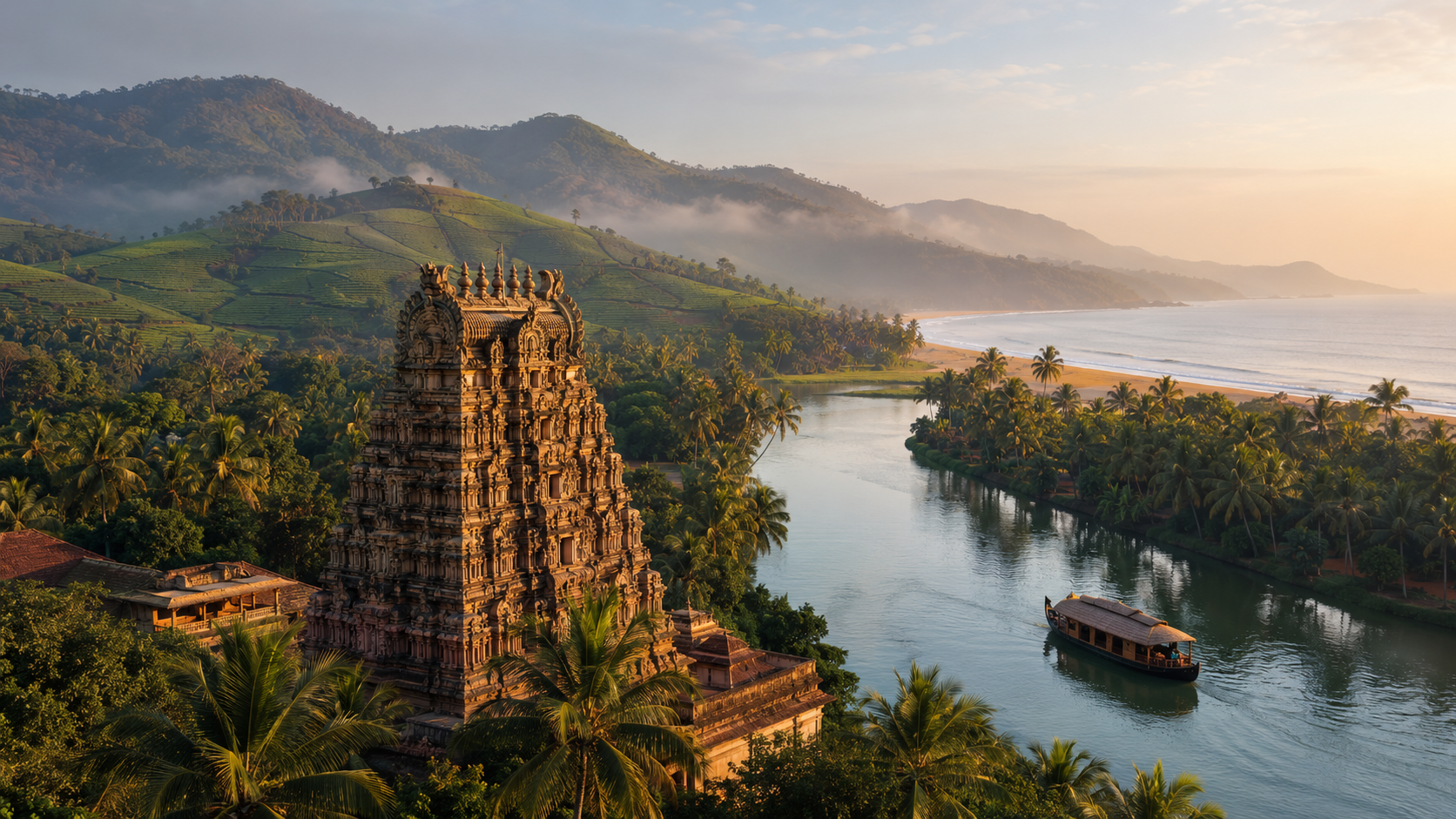
Travel south to Alappuzha, usually around one and a half to two hours by road depending on traffic and your starting point. The backwaters are a network of canals, lakes and lagoons woven through coconut groves and villages. The national tourism portal describes them as central to Kerala’s landscape and culture.
An overnight houseboat is the classic experience, but it is not the only one. A small canoe, public ferry or waterside homestay can bring you closer to daily life and may have a lighter environmental footprint. Look for responsible operators, proper waste management and fair employment practices.
As your final evening settles over the water, the month may feel both enormous and unfinished. That is the honest gift of India. You leave with memories, but also with a longer list of places that call you back.
Day 30: Departure from Kochi
Return to Kochi for your flight. If departure is early, stay near Kochi or the airport on day 29 rather than trusting a same-morning road transfer from Alappuzha.
How to book transport for these India routes
Trains
Use the official IRCTC website for railway bookings. The standard advance reservation period is currently 60 days for most trains, excluding the day of travel, though some services have different windows. International travellers may also be eligible for the Foreign Tourist Quota, for which IRCTC publishes separate booking guidance.
For overnight travel, AC 2-tier offers a useful balance of comfort and social atmosphere, while AC 3-tier is more economical and busier. AC Chair Car and Executive Chair Car work well on fast daytime routes such as Delhi to Agra. Carry your passport and booking details, arrive early and check the train number as well as the destination because large stations serve many departures.
Domestic flights
Flights make sense when the alternative would consume a full day and night, particularly Udaipur to Varanasi, Varanasi to Mumbai and the Hampi region to Kerala. Compare the total door-to-door journey, not just flight time. Airport transfers, check-in and baggage rules can erase the apparent advantage on shorter routes.
Leave generous space around separate flight bookings. A cheap connection stops being cheap if a delay causes you to buy a new ticket.
Cars, buses and local transport
A car with a driver is particularly useful between Agra and Jaipur or Jodhpur and Udaipur, where a worthwhile stop can be built into the route. Agree in writing what the quote includes, such as fuel, tolls, parking, driver expenses and overnight charges.
Government and reputable private buses can be excellent value. For local rides, use prepaid taxi counters or well-established app-based services where available, and confirm your destination before setting off.
Practical planning tips for your India itinerary
- Use open-jaw flights: Arrive in Delhi and leave from Jaipur, Goa, Mumbai or Kochi where possible. This saves unnecessary backtracking.
- Count nights, not labels: “Two days in Jaipur” often becomes one late arrival and one rushed morning. Three nights usually gives you two usable days.
- Protect your departure: Sleep in your international departure city the night before the flight if a delay would be costly.
- Keep one buffer: In a two-week trip, preserve at least half a day. In a month, keep one full flexible day or make one booking refundable.
- Pack lighter than you think: Lifting a heavy suitcase onto trains and through old-city lanes quickly becomes tiring. Laundry is widely available.
- Do not change hotels every night: Repeated check-ins steal more energy than a map suggests.
- Plan around festivals: They can make a journey unforgettable, but transport and rooms may sell out and city movement can change.
- Eat regionally: North Indian, Rajasthani, Goan and Kerala food are not interchangeable. Use our traveller’s guide to Indian food to know what to look for along the route.
India visa and entry planning
Entry rules depend on your nationality and can change. Check the Government of India’s official e-Visa portal before paying any third-party service. Apply using the passport with which you intend to travel, confirm that your arrival airport or seaport is permitted for your visa type, and keep both digital and printed copies of your approval.
Do not treat a blog, social-media post or old visa experience as the final authority. Verify passport validity, visa conditions, permitted activities and entry points directly with the official portal before departure.
What to remove if your India itinerary feels too busy
Remove the place that requires the most awkward transfer, not the one with the fewest famous sights. A route becomes tiring through repeated packing, station waits and airport transfers, not through the number of kilometres alone.
For seven days, keep only the Golden Triangle or one region such as Kerala. For two weeks, do not add both Varanasi and Goa to the Rajasthan route. For three weeks, choose either a northern and western arc or a northern and southern contrast. For one month, accept that Northeast India, the Himalayas, Tamil Nadu, central India and much of the east deserve future journeys of their own.
If you need to make room, cut a destination and deepen another. One extra morning in Udaipur or one unplanned evening in Kochi may become more memorable than another hurried pin on the map.
Frequently asked questions about planning an India itinerary
Is 7 days enough for India?
Seven days is enough for a focused first trip, not for the whole country. The Delhi, Agra and Jaipur Golden Triangle works well because the cities form a logical circuit with manageable overland connections. Kerala is an equally good seven-day alternative.
What is the best India itinerary for a first-time visitor?
For one week, choose Delhi, Agra and Jaipur. With two weeks, continue through Jodhpur and Udaipur. With three weeks, add Mumbai and Goa. A month lets you include Varanasi, Hampi and Kerala, provided you accept a few longer travel days.
Is two weeks enough to travel around India?
Two weeks is enough for a rewarding regional journey. It is not enough to cover North and South India deeply. A Delhi-to-Udaipur route through Agra, Jaipur and Jodhpur provides variety without excessive flying.
How much of India can I see in one month?
In one month, you can experience parts of three broad regions at a comfortable but active pace. Aim for roughly eight to eleven bases, use flights for the longest jumps and preserve at least one flexible day. You will still see only a fraction of India, which is exactly why the route should be selective.
Should I travel around India by train or plane?
Use trains for routes such as Delhi to Agra, Jaipur to Jodhpur and Mumbai to Goa if time allows. Fly when rail travel would consume a full day or require an inconvenient connection. The most satisfying itinerary usually combines trains, flights and a few road journeys.
How far ahead should I book Indian trains?
For most trains, the regular advance reservation period is currently 60 days, excluding the journey date. Popular routes and comfortable classes can sell quickly, especially around festivals and holidays. Confirm the current booking window on IRCTC because railway rules can change.
What is the biggest mistake when planning a first trip to India?
The biggest mistake is confusing movement with experience. A route with too many one-night stays leaves you remembering stations and check-in desks. Fewer bases, early transport and open space make India feel richer, not smaller.
Final thoughts
The right India itinerary should leave a few doors unopened. Seven days can give you the first shimmer of the Taj at sunrise. Two weeks can carry you through Rajasthan’s forts and blue lanes. Three weeks can take you from Delhi’s crowded bazaars to the Arabian Sea. A month can reveal how dramatically language, food, landscape and pace change as you cross the country.
But no version should try to contain India.
Plan the route carefully, book the journeys that matter and then leave a little space for the unplanned cup of chai, the conversation on a train and the lane you follow simply because it smells of cardamom and hot bread. Those are often the moments that turn an itinerary into a journey.