Now Reading: East India Travel Guide: Kolkata, Odisha, Bihar and the Bay of Bengal
-
01
East India Travel Guide: Kolkata, Odisha, Bihar and the Bay of Bengal
East India Travel Guide: Kolkata, Odisha, Bihar and the Bay of Bengal

Plan a journey through Kolkata, the Sundarbans, Odisha, Bihar and Jharkhand with realistic itineraries, seasonal advice, regional food, transport tips and responsible travel guidance.
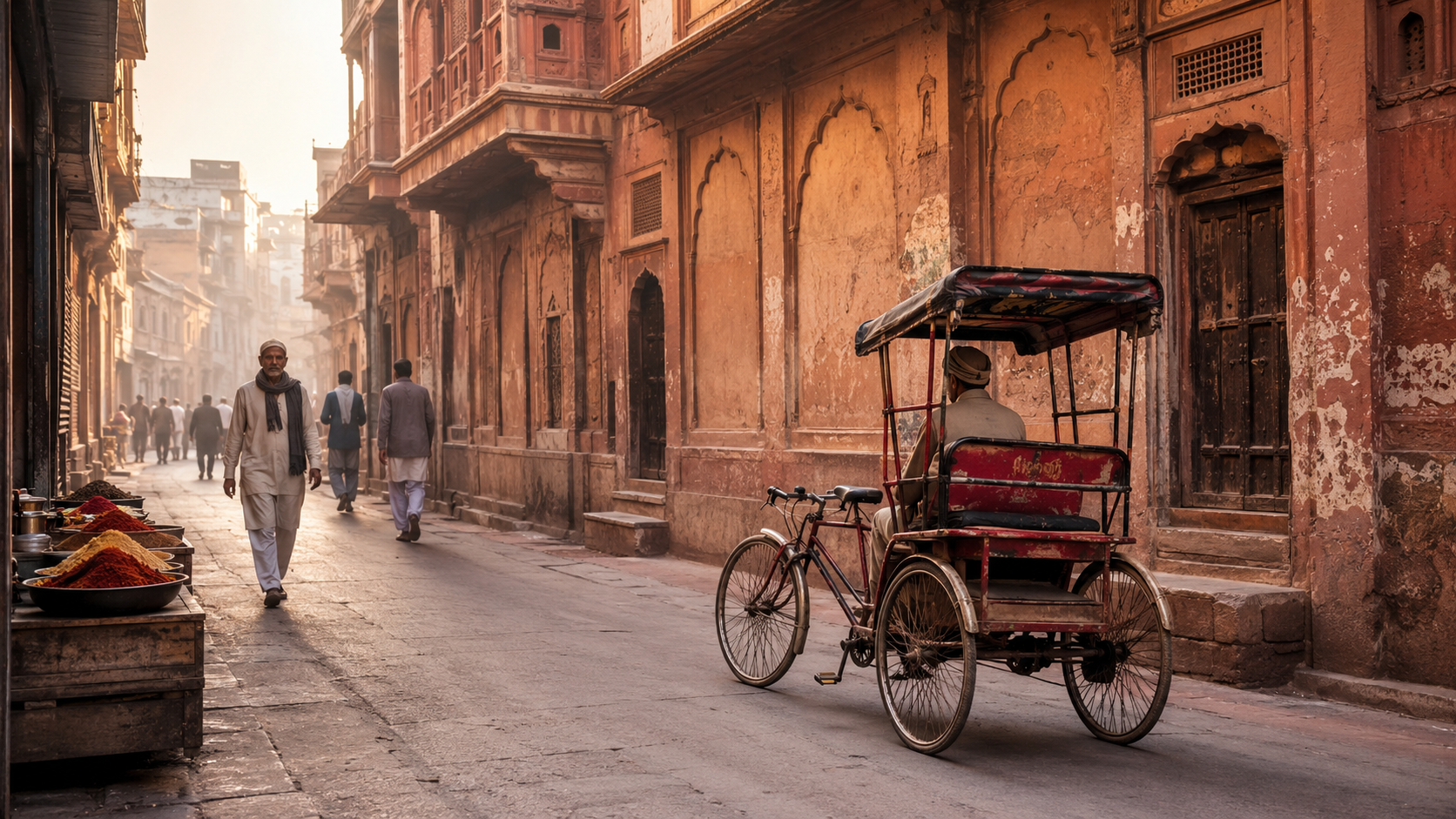
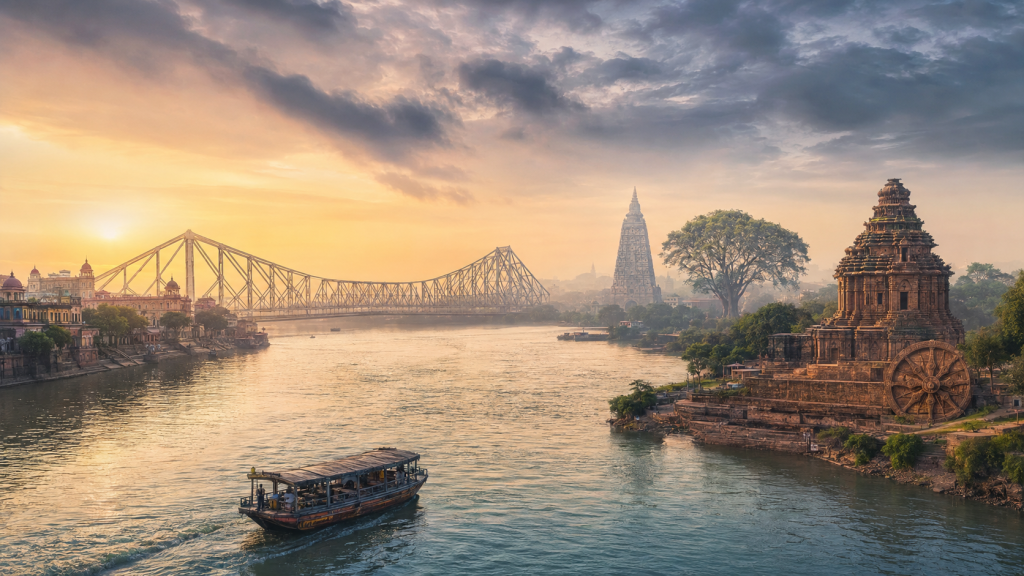
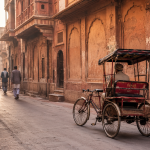
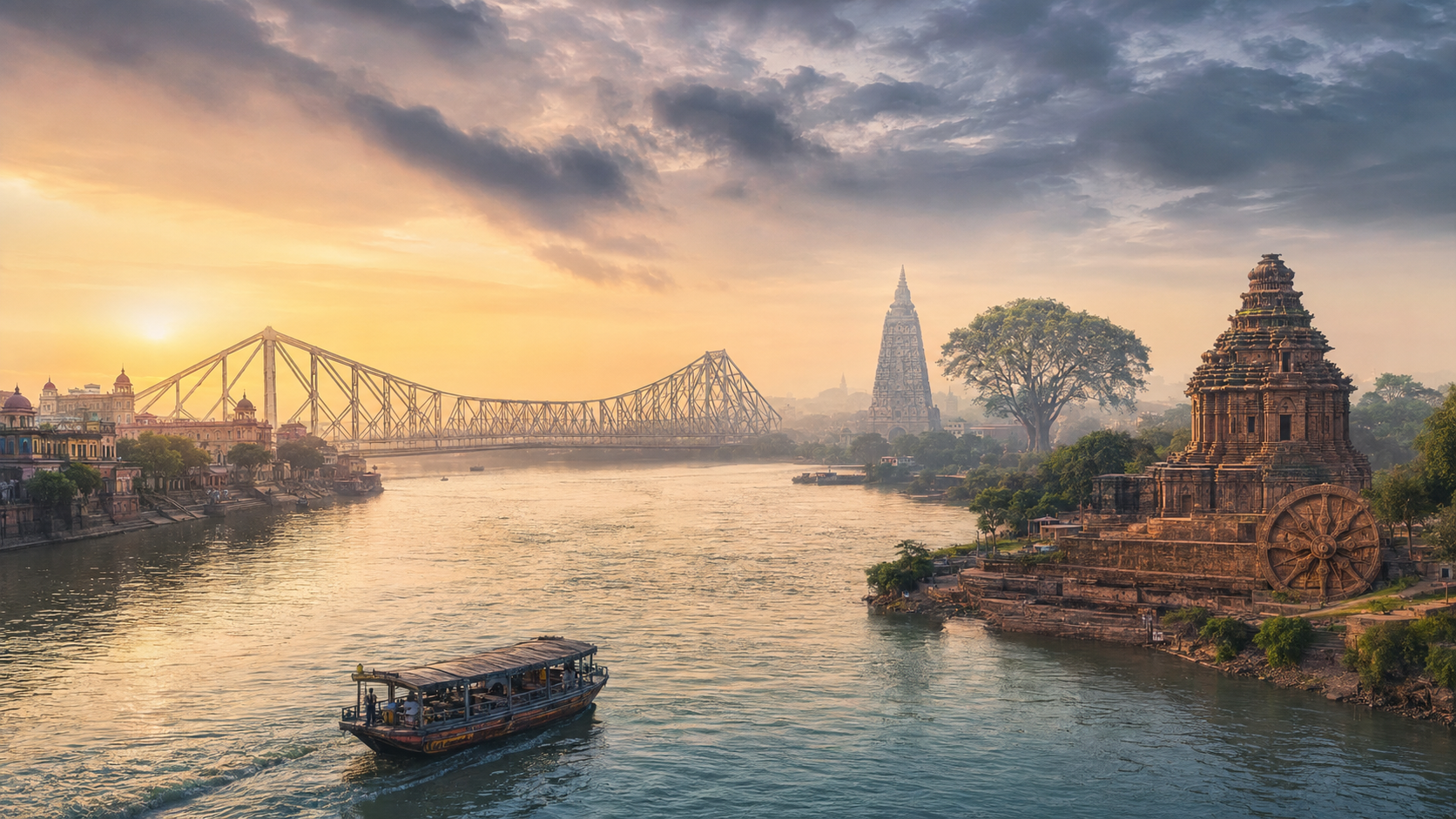
Morning reaches Kolkata through sound and appetite. Tea splashes into clay cups, newspaper bundles land against shopfronts and the first ferries move across the Hooghly beneath the steel outline of Howrah Bridge. In a North Kolkata lane, shutters rise beneath fading balconies. By breakfast, someone is already tearing open a hot kochuri while a yellow taxi noses into traffic.
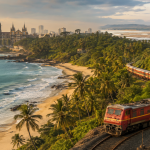
Travel south and the mood changes. Odisha opens towards the Bay of Bengal, where temple towers rise above coconut palms and the stone wheels of Konark hold eight centuries of sunlight. Farther inland, Bihar becomes quieter and older. Pilgrims sit beneath the Bodhi Tree, monks walk between monasteries built by communities from across Asia and the ruins of Nalanda spread across the red earth.
East India rarely presents itself as one neat circuit. It is a meeting of river cities, mangrove islands, Buddhist pilgrimage routes, sacred temple towns, forested plateaus and a coast shaped by both beauty and storms. The distances are real, but so is the reward for travelling slowly.
This East India travel guide will help you plan a realistic journey through Kolkata and West Bengal, Odisha, Bihar and Jharkhand. It covers the best places to visit, when to go, how long to spend, what to eat, how to travel between regions and how to approach the Bay of Bengal with care.
East India at a glance
For a first journey, Kolkata and Odisha make the easiest pairing. Add the Sundarbans if mangroves and river life interest you, or continue inland through Bodh Gaya, Rajgir and Nalanda for one of Asia’s most significant Buddhist routes. Jharkhand works best as a separate forest and plateau extension rather than a hurried day trip.
| Area | Best for | Suggested time | Good first base |
|---|---|---|---|
| Kolkata | Neighbourhoods, architecture, art, books and exceptional food | 3 to 4 days | Central Kolkata, Park Street or a well-connected South Kolkata neighbourhood |
| Sundarbans | Mangrove waterways, birdlife, village landscapes and slow boat journeys | 2 to 3 days | A reputable lodge near Gosaba, Dayapur or another established tourism island |
| West Bengal beyond Kolkata | Terracotta temples, Tagore’s legacy, tea country and quieter coastal towns | 2 to 6 days | Bishnupur, Santiniketan or Darjeeling, depending on the route |
| Odisha | Temple architecture, crafts, beaches, wetlands and wildlife | 6 to 10 days | Bhubaneswar, Puri and one nature destination |
| Bihar | Buddhist history, pilgrimage, archaeology and ancient learning | 4 to 7 days | Bodh Gaya, Rajgir and Patna |
| Jharkhand | Waterfalls, forests, plateau scenery and less-visited cultural routes | 3 to 6 days | Ranchi, Netarhat or Betla |
What does East India include?
Regional definitions vary, but this guide treats West Bengal, Odisha, Bihar and Jharkhand as East India. They share historical and geographical connections, yet they are not one culture. Bengali, Odia, Maithili, Bhojpuri, Magahi, Santhali and many other languages belong here. Food, faith, music, architecture and everyday rhythm can change sharply across a state border.
Sikkim, Assam, Meghalaya, Nagaland, Manipur, Mizoram, Tripura and Arunachal Pradesh belong to a separate Northeast India journey. Darjeeling and Kalimpong are in West Bengal and are included here as an optional Himalayan extension, but they should not be used as shorthand for the cultures of the Northeast.
If this is your first visit to the country, begin with our complete India travel guide. It covers visas, money, connectivity, health, transport and the practical decisions that sit behind every regional route.
Best time to visit East India
November to February offers the most dependable balance across the region. Kolkata is cooler, walking around Bhubaneswar and Konark is comfortable, the winter bird season brings life to Chilika and the Sundarbans, and Bodh Gaya fills with an international community of pilgrims. Nights in Bihar and Jharkhand can feel cold, particularly in December and January, so carry a warm layer.
October and March are useful shoulder months. October can coincide with Durga Puja in West Bengal, when Kolkata becomes an immense public art festival of illuminated neighbourhoods and temporary temple structures called pandals. It is extraordinary, but accommodation, roads and public transport become much busier. March is warmer, yet still manageable if you begin early and rest through the hottest part of the afternoon.
April to June is hot and increasingly humid. Temperatures across Bihar, Jharkhand and inland Odisha can become exhausting, while Kolkata often feels close and heavy before the monsoon. If you travel then, choose air-conditioned accommodation, carry oral rehydration salts and avoid building long walking days around noon.
The main monsoon usually affects the region from June to September. Rain gives Odisha and Jharkhand a deep green beauty, but it can disrupt trains, roads, forest access and boat trips. Parts of the Bay of Bengal coast are exposed to tropical cyclones, especially around the pre-monsoon and post-monsoon periods. Check current forecasts from the India Meteorological Department, follow local evacuation advice and never continue to an island or beach destination when operators or authorities recommend against it.
The best places to visit in East India
Kolkata: give the city time to reveal itself
Kolkata rewards curiosity more than checklist sightseeing. Its grand buildings matter, but the city becomes memorable in the spaces between them: a para, or neighbourhood, waking around a tea stall; books spilling onto College Street; football arguments crossing a tramline; an old house preparing for a family puja; rain polishing the pavement outside a sweet shop.
Begin in North Kolkata, where Kumartuli’s sculptors shape clay figures for festivals and lanes open unexpectedly into courtyards, temples and old mansions. College Street is both a book market and an intellectual landscape. Browse slowly, then pause at the Indian Coffee House or a nearby cabin restaurant rather than treating it as a photograph stop.
Central Kolkata holds the Victoria Memorial, Indian Museum, Maidan, St Paul’s Cathedral and the broad avenues associated with the colonial city. Visit with context. These buildings tell stories about power, empire and resistance as well as architecture. The South Park Street Cemetery and the riverfront around Prinsep Ghat add quieter chapters, while a public ferry across the Hooghly gives you one of the simplest and most satisfying views of the city.
South Kolkata changes the pace. Kalighat is intensely devotional and often crowded. Neighbourhoods such as Ballygunge, Gariahat and Hindustan Park offer markets, cafes, small galleries and a more everyday view of the city. The elegant halls and gardens of the Jorasanko Thakur Bari, associated with Rabindranath Tagore, are elsewhere in the city but belong in any journey interested in Bengali cultural history.
Kolkata is also a city to eat through. Start with kochuri and alur tarkari, try a kathi roll, taste puchka from a busy vendor and sit down for a proper Bengali meal rather than stopping at snacks. Fish in mustard, kosha mangsho, daab chingri, seasonal vegetables and the careful progression of a Bengali thali reveal far more than the word “curry” ever could. Finish with mishti doi, sandesh or a warm syrupy sweet from a trusted shop.
How long in Kolkata? Three full days is a sensible minimum. Add a fourth if you enjoy art, food, architecture or neighbourhood walks. Group each day geographically because crossing the city repeatedly can consume hours.
Local tip: use the Metro for longer north-south journeys, app-based cabs or registered taxis when useful, ferries for selected river crossings and your feet within individual neighbourhoods. Kolkata has several major railway stations, especially Howrah and Sealdah, so check the exact departure point before leaving your hotel.
The Sundarbans: come for the mangroves, not a guaranteed tiger
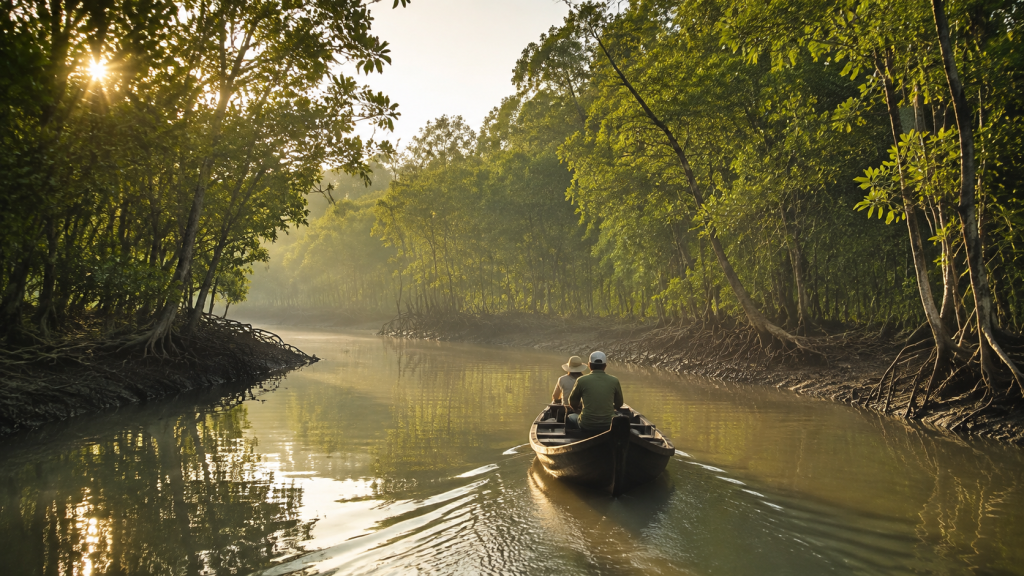
The city loosens slowly on the way to the Sundarbans. Buildings give way to ponds, rice fields, embankments and widening channels. Then the road ends and water takes over. Boats pass islands protected by mud banks, mangrove roots hold their ground against the tide and kingfishers flash briefly between long stretches of green.
The Indian Sundarbans form part of the great delta shared with Bangladesh. The national park is a UNESCO World Heritage Site, but a visit is about more than the protected core. People live throughout this vulnerable landscape, negotiating tides, salinity, storms, wildlife and limited access to services.
Royal Bengal tigers live here, yet sightings are uncommon. Any operator promising one is selling fantasy. A better journey pays attention to the whole ecosystem: mudskippers, crocodiles, spotted deer, raptors, herons, changing tides and the remarkable ways mangroves survive where river and sea meet.
Choose a two-night trip if time allows. A day tour from Kolkata involves a long road transfer and can reduce the experience to hours on a crowded boat. A small, locally connected lodge gives you quieter mornings, village walks where appropriate and more time on the water. Confirm what is included, the boat size, sleeping arrangements, food, permits, guide credentials and whether life jackets are available for every passenger.
Entry to the tiger reserve is controlled and boats require permits. Foreign nationals may need additional documentation, so send passport and visa details only to a reputable operator and allow extra time. Current information is available through the Sundarban Tiger Reserve. Seasonal closures and weather restrictions can change, which is another reason to confirm shortly before travelling.
Do not step onto mudbanks or leave the vessel in restricted areas. Keep noise low, never feed wildlife and avoid tours that stage intrusive village encounters. The Sundarbans are not an empty wilderness created for visitors. They are a living, climate-exposed homeland.
Bishnupur and Santiniketan: Bengal beyond the metropolis
Bishnupur’s terracotta temples are among West Bengal’s loveliest architectural surprises. Their warm brick walls carry finely worked scenes of deities, courtly life, animals and battle. The town is also known for Baluchari weaving and a classical music tradition. One overnight stay gives you the cooler hours of morning and late afternoon, when the relief work is easiest to appreciate.
Santiniketan grew around the educational and cultural vision of Rabindranath Tagore. The landscape is quieter, shaded by trees and connected to art, literature, music and the history of Visva-Bharati. Access to individual buildings can vary with institutional schedules, so confirm opening days before making a special journey. Nearby craft villages and markets can add a grounded local dimension when visits are arranged respectfully.
Both destinations are reachable from Kolkata by train and short road transfer. Choose one for a two-day addition rather than squeezing both into consecutive rushed day trips.
Darjeeling and Kalimpong: an optional Himalayan turn
Darjeeling belongs to West Bengal, but it feels like a different journey from the delta and coast. Tea gardens fold across steep hills, Kanchenjunga can appear above the rooftops on a clear morning and Tibetan, Nepali, Bengali and colonial histories meet in a compact mountain town.
Allow at least four nights for Darjeeling and Kalimpong, plus travel. The usual gateways are New Jalpaiguri railway station and Bagdogra airport, followed by a long uphill road transfer. Mountain traffic, fog, rain and landslides can delay the journey, particularly during the monsoon.
Visit a tea estate that explains cultivation and labour rather than offering only a decorative tasting. Walk when you can, eat momos, thukpa and local Nepali dishes, and treat views of the mountains as a gift rather than a scheduled attraction. Clouds owe no traveller a sunrise.
Odisha: temples, crafts and a coast with depth
Odisha is the most naturally connected route after Kolkata. Fast and overnight trains link the two regions, while Bhubaneswar provides an airport, good accommodation and a practical base. The classic Bhubaneswar, Puri and Konark triangle needs four days. Six or seven days lets you add Chilika and Raghurajpur without racing. With ten days, choose either Bhitarkanika, Similipal or southern Odisha.
Bhubaneswar: read the city through stone
Old Bhubaneswar contains an extraordinary concentration of temples. The towers rise above lanes, tanks, flower sellers and homes, making sacred architecture part of a lived neighbourhood rather than a sealed archaeological zone. Mukteshwar Temple is small and exquisitely carved. Rajarani Temple sits in open grounds, while the larger Lingaraj complex remains an active centre of worship with access rules that visitors must respect.
Beyond the temple quarter, visit the Udayagiri and Khandagiri caves, associated with Jain history, and Dhauli, where inscriptions and later monuments recall Emperor Ashoka’s transformation after the Kalinga War. The Odisha State Tribal Museum can provide a useful introduction to the diversity of the state’s indigenous communities, provided its displays are approached as a beginning rather than a substitute for living voices.
Give Bhubaneswar two days. It is tempting to use the city only as an airport, but the time here makes Konark, Puri and Odisha’s wider cultural landscape more meaningful.
Puri: pilgrimage beside the sea
Puri wakes to two powerful sounds: temple bells and the Bay of Bengal. The Jagannath Temple shapes the city’s calendar, food traditions and daily movement. During Rath Yatra, usually held in June or July, the deities travel in vast chariots and the streets fill with pilgrims. The scale is unforgettable, but so are the heat, crowds and pressure on transport. Reserve far ahead and do not expect an ordinary sightseeing day.
Temple authorities restrict entry to Hindus. International visitors and non-Hindus should expect not to enter the main complex, even when they feel a genuine connection to Hindu traditions. Do not argue with staff or accept offers to bypass the rule. You can still experience the wider sacred geography of Puri, observe the temple exterior from permitted public areas, visit craft communities and learn about Jagannath traditions through a knowledgeable guide.
Puri Beach is broad, lively and deeply woven into domestic tourism. Currents can be strong. Swim only where conditions are clearly safe and lifeguards or local authorities permit it. Quieter stretches lie along the coast, but an empty beach is not automatically a safe swimming beach.
Konark and Raghurajpur: stone, dance and painted stories
Konark’s 13th-century Sun Temple was conceived as Surya’s immense stone chariot. Its wheels, horses and carved surfaces reward close looking, especially in softer morning or late-afternoon light. The monument is a UNESCO World Heritage Site and stands around 35 kilometres from Puri, making it an easy day trip by car.
Do not rush from the entrance to the largest surviving structure and back. Walk around the complex, notice the changing scale of the carvings and allow the guide or interpretation to explain how architecture, astronomy, devotion and royal power meet here. Some carvings are explicitly sensual. They belong to a much wider visual programme and should be approached with maturity rather than giggles or embarrassed silence.
Pair Konark with Raghurajpur, a heritage crafts village known especially for pattachitra painting. Visit with enough time to speak with artists, understand the work and buy directly if something genuinely moves you. Ask before photographing people or the interiors of homes. A purchase made with interest and fair payment is more meaningful than a staged walk through the village.
Chilika Lake: choose the right shore
Chilika is a vast brackish lagoon and a wetland of international importance. Because it stretches across a large area, the experience depends on where you approach it.
- Satapada, reached most easily from Puri, is known for boat trips and the possibility of seeing Irrawaddy dolphins. Sightings are never guaranteed.
- Mangalajodi, on the northern side, is the strongest choice for slow, low-impact birdwatching, especially during the winter migration season.
- Barkul and Rambha, farther south, offer wider lagoon views, islands and a quieter overnight pause.
Choose a licensed boat, insist on properly fitting life jackets and refuse any attempt to chase or surround dolphins. The pleasure of Chilika is not a close-up photograph at any cost. It is the width of the water, fishermen reading the shallows and thousands of wings lifting in the winter light.
Bhitarkanika, Similipal and southern Odisha
Bhitarkanika offers mangrove creeks, saltwater crocodiles, birdlife and a very different water landscape from Chilika. Reaching it takes time, and an overnight stay is far more rewarding than a long return day from Bhubaneswar. Boat access, nesting seasons and closures vary, so use the official Odisha Tourism portal and forest authorities for current information.
Similipal combines forest, waterfalls and wildlife habitat in northern Odisha. Entry is seasonal and weather dependent. Do not build a tight onward connection immediately after a forest visit because gate rules, road conditions and permits can change.
Travellers with more time can continue towards Gopalpur, the hills and waterfalls around Koraput, or the state’s southern highlands. This is a slower journey with longer roads and thinner tourism infrastructure. Indigenous communities are not attractions. Avoid tours that turn weekly markets, ceremonies or homes into spectacles, and choose locally accountable guides who explain where visits are welcome.
Bihar: travel into the Buddhist heartland
Bihar carries some of the deepest historical layers in South Asia, yet many travellers see only Bodh Gaya. Stay longer and a larger landscape emerges: the monasteries and caves around Rajgir, the university ruins of Nalanda, the ancient republic of Vaishali, Sikh heritage in Patna and the Ganges moving steadily through it all.
Bodh Gaya: sit before you move on
The Mahabodhi Temple marks the place associated with the Buddha’s enlightenment and is one of Buddhism’s most sacred pilgrimage sites. The present temple contains fabric from different periods, while the living complex gathers pilgrims from across India, Sri Lanka, Thailand, Bhutan, Tibet, Japan, Myanmar and far beyond.
Visit early, then return near dusk when lamps begin to glow and chanting moves gently across the grounds. Security procedures and rules about phones, bags and photography can change, so take only what you need and follow instructions without complaint. Sit quietly beneath or near the Bodhi Tree if space permits. The meaning of Bodh Gaya is not improved by moving faster.
The UNESCO-listed Mahabodhi Temple Complex is surrounded by monasteries representing different Buddhist traditions. Visit a few with respect, remove shoes where requested and remember that these are places of practice, not an architectural theme park. Two nights is a good minimum; three gives room for meditation, conversation or a day trip to the ancient Barabar Caves.
Rajgir and Nalanda: hills, ruins and the memory of learning
Rajgir sits among low hills and is sacred within Buddhist, Jain and Hindu traditions. The landscape includes Vulture Peak, hot springs, monasteries and the white Vishwa Shanti Stupa above the valley. Ropeway operations and access arrangements can change, so check locally before planning the day around them.
Nearby Nalanda was a great monastic and educational centre connected to centuries of scholarship across Asia. Its excavated red-brick monasteries, temples and courtyards do not overwhelm through height. Their power comes from scale, repetition and the realisation that generations of teachers and students once moved through these spaces. The archaeological site is protected by UNESCO World Heritage status.
Stay one or two nights in Rajgir and visit Nalanda early. Pawapuri can be added for its Jain significance, but avoid turning the day into a race among sacred sites.
Patna, Vaishali and the wider Bihar route
Patna is Bihar’s transport hub and deserves at least a considered day. The Bihar Museum provides a strong introduction to the region’s history and art. Takht Sri Harmandir Sahib in Patna City is one of Sikhism’s most important gurdwaras, associated with the birth of Guru Gobind Singh. Cover your head, remove your shoes and follow the same respectful principles that apply at any active place of worship.
Vaishali can be visited by road from Patna and is connected with early Buddhist and Jain history. Farther east, the ruins of Vikramashila near Bhagalpur appeal to travellers especially interested in monastic learning and archaeology, but they require additional time and careful transport planning.
Bihar’s visitor infrastructure is improving but remains uneven outside the main centres. A car with an experienced driver is useful for Bodh Gaya, Rajgir, Nalanda and Patna, particularly when time is limited. Agree the route, hours, tolls, parking and overnight costs in advance. Winter fog can slow both road and rail travel, so keep a buffer before flights.
Jharkhand: a forest and plateau extension
Jharkhand is often absent from first India itineraries, which is precisely why its forested roads and plateau landscapes can feel refreshing after Kolkata or the pilgrimage circuit. Ranchi is the practical gateway, with waterfalls and day trips in several directions. Netarhat offers wooded hills and wide sunrise and sunset views, while Betla is the main visitor base for Palamau Tiger Reserve.
Wildlife sightings in Betla are never guaranteed, and the forest should not be judged by whether a tiger appears. Ask about current safari operations, entry requirements and road conditions through Jharkhand Tourism or the relevant forest authority.
Deoghar is an important Hindu pilgrimage city centred on the Baidyanath Temple. It becomes exceptionally crowded during the monsoon pilgrimage season. Maluti, in the state’s northeast, is known for a remarkable group of terracotta temples but requires a more deliberate overland route.
Jharkhand has large Adivasi populations and rich traditions that are frequently simplified by outside tourism. Choose cultural experiences carefully. Ask who invited the visit, who interprets it and who is paid. A community is not more “authentic” because it has fewer facilities or because a visitor understands less.
The Bay of Bengal coast: choosing beaches with care
The Bay of Bengal is a defining presence across this journey, but it is not one continuous resort coast. The mangrove channels of the Sundarbans, the busy sands of Puri, the wide estuarine landscape of Chilika and Odisha’s quieter beaches each demand a different approach.
West Bengal’s best-known beach towns include Digha, Mandarmani, Tajpur and Bakkhali. They are popular with domestic travellers, especially on weekends and holidays. Digha has the most developed visitor infrastructure. Bakkhali feels more spacious, while Mandarmani has been associated with vehicles driven on the sand. Do not support beach driving. It damages habitat, creates danger for walkers and turns a shoreline into a road.
Odisha’s coast includes Puri, Chandrabhaga near Konark, Gopalpur, Chandipur and many less-developed stretches. Chandipur is known for a dramatic low tide that exposes a broad seabed. Check tide times and local guidance rather than walking far out alone.
Olive ridley sea turtles nest along parts of the Odisha coast, including the wider Gahirmatha and Rushikulya areas. Nesting and hatching are sensitive events, not guaranteed performances. Use only authorised viewing arrangements, keep lights low, never touch a turtle or hatchling and obey seasonal exclusion zones.
Across the Bay of Bengal, take currents, flags and lifeguard advice seriously. Avoid isolated swimming, especially at dawn, dusk or after storms. During cyclone warnings, leave exposed coastal areas when instructed. A sea view is never worth ignoring local knowledge.
Three realistic East India itineraries
7 days: Kolkata and Odisha’s cultural triangle
- Days 1 to 3: Kolkata, divided into North Kolkata, central heritage areas and one slower neighbourhood-and-food day.
- Day 4: Train or flight to Bhubaneswar. Settle in and explore one part of the old city.
- Day 5: Bhubaneswar temples, caves, museum or Dhauli.
- Day 6: Travel to Puri, stopping at Raghurajpur if the timing works.
- Day 7: Konark early, then return towards Puri or Bhubaneswar for an onward departure.
This is a compact journey. Add one night if you want real beach time or a proper visit to Chilika.
10 days: Kolkata, the Sundarbans and coastal Odisha
- Kolkata: 3 nights.
- Sundarbans: 2 nights with an established lodge and permitted boat journey.
- Bhubaneswar: 2 nights.
- Puri and Konark: 2 nights.
- Chilika or departure buffer: 1 night.
The route connects city, mangrove, temple and coast without requiring a domestic flight. An overnight train between Kolkata and Bhubaneswar can save daylight, but a daytime train is gentler if you do not sleep well in transit.
14 to 18 days: Kolkata, the Sundarbans, Odisha and Bihar
- Kolkata: 3 nights.
- Sundarbans: 2 nights.
- Bhubaneswar: 2 nights.
- Puri, Konark and Raghurajpur: 3 nights.
- Chilika: 1 night, or use this night as a transport buffer.
- Bodh Gaya: 2 to 3 nights.
- Rajgir and Nalanda: 1 to 2 nights.
- Patna: 1 night before departure.
At 14 days, remove either the Sundarbans or Chilika and travel efficiently. At 18 days, the journey has room to breathe. Train and flight schedules change, so plan the long Odisha to Bihar connection first, then build the shorter stays around it.
With three weeks, add Bishnupur or Santiniketan, Bhitarkanika, or a Jharkhand loop through Ranchi, Netarhat and Betla. Do not add all three. Our India itineraries guide can help place this regional route within a longer journey.
How to travel around East India
By train
Rail is the backbone of this region. Kolkata connects well with Bhubaneswar, Puri, Gaya, Patna, Ranchi, New Jalpaiguri and many smaller cities. Bhubaneswar and Puri also have useful long-distance services towards Bihar and northern India.
For daytime travel, air-conditioned Chair Car can be comfortable. For overnight journeys, many international travellers choose 2AC or 3AC. Book through the official IRCTC system or a reputable service, keep passport details consistent and check both the station code and city. Kolkata alone has multiple major terminals.
Popular trains fill early around Durga Puja, Diwali, Chhath, Rath Yatra, school holidays and long weekends. Winter fog can delay services across Bihar. Leave a buffer before an international flight.
By air
Kolkata and Bhubaneswar are the most useful aviation gateways. Patna has frequent domestic connections, while Gaya’s flight network is smaller and can be seasonal. Ranchi is useful for a Jharkhand extension. Airline routes and baggage allowances change often, so confirm on the airline’s own website rather than relying on an old itinerary.
By car and driver
A car is valuable for Odisha’s Bhubaneswar, Puri, Konark and Chilika circuit, and for Bihar’s Bodh Gaya, Rajgir, Nalanda and Patna route. It is also the practical choice for Netarhat, Betla, Bhitarkanika and many rural destinations.
Use a recommended operator and agree the full cost, including fuel, tolls, parking, driver allowance, interstate charges and night halts. Avoid repeated overnight road journeys. Driving yourself is rarely the easiest introduction to eastern India because traffic, road surfaces, animals, weather and local navigation require constant attention.
By boat
Boats are essential in the Sundarbans and central to experiences at Chilika and Bhitarkanika. A low price should never matter more than a seaworthy vessel, a licensed operator, a competent boat crew and life jackets for everyone. Ask how long the trip lasts, where it goes and whether toilets or shade are available.
Within cities
Kolkata’s Metro is useful, while taxis, app-based cabs, buses, ferries and auto-rickshaws fill the gaps. Bhubaneswar is spread out enough for cabs to be practical. Puri’s central areas are walkable, though heat and festival crowds change what feels comfortable. In Bodh Gaya, many monastery areas can be explored on foot or by e-rickshaw.
What does East India cost?
Costs vary sharply between Kolkata, pilgrimage towns, forest lodges and private boat trips. The following rounded daily estimates are per person in US dollars, excluding long-distance trains, flights, major safaris and shopping. They use an indicative exchange rate of approximately US$1 to ₹95, so check the latest rate before travelling.
| Travel style | Indicative daily budget | What it usually covers |
|---|---|---|
| Budget | US$20 to US$40 | Hostel or simple guesthouse, local meals, public transport and selective entry fees |
| Comfortable mid-range | US$50 to US$85 | Well-reviewed private room, a mix of local and sit-down meals, cabs and paid attractions |
| Higher comfort | US$105 and above | Character hotels or resorts, private drivers, guides and more flexible transfers |
A Sundarbans package, private Chilika boat, forest stay or long car-and-driver circuit can raise the average considerably. Solo travellers pay more for private boats and vehicles, so small-group departures can offer better value. During major festivals and winter pilgrimage periods, accommodation prices may rise sharply.
Do not build the cheapest possible trip around very late arrivals, unreviewed transport or unsafe boats. A well-located room, a reliable transfer and a knowledgeable guide at a complex historical site are often the wisest places to spend.
What to eat across East India
Eastern Indian food moves beautifully between rice, fish, mustard, poppy seed, seasonal vegetables, temple cooking, roasted grains and sweets made from fresh curd cheese. The differences are as revealing as the connections.
- Kolkata and West Bengal: kochuri with potato curry, puchka, jhal muri, kathi rolls, macher jhol, shorshe fish, chingri preparations, kosha mangsho, luchi, mishti doi and sandesh.
- Odisha: dalma, pakhala bhata in warm weather, santula, machha besara, seafood along the coast, temple-influenced vegetarian meals, chhena poda and khaja.
- Bihar: litti chokha, sattu paratha, dal pitha, seasonal saag, mutton preparations, thekua, tilkut and khaja.
- Jharkhand: dhuska, ghugni, chilka roti, rice dishes, local greens and seasonal foods connected to forest and farming traditions.
Ask what is local today rather than ordering from the longest menu. Choose busy places where food is cooked fresh, drink sealed or reliably filtered water and explain allergies clearly. Vegetarian travel is easy across the region, although fish stock, dried seafood, ghee or other animal products may appear in dishes that look plant-based. Explore the wider culinary landscape in our traveller’s guide to Indian food.
Festivals worth planning around
Durga Puja transforms Kolkata and towns across West Bengal, usually in September or October. Neighbourhood committees create ambitious temporary structures, art installations and devotional spaces. Visit late at night or very early with local guidance, wear comfortable shoes and expect altered traffic and immense crowds.
Rath Yatra brings Puri to extraordinary intensity in June or July. It is a profound pilgrimage, not simply a parade. Heat, crowd movement and accommodation pressure require serious preparation.
Chhath, usually in October or November, is especially important in Bihar. Families gather beside rivers and water bodies to offer prayers to the sun. Observe from a respectful distance, avoid obstructing rituals and ask before photographing.
The Konark Dance Festival is generally held in early December and presents Indian classical dance near the Sun Temple. Dates, venues and ticket arrangements should always be checked through official Odisha sources.
Festivals can be the emotional centre of a journey, but they also affect trains, hotels, opening hours and local movement. Book early and allow the celebration to set the pace.
Responsible and respectful travel
- Follow entry, clothing, shoe and photography rules at temples, monasteries, mosques, churches and gurdwaras.
- Do not attempt to bypass restrictions at Puri’s Jagannath Temple or other active religious sites.
- Ask before photographing worshippers, artisans, fishermen, children or people in rural and Adivasi communities.
- Choose mangrove and dolphin trips that keep distance from wildlife and provide proper safety equipment.
- Never drive on beaches, handle turtle hatchlings or enter protected nesting areas.
- Buy crafts directly from makers when possible and pay fairly for the time and skill involved.
- Carry a refillable bottle with a reliable filtration method, but do not refill from an uncertain source.
- Keep music and voices low in forests, wetlands and places of contemplation.
- Use water thoughtfully on islands and in small coastal communities where fresh supply can be limited.
Safety and practical preparation
East India is suitable for independent travel, but thoughtful preparation matters. Keep valuables discreet in crowded markets and stations, use registered or well-reviewed transport and avoid arriving alone at an unfamiliar small-town station very late at night. Share long journeys with someone you trust and keep digital copies of your passport, visa, insurance and bookings.
Women travelling alone should choose accommodation with strong recent reviews, arrange dependable transfers after dark and trust discomfort early. Move away, enter a busy shop, call the hotel or seek help before a situation escalates. Politeness is never more important than safety.
Heat, humidity and dehydration are often greater risks than crime. Build a shaded pause into the middle of the day, use sun protection and replace fluids sensibly. Mosquito protection is important around wetlands, mangroves and during the monsoon. Seek personalised medical advice before travel rather than relying on a generic packing list.
Coastal storms, river conditions, forest closures and political events can alter access quickly. Check official weather, transport and government travel advice close to departure. Visa rules depend on nationality and change over time. Use only the official Government of India visa website or the relevant Indian mission.
Common East India planning mistakes
- Treating Kolkata as a one-night gateway. The city needs at least three days to become more than traffic between an airport and a station.
- Booking a Sundarbans day trip only for a tiger sighting. Choose the journey for mangroves, waterways and the wider ecosystem.
- Calling every Odisha stop a day trip from Bhubaneswar. Puri, Chilika, Bhitarkanika and Similipal become tiring when every day starts with a long drive.
- Seeing Bihar only through Bodh Gaya. Rajgir and Nalanda add essential historical depth.
- Assuming a beach is safe because other people are in the water. Currents, tides and storm conditions need local judgement.
- Ignoring festival demand. Durga Puja, Rath Yatra and Chhath can transform transport and accommodation availability.
- Turning indigenous communities into sightseeing. A responsible visit begins with consent, local benefit and humility.
- Leaving no transit buffer. Fog, monsoon rain, road delays and changing boat conditions are part of honest planning.
East India travel guide FAQs
How many days do I need for East India?
Ten days is enough for Kolkata, the Sundarbans and Odisha’s Bhubaneswar, Puri and Konark route. Allow 14 to 18 days if you also want Bodh Gaya, Rajgir and Nalanda. Three weeks gives you space for Chilika, a Bengal detour, Bhitarkanika or Jharkhand without constant movement.
What is the best month to visit East India?
November and February offer an excellent overall balance, with cooler city weather, comfortable temple visits and good conditions for many wetland experiences. December and January are also rewarding but can bring winter fog in Bihar and higher demand in Bodh Gaya.
Is East India suitable for first-time visitors?
Yes. Kolkata, Bhubaneswar, Puri and Bodh Gaya have established tourism infrastructure and useful transport links. The Sundarbans, forest reserves and rural circuits require more planning, so arrange them through reputable local operators.
Can I combine Kolkata, Odisha and Bihar in one trip?
Yes, but allow at least two weeks and plan the longest transport connections first. A comfortable route begins in Kolkata, moves south to Bhubaneswar and Puri, then continues by train or air towards Gaya and Patna. Adding the Sundarbans makes 16 to 18 days more realistic.
Will I see a tiger in the Sundarbans?
Probably not. Tigers are present, but sightings on tourist boat routes are uncommon. Choose the Sundarbans for its mangrove ecosystem, birdlife, tidal waterways and human story. A good trip remains worthwhile without a tiger.
Can non-Hindus enter the Jagannath Temple in Puri?
Temple authorities restrict entry to Hindus, and many foreign visitors are not admitted. Rules and their application are determined by the temple. Respect the restriction, do not pay anyone who claims to offer a secret route inside and experience Puri’s wider sacred and cultural landscape instead.
Are the beaches of Odisha and West Bengal safe for swimming?
Conditions vary by beach, tide, season and weather. Strong currents occur along the Bay of Bengal. Swim only in designated areas when local authorities or lifeguards indicate that conditions are safe, and avoid entering rough water or swimming alone.
Do I need a driver?
Not for Kolkata or the major intercity rail routes. A driver is useful for Bhubaneswar, Konark, Puri and Chilika, and for Bihar’s Bodh Gaya, Rajgir, Nalanda and Patna circuit. Forest and rural destinations often require a vehicle arranged in advance.
Is East India good for vegetarian travellers?
Very good. Odisha’s temple-influenced cooking, Bengali vegetable courses, Bihari sattu dishes and simple rice-and-lentil meals provide wide choice. Ask whether fish stock, dried seafood or ghee is used if you avoid these ingredients.
Should I include Jharkhand on a first trip?
Include it if forests, waterfalls and less-visited overland travel matter more to you than famous monuments. Allow at least three or four extra days. If you have only two weeks, Kolkata, Odisha and Bihar form a more coherent first route.
Final thoughts: let the east unfold slowly
East India does not need to shout for attention. Kolkata gives you a lane, a bookshop and a plate that becomes more interesting with every course. Odisha lets temple stone lead you towards painted villages, lagoons and the open sea. Bihar asks you to sit beneath a tree whose meaning has crossed continents. Jharkhand offers forest roads where the schedule begins to loosen.
Leave space between these experiences. Take the ferry even when a cab is quicker. Stay for a second morning in Bodh Gaya. Let a craftsperson finish explaining the painting before you ask the price. Watch the Sundarbans tide alter the shape of the shore.
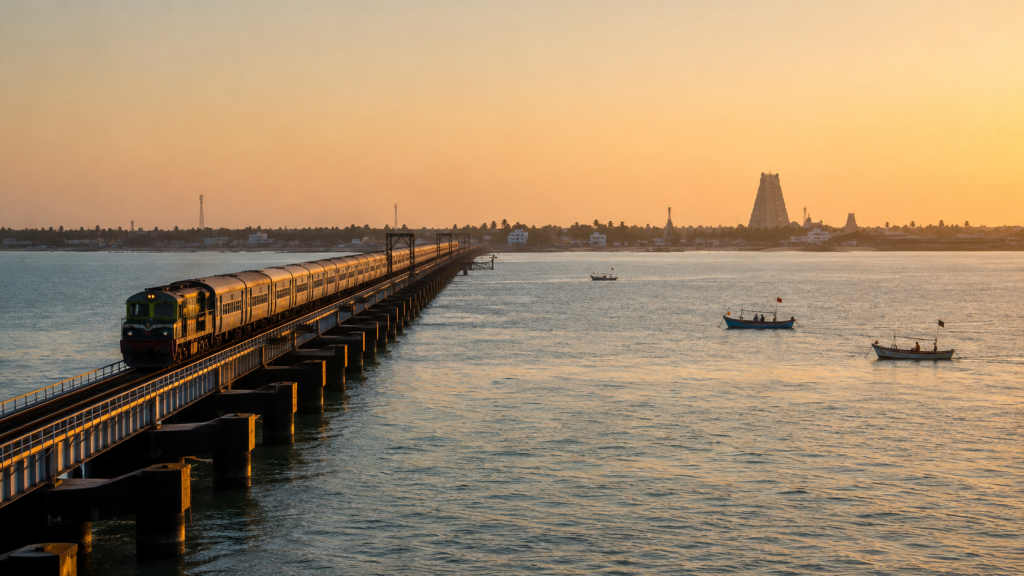
The east becomes unforgettable through accumulation: mustard in the air, red brick after rain, temple bells beneath the sound of surf and the long silver surface of a river seen from a train. Travel slowly enough to notice, and the region will remain with you long after the Bay of Bengal has disappeared from view.