Now Reading: Kerala Backwaters Guide: Choosing an Ethical Houseboat Experience
-
01
Kerala Backwaters Guide: Choosing an Ethical Houseboat Experience

Choose a Kerala houseboat that protects the backwaters and supports local people. This practical guide covers routes, licences, sewage, fuel, safety, crew welfare, costs and lower-impact alternatives.
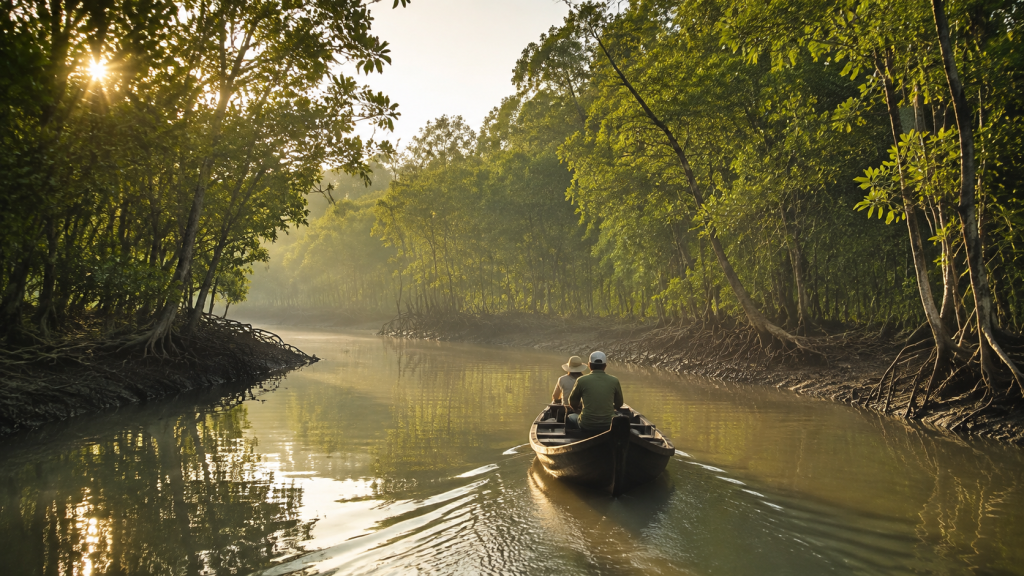
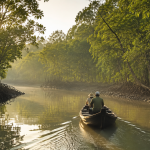
The Kerala backwaters do not announce themselves with drama. They draw you in slowly. A kingfisher flashes blue above the reeds. Coconut palms lean towards their reflections. Beyond the open lake, a narrow canal slips between rice fields and waterside homes, carrying schoolchildren, fishermen and the occasional wooden canoe.
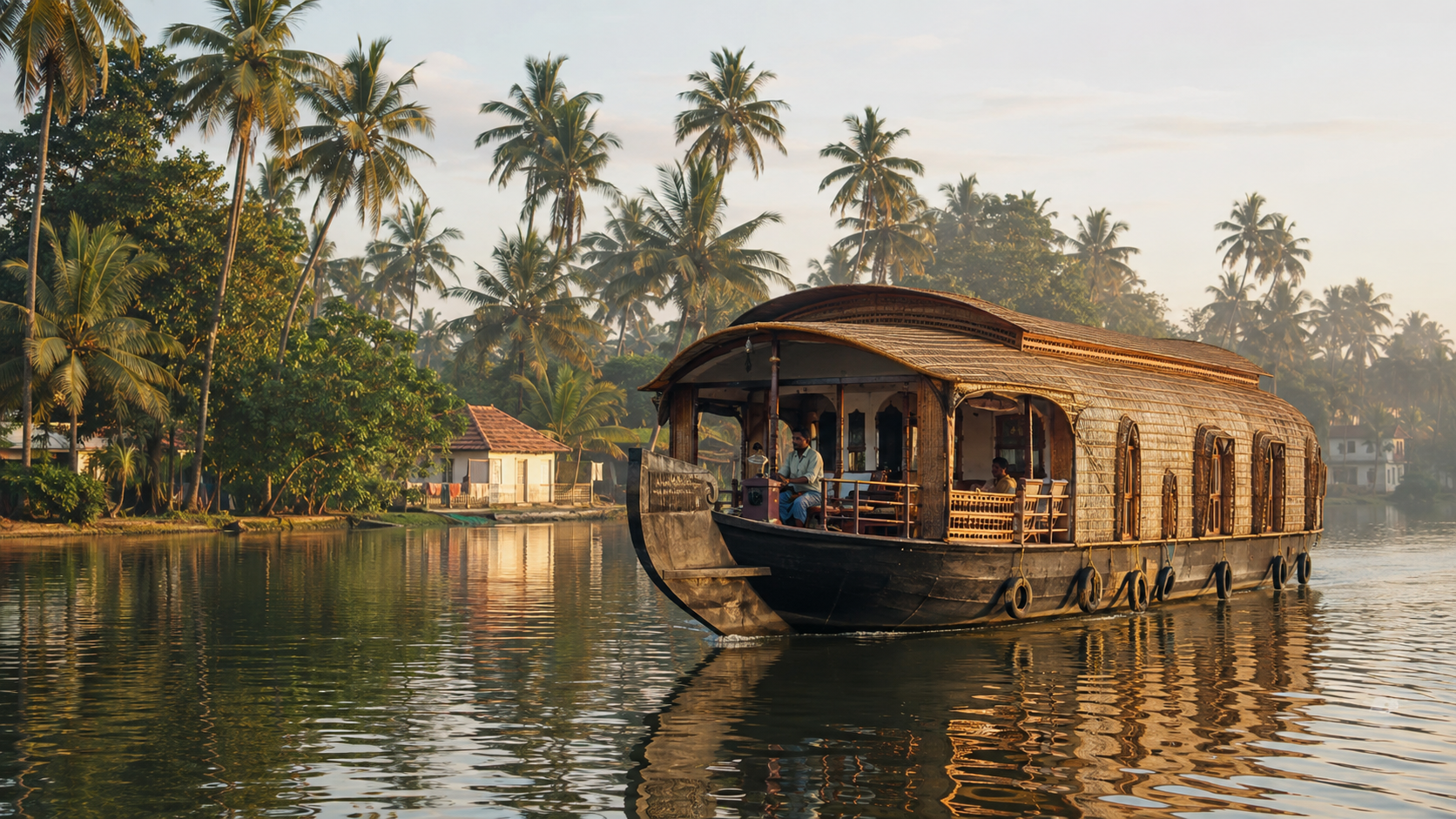
Then your houseboat turns into view, its woven roof curved like the old rice barges that once carried grain through Kuttanad. It is easy to surrender to the romance of it. Yet these waters are not simply a beautiful setting for a holiday. They are a living wetland, a transport network, a source of food and income, and home to communities whose daily lives unfold along the banks.
Choosing an ethical Kerala houseboat therefore means looking beyond polished bedrooms and sunset photographs. The right boat should protect the water beneath it, operate legally and safely, treat its crew fairly, buy locally where possible and move through villages with restraint.
This guide explains exactly what to check, where to cruise and when a smaller boat or waterside homestay may give you a better experience with a lighter footprint.
Quick answer: how to choose an ethical Kerala houseboat
Before paying a deposit, ask the operator for the following:
- the vessel’s visible Kerala Inland Vessel, or KIV, number;
- a current Port Department operating licence;
- a current Kerala Tourism classification certificate, if the boat is advertised as classified;
- valid Pollution Control Board documentation;
- details of the sealed sewage holding system and where waste is emptied on shore;
- the engine type, generator use and air-conditioning hours;
- life jackets for every guest, fire equipment, insurance and trained crew;
- the exact route, cruising hours, mooring point and maximum guest capacity;
- whether food is sourced from nearby farms, fishers and small suppliers; and
- how the operator reduces single-use plastic and disposes of food and solid waste.
A genuine operator will answer specifically and share photographs or document numbers. A vague promise that a boat is “eco-friendly” is not enough.
My practical recommendation: for most travellers, the best balance is a private one-bedroom classified boat with a verifiable sewage system, a modest route away from the busiest channel and air conditioning limited to sleeping hours. If your main aim is to see village life and narrow canals, combine a canoe or shikara trip with a locally owned homestay instead of sleeping on a large houseboat.
What makes the Kerala backwaters so special?
Kerala’s backwaters form a broad web of lakes, lagoons, rivers and man-made canals running behind the Arabian Sea coast. Vembanad Lake, reached from Alappuzha and Kumarakom, is the best-known section. Farther south, Ashtamudi Lake spreads into eight palm-edged arms around Kollam. Smaller waterways wind through Munroe Island, while quieter backwater landscapes also appear in northern Kerala.
This is not an empty wilderness. Along the water you may see washing drying beside a house, a farmer tending a paddy field below water level, ducks moving in a noisy flotilla or a small passenger ferry stopping at a village jetty. The beauty comes from the meeting of landscape and ordinary life.
Houseboats grew from the traditional kettuvallam, a cargo vessel once used to move rice and other goods. Modern versions can have bedrooms, bathrooms, kitchens, dining decks and air conditioning. Some are intimate boats for a couple. Others are floating hotels with several rooms, bright lights and generators.
The difference matters. More rooms usually mean more fuel, water, waste and noise. Ethical does not have to mean basic, but the lightest suitable boat is usually a better choice than the largest one you can afford.
Why responsible houseboat tourism matters
A houseboat holiday can support cooks, captains, cleaners, boat builders, farmers, fishers and food suppliers. It can keep traditional boat-building knowledge alive and spread tourism income beyond Kerala’s cities and beach resorts.
But poorly managed tourism places pressure on the same landscape visitors have come to enjoy. Sewage and kitchen waste can damage water quality. Diesel engines and generators add fumes and noise. Plastic bottles and food packaging accumulate where waste collection is already difficult. Heavy traffic erodes the quiet of village canals and can disturb birds and fishing activity.
The point is not to feel guilty for visiting. It is to make your spending reward operators who take these problems seriously. One booking will not transform Vembanad Lake, but hundreds of travellers asking the same firm questions can change what the market values.
Alappuzha, Kumarakom or Kollam: where should you book?
The departure point shapes the experience almost as much as the boat. Choose the landscape and pace first, then compare vessels.
| Backwater base | What it feels like | Best for | Ethical approach |
|---|---|---|---|
| Alappuzha | The greatest choice of boats and the classic Kuttanad scenery of canals, rice fields and waterside villages. Main routes can feel busy. | First-time visitors who want the familiar Kerala houseboat experience and plenty of price options. | Choose a smaller boat, ask for a less congested route and add a canoe excursion for canals too narrow for a houseboat. |
| Kumarakom | A greener, slower-feeling edge of Vembanad Lake, with village landscapes and birdlife nearby. | Couples, birdwatchers and travellers pairing a cruise with a resort or homestay. | Use community-linked activities, buy locally and keep noise low around bird habitats and small settlements. |
| Kollam and Ashtamudi | Broad lake views, islands, mangroves and generally fewer houseboats than the Alappuzha belt. | Travellers who value space, longer views and a quieter atmosphere. | Choose a locally based operator and combine the lake with a small-boat visit around Munroe Island. |
| Munroe Island | Low bridges, intimate canals, overhanging palms and close views of village life. Large houseboats are not the point here. | Budget travellers, photographers and anyone seeking a low-key community experience. | Stay in a homestay and use a canoe, kayak or small shared boat with a local guide. |
Alappuzha: the classic choice
Alappuzha, still widely called Alleppey, is the easiest place to compare many boats. It also gives access to Kuttanad, where paddy fields sit behind embankments and the horizon seems made of water, palms and sky.
The trade-off is traffic. Around popular jetties, engines, horns and rows of moored boats can weaken the sense of escape. Ask the operator how long the boat remains on the main channel and whether the route reaches quieter stretches. Be cautious if the sales agent refuses to name even the general cruising area.
Kumarakom: lake, birds and village connections
Kumarakom lies on the eastern shore of Vembanad Lake and suits a slower stay. It works particularly well if you want one night on the water followed by a homestay, birdwatching or a community-based village experience. Kerala’s Responsible Tourism initiative has long used Kumarakom to connect visitors with local food, farming, coir work and other village livelihoods.
A cruise here can still cross busy parts of Vembanad, so do not assume the location alone makes a boat responsible. Apply the same checks to sewage, licences, crew and fuel use.
Kollam and Ashtamudi: a quieter alternative
Ashtamudi feels different. Its long arms open between coconut groves, wetlands and islands, and there is often more space between tourist boats. It is a thoughtful choice for travellers continuing towards Varkala or Thiruvananthapuram.
The distances can be longer, which may mean more engine time. Ask whether the route is designed around meaningful stops and slower cruising rather than simply covering kilometres.
Houseboat, day cruise or canoe?
An overnight houseboat is memorable, but it is not automatically the best way to experience the backwaters. Think about what you actually want from the water.
| Experience | Advantages | Limitations | Best ethical use |
|---|---|---|---|
| Overnight houseboat | Unhurried, private and atmospheric, with meals and accommodation together. | Higher fuel, water and waste use. Boats normally moor for the night, so the cruising time may be shorter than expected. | Choose one night, the smallest suitable vessel and a transparent operator. |
| Day houseboat cruise | Gives you the deck, lunch and broad-water scenery without sleeping aboard. | Can still involve a large private boat and several hours of engine use. | Share the boat with your group and avoid hiring surplus bedrooms or space. |
| Shikara or motor canoe | Reaches narrower canals and is usually cheaper and less resource-intensive. | Less shade, fewer facilities and some engine noise. | Use a local guide, keep the group small and avoid intrusive photography. |
| Paddled canoe or kayak | Quiet, close to the water and low in direct emissions. | Weather, heat and fitness matter; not suitable on every open-water route. | Go early, follow a local guide and keep clear of fishing nets and commuter boats. |
| Public ferry | Affordable, low-impact per passenger and part of everyday backwater life. | No private guide, meal or hotel-style comfort. | Travel as a passenger, not as though local transport were a sightseeing set. |
For many independent travellers, the richest combination is a half-day small-boat journey, a local lunch and a night in a waterside homestay. You hear more birds, enter smaller canals and put more of the cost directly into local hands.
The 10 questions to ask before booking a Kerala houseboat
1. What is the KIV number?
KIV stands for Kerala Inland Vessel. The number identifies the registered vessel and should be displayed on a classified houseboat. Ask for it before booking and check that the boat you board is the same boat shown in the photographs and documents.
2. Is the Port Department licence current?
Kerala Tourism classification does not replace the licences and permissions required to operate. Ask for a photograph of the current operating licence, not simply a logo on the operator’s website.
3. Is the boat classified by Kerala Tourism?
Kerala Tourism currently uses Silver Vessel, Gold Vessel and Diamond Vessel categories. Classification is a useful sign that a boat has entered an inspection and documentation process. The official checklist covers facilities, safety, staff, waste systems and required records.
However, a higher category mainly indicates a higher level of facilities. A Diamond Vessel is not automatically more environmentally responsible than a simpler classified boat. Treat classification as a starting point, then ask the environmental and employment questions below.
4. How is toilet waste stored and emptied?
This is the most important environmental question. Look for a clear answer: toilets feed into a sealed holding or treatment system, the tank is emptied at an authorised shore facility, and the operator keeps a regular servicing routine.
“We never pollute” is not an adequate explanation. Ask where the waste goes. If the agent becomes defensive or changes the subject, choose another boat.
5. What engine does the boat use?
Ask whether the main engine is a modern four-stroke unit and whether any part of the system uses electric or solar assistance. Also ask how many hours the diesel generator normally runs. Solar panels can help with lights and small appliances, but a token panel does not make a large diesel-powered boat emission-free.
6. When does the air conditioning operate?
Many standard boats provide air conditioning only during sleeping hours. This can reduce generator use and is usually enough outside the hottest months. Full-time air conditioning may be valuable for a genuine health or comfort need, but it consumes more energy. Make the choice deliberately rather than assuming “premium” is always better.
7. What happens to plastic, food waste and cooking oil?
Choose operators that refill drinking water safely, use steel or ceramic tableware, avoid miniature toiletries and bring segregated waste back to shore. No rubbish, cooking oil or food scraps should be thrown into the water.
Bring your own refillable bottle, but confirm that the boat can provide properly filtered drinking water before relying on it.
8. Who works on the boat?
Ask how many crew members will be aboard, whether they are locally employed and whether they have proper rest space. A captain, cook and service crew may spend long days on the water while remaining almost invisible in glossy advertising.
Respectful tourism includes reasonable hours, safe working conditions and fair pay. You may not be able to audit an operator’s payroll, but direct questions show that guests care. Never pressure the captain to cruise after permitted hours or take a route they consider unsafe.
9. Where does the food come from?
Meals are often one of the loveliest parts of the journey: rice, sambar, vegetables with coconut, fried fish and something warm with cardamom at tea time. Ask whether the operator buys produce and fish from local suppliers and whether vegetarian or vegan meals can be prepared without excess packaged substitutes.
Local sourcing keeps more value in the backwater economy. It also gives you food that belongs to the landscape rather than an anonymous hotel buffet.
10. What exact boat and route am I booking?
Request recent, date-stamped photographs of the actual vessel, including the bathroom, kitchen, deck, life jackets and displayed registration. Confirm whether the booking is private or shared, how many bedrooms will be occupied, where the boat boards and moors, and what is included in the price.
Some disappointing experiences begin when a traveller chooses a beautiful category photograph but receives a different boat at the jetty. Put the vessel name and KIV number in your written confirmation.
Safety checks to make when you board
Pause for five minutes before the ropes are released. You should be able to see:
- enough adult and child-sized life jackets for everyone;
- life rings and accessible emergency exits;
- fire extinguishers near the kitchen, engine area and guest spaces;
- a stocked first-aid kit;
- clean drinking-water arrangements;
- a hygienic kitchen and refrigerator;
- secure railings and uncluttered walkways;
- the vessel name and KIV number matching your confirmation; and
- displayed licences or classification details where applicable.
Ask the crew for a short safety briefing, particularly if travelling with children. Tell them about allergies before departure, in writing if the allergy is serious. If conditions look unsafe, do not allow the romance of the occasion or the pressure of a prepaid booking to overrule your judgement.
Red flags that should make you walk away
- The operator will not provide a vessel name or KIV number.
- “Eco-friendly” appears repeatedly, but nobody can explain the sewage system.
- The price is dramatically below comparable boats with no clear reason.
- Only heavily edited stock photographs are available.
- The actual boat is changed at the last moment without an equivalent document check.
- There are not enough visible life jackets for the group.
- The crew suggest throwing food, bottles or wastewater overboard.
- A loud sound system, party lighting or night cruising is promoted as the main attraction.
- The itinerary promises access to tiny canals that a large houseboat plainly cannot enter.
- Full payment is demanded through an untraceable method without a written booking policy.
How much does a Kerala houseboat cost in 2026?
Prices vary sharply by season, boat condition, number of bedrooms, exclusivity, food and air-conditioning. Holiday weekends and the Christmas and New Year period can cost considerably more.
| Experience | Indicative price | What to check |
|---|---|---|
| Small private day cruise for two | From about ₹9,000, roughly US$95 | Duration, lunch, taxes, exact boat and route |
| Premium private day cruise | About ₹15,000 to ₹20,000, roughly US$160 to US$210 | Whether extra space or facilities justify the higher fuel use and price |
| One-bedroom overnight boat | Commonly about ₹10,000 to ₹25,000, roughly US$105 to US$265 | Meals, air-conditioning hours, cruising time, mooring place and taxes |
| Canoe, kayak or shikara experience | Usually much less than a private houseboat | Group size, guide, duration, safety gear and community ownership |
These are broad planning figures checked in August 2026. US dollar estimates use approximately ₹95 to US$1 and should be treated only as a guide. Exchange rates and houseboat tariffs change, so compare like-for-like written quotations.
Do not choose by price alone. A properly maintained vessel, legal waste disposal, trained staff and fair working conditions all cost money. The aim is not to find the cheapest boat, but to understand what your payment supports.
What an overnight houseboat experience is really like
Most overnight trips begin around late morning or lunchtime. The boat moves through the afternoon, pausing for lunch and sometimes a village or small-boat excursion. Before darkness, it moors at an approved or customary overnight point. Dinner is served aboard, the water grows still and the engine quietens.
This mooring is not a failure of the itinerary. Night-time movement is commonly restricted for safety and to protect local water traffic. It also gives the crew time to prepare dinner and rest. Ask where the boat normally moors, because a peaceful bank and a crowded line of vessels create very different nights.
Expect insects near water, occasional noise from neighbouring boats, humidity and the sounds of village life beginning early. Carry light cotton clothing, sandals with grip, mosquito repellent and a small torch. Keep windows screened where possible and avoid spraying chemicals over the water.
Best time for a Kerala backwaters trip
November to February generally brings the most comfortable temperatures and the greatest demand. Book early and avoid assuming that peak-season prices guarantee the best boat.
March to May can be intensely hot and humid. A morning canoe trip may be more comfortable and less energy-intensive than an air-conditioned overnight stay.
June to September turns Kerala deep green under the monsoon. Rain on the lake can be beautiful, but heavy weather may alter routes and departures. Choose flexible plans, listen to local safety advice and do not pressure a crew to sail in unsafe conditions.
For a wider look at regional weather, festivals and crowd levels, read our month-by-month guide to the best time to visit India.
A lower-impact two-day backwaters itinerary
Day one: arrive slowly
Travel to Alappuzha, Kumarakom or Kollam and check into a locally owned homestay near the water. In the late afternoon, walk with a local guide or take a short paddled canoe trip. Eat dinner at the homestay and ask where the fish, rice and vegetables came from. The conversation may become as memorable as the meal.
Day two: choose one meaningful cruise
Begin early in a canoe or shikara, when the water is cooler and birds are active. Return for breakfast, then take a four-to-six-hour houseboat cruise on a properly documented small vessel. Enjoy lunch aboard and finish before evening, leaving time to travel onward or spend a second night on shore.
This arrangement uses a houseboat for what it does best, broad water, a shaded deck and a slow Kerala meal, while a smaller craft reveals the narrow canals. It also spreads your spending between a boat crew, a guide and a homestay.
If the dream of waking on the water matters deeply to you, keep the overnight. One carefully chosen night is enough for most travellers.
How to behave respectfully on the backwaters
- Ask before photographing people, homes, religious activity or children.
- Keep music low, particularly near villages, bird habitat and evening moorings.
- Do not fly a drone without checking current rules and obtaining appropriate permission.
- Never throw food, cigarette ends, toiletries or packaging into the water.
- Use water sparingly when showering aboard.
- Carry reef-safe habits into freshwater too: use minimal lotions and chemicals before swimming or washing.
- Do not block passenger jetties or treat working boats as props.
- Tip fairly for good service, but do not use a tip to pressure the crew into unsafe or prohibited requests.
Frequently asked questions
Are Kerala houseboats bad for the environment?
They can cause harm when sewage, fuel, food waste and plastic are poorly managed, or when too many boats crowd sensitive waterways. A legal, well-maintained smaller boat with proper waste storage and shore disposal is a more responsible choice. Canoes, kayaks, shikaras and public ferries generally have a lighter impact per experience.
Is a Kerala Tourism classification enough?
No. It is a useful verification point, but classification does not replace the vessel’s operating licences. Nor does the highest facilities category automatically mean the lowest environmental impact. Check the KIV number, Port licence, Pollution Control Board documentation, sewage process, safety equipment and employment practices.
Is Alappuzha or Kumarakom better for a first visit?
Choose Alappuzha for the widest range of boats and classic Kuttanad scenery. Choose Kumarakom for a slower stay that combines lake views, birdlife and village-based experiences. An ethical operator matters more than the place name.
Should I book a day cruise or stay overnight?
A day cruise is enough if you mainly want scenery, lunch and time on deck. Stay overnight if the quiet of evening and waking beside the water are central to the dream. A canoe trip plus homestay often offers more local contact with fewer onboard resources.
Can a houseboat enter Kerala’s narrow canals?
Many cannot. Large vessels stay on broader lakes, rivers and canals. Add a canoe, kayak or shikara trip if you want to enter the smallest waterways. Treat promises that a multi-bedroom boat will glide through every tiny village canal with scepticism.
Are houseboats suitable for children?
They can be, provided the boat has secure railings, suitable child-sized life jackets and attentive supervision. Ask for current photographs and never leave children alone on an open deck. A shorter day cruise may be easier for very young children.
Can solo travellers book a houseboat?
Yes, but a private boat can be expensive and resource-heavy for one person. A shared cruise, small-boat tour, public ferry or homestay package is often more sociable, affordable and efficient.
Useful official resources
- Kerala Tourism houseboat classification requirements
- Kerala Maritime Board inland vessel information
- Kerala Tourism houseboat and backwater destinations
- Kumarakom community-based Village Life Experience
Final thoughts
The loveliest Kerala backwater journeys are rarely the loudest or most luxurious. They are the ones where the boat feels small beneath the sky, lunch tastes of coconut and curry leaves, and the crew know when to turn off the engine and let the water speak.
Choose a vessel that can prove how it handles waste. Check the licences rather than trusting a green label. Keep the group and boat in proportion, spend with local people and leave room in the itinerary for a canoe, a ferry or a conversation on shore.
Done thoughtfully, a houseboat journey can remain one of South India’s most beautiful experiences without asking the backwaters to carry more than they should. Continue planning with our complete South India travel guide.