Now Reading: Madurai and Rameswaram: Temples, Pilgrimage and the Southern Coast
-
01
Madurai and Rameswaram: Temples, Pilgrimage and the Southern Coast

Plan a meaningful journey from Madurai's Meenakshi Amman Temple to Rameswaram's pilgrimage corridors and the windswept coast at Dhanushkodi, with practical transport, food, budget and etiquette advice.
Before sunrise, Madurai is already awake. The streets around the old city carry the smell of jasmine, ghee and wet stone. Flower sellers sit beside mountains of marigolds, stainless-steel tumblers clink at the tea stalls, and above it all the sculpted towers of Meenakshi Amman Temple hold the first colour of the morning.
A few days later, the road and rail line reach the sea. Rameswaram feels different from Madurai in almost every way: flatter, saltier, quieter between the busy temple lanes. Pilgrims arrive with wet clothes folded under their arms, fishermen head out before daylight, and the water around the island seems to stretch in every direction.
Together, Madurai and Rameswaram make one of Tamil Nadu’s most meaningful short journeys. This is not a route to rush through between photographs. It is a chance to understand living temple culture, eat some of South India’s most memorable food, and follow the land until it thins into the Palk Strait. Give it three or four days and let the contrast do its work.
Madurai and Rameswaram at a glance
| Planning point | What to expect |
|---|---|
| Best length | 3 nights minimum: 2 in Madurai and 1 in Rameswaram. Add a night if you want a slower temple visit and Dhanushkodi. |
| Best season | November to February for more comfortable sightseeing. March to May is intensely hot; October to December can bring rain and strong coastal weather. |
| Route | Arrive in Madurai, continue to Rameswaram by train or road, then return to Madurai or travel onward through Tamil Nadu. |
| Transport time | Allow around 3 to 4 hours between Madurai and Rameswaram, depending on the service, traffic and weather. |
| Best for | Temple architecture, pilgrimage culture, Tamil food, slower travel and a dramatic island coast. |
This route fits naturally into a wider South India journey. It is especially rewarding after Thanjavur or Chettinad, or before you head towards Kanyakumari and Kerala. For the bigger picture on seasons, read our guide to the best time to visit India.
Why these two places belong together
Madurai is a great inland temple city. It is dense, noisy, devotional and full of everyday commerce. Meenakshi Amman Temple is its heart, but the city is not a single monument. Its markets, tailors, old neighbourhoods and food halls all move to the rhythm of a place that has received travellers and pilgrims for centuries.
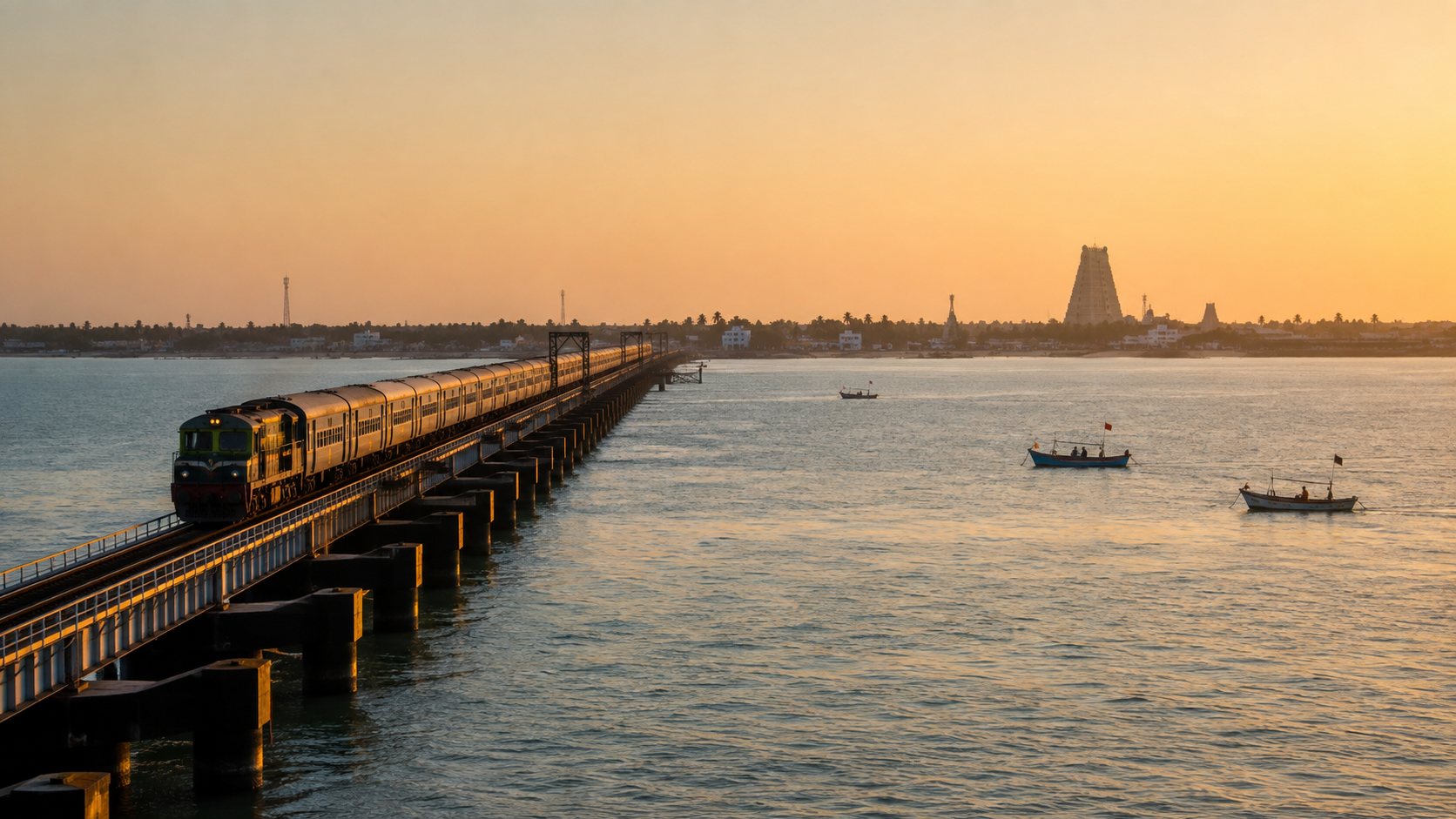
Rameswaram is more exposed. The island lies close to Sri Lanka across the Palk Strait, and the journey across Pamban is a memorable transition from mainland Tamil Nadu to a landscape shaped by wind, sand and sea. Ramanathaswamy Temple is one of India’s important Shaivite pilgrimage sites, but even travellers without a religious itinerary can feel the seriousness and generosity of the place.
The route works because the two cities ask for different kinds of attention. In Madurai, look up at painted temple towers and lose yourself in the lanes. In Rameswaram, look outward: towards the water, the bridge, the fishing boats and the long pale road to Dhanushkodi.
Madurai: a temple city that never quite switches off
Madurai is sometimes called one of the oldest continuously inhabited cities in India. Whether you come for faith, architecture or food, it still feels intensely lived in. The central streets can be chaotic, especially in the heat of the day, but the best way to meet the city is to walk early and return after dark.
Meenakshi Amman Temple
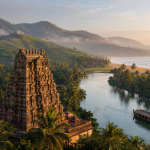
Meenakshi Amman Temple is one of the great architectural and spiritual experiences of South India. Its gopurams, or gateway towers, are covered in a dense population of painted deities, guardians and mythical figures. Inside, the atmosphere changes from bright street noise to cool corridors, lamps, bells, shrines and the steady movement of worshippers.
Do not treat it as a box to tick. Visit once early, when the stone is cool and the crowd is still building. Then return in the evening to see the temple and its surrounding streets in a completely different mood. If you want context, a knowledgeable local guide can make the symbols and ritual life more intelligible without turning the experience into a hurried lecture.
Dress conservatively, leave shoes where directed, and expect security controls. Some sacred spaces may be restricted to Hindus, and photography or large bags may be limited. Rules, opening hours and special-darshan arrangements can change around festivals, so confirm the current guidance with the temple before you go. Respectful observation is enough. You do not need to imitate a ritual that is not yours.
The streets around the temple
The area around the temple is as much a part of the visit as the complex itself. Walk through the flower market in the morning, when jasmine is threaded into garlands and vendors call out prices above the scent. Browse textile shops, brassware stalls and small sweet shops without assuming that every interaction has to become a purchase.
Madurai rewards tiny pauses. Order a coffee served in a steel tumbler and davara, watch it being poured back and forth to cool, or sit down for breakfast while the city is still shaking off the night. The temple towers remain visible at the end of many lanes, making it surprisingly easy to find your way back.
Beyond Meenakshi
Make time for Thirumalai Nayakkar Mahal, where huge arches and stucco work hint at the scale of the former Nayak court. The palace is most enjoyable in softer morning or late-afternoon light, when you can look at the structure without the pressure of the midday heat.
If you have a further half day, the Gandhi Memorial Museum gives a more reflective counterpoint to the temple city. It is not essential for every short visit, but it offers historical context and a quieter space after the intensity of the old centre. Do not try to pack every attraction into one day. Madurai is best when you leave time to wander and eat.
What to eat in Madurai
Food is one of the strongest reasons to linger. Start with idli, pongal or dosai for breakfast, often served with several chutneys and a sharp, warming sambar. At lunch, a banana-leaf meal gives you a generous introduction to Tamil flavours: rice, vegetables, rasam, curd and pickles arriving in a rhythm that makes sense only once you stop trying to identify every dish.
In the evening, seek out parotta with a rich vegetable, egg or meat curry if you eat it. Madurai is also famous for jigarthanda, a cooling, layered drink-dessert with milk, almond gum, syrup and ice cream. It is sweet, gloriously over-the-top and exactly right after a hot afternoon on the streets.
For a wider introduction before you travel, see our guide to Indian food by region. In Tamil Nadu, the best meal is often the busy, unfussy local restaurant where families are eating, the turnover is high and the menu is short.
From Madurai to Rameswaram: make the crossing part of the journey
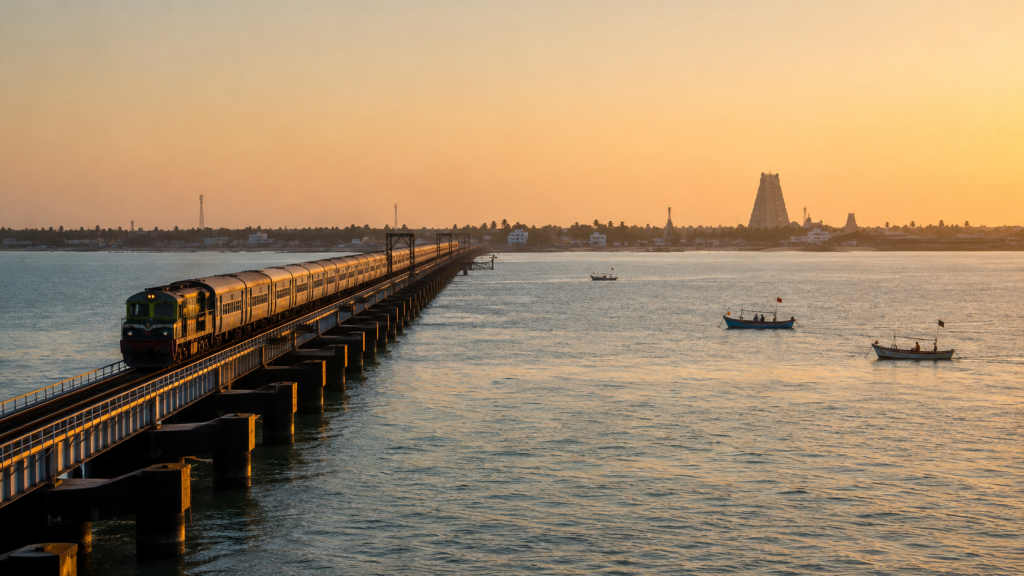
Madurai and Rameswaram are linked by road and rail. If the train timetable suits you, choose the rail journey. Approaching the island over the Pamban crossing is one of those small Indian travel moments that remains with you: water on both sides, boats below, the air suddenly brighter and saltier.
A private car gives more flexibility, particularly if you are travelling as a family or want to stop at Pamban and make a direct trip to Dhanushkodi. Buses are cheaper and frequent enough for confident budget travellers, but they are less comfortable in high heat and offer little room for a tight onward plan.
Book trains through the official railway booking system or a trusted agent, and do not build a same-day flight connection around this leg. Coastal winds and operational changes can affect services near the bridge. Keep an extra buffer, particularly in the wettest and windiest months. Our guide to getting around India will help you choose between trains, buses and private drivers for the rest of your route.
Rameswaram: where pilgrimage meets the sea
Rameswaram is not polished into a resort town, and that is part of its appeal. The lanes close to the temple are full of pilgrims, simple lodges, small eateries and shops selling puja items. Move a little away from this centre and the island opens out into beaches, palms, fishing communities and long roads facing the sea.
Ramanathaswamy Temple
Ramanathaswamy Temple is famous for its extraordinarily long painted corridors, their repeating pillars creating a perspective that seems to pull you towards the far end of the building. It is a living place of worship dedicated to Shiva, and for many Hindus it is a major destination on a wider pilgrimage circuit.
Many pilgrims follow a ritual sequence that includes bathing at Agni Theertham on the seafront and visiting the temple’s sacred wells. You can observe this respectfully without joining it. If you do intend to take part, ask a reliable local source about the sequence, facilities and clothing beforehand, and carry a dry change of clothes. Do not rely on an old blog post for practical temple rules.
As in Madurai, modest dress is essential. Access rules and queues can be more structured on religious days. Arrive early, keep valuables minimal, and let the visit take the time it takes. The point is not to race through the corridor for a photograph.
Agni Theertham and the seafront
Just east of the temple, Agni Theertham is the beach where pilgrims perform ritual bathing. At dawn, the scene can be quiet and moving: families gathering at the water, priests offering guidance, crows stepping along the sand, and the sky turning pale behind the fishing boats. It is a worship space before it is a beach. Keep a respectful distance from private moments and do not photograph people without asking.
For a more relaxed look at the island’s seascape, go later to the coast beyond town rather than treating Agni Theertham as a swimming beach. Conditions can change quickly and some stretches are not suitable for bathing. Follow local advice, especially with children.
Dhanushkodi: the road to the edge
Dhanushkodi is the natural finale to this route. The former town was devastated by the 1964 cyclone, and the remains beside the sand carry a quiet, eerie weight. The attraction is not only the ruins. It is the drive itself, a narrow road with the Bay of Bengal on one side and the Gulf of Mannar on the other, leading towards one of India’s most exposed coastal landscapes.
Go early or late in the day. Midday sun is fierce and the landscape offers little shade. Bring water, sun protection and a light layer against the wind. Do not venture into restricted areas or chase the farthest possible viewpoint: this is a sensitive coastline close to an international maritime boundary, and access can change with weather and official instructions.
The journey is far more rewarding if you do not reduce it to a dramatic Instagram stop. Take time to notice the colour of the water, the fishing boats, the wind across the sand and the feeling of standing at the end of a long subcontinental route.
A simple 3-night itinerary
- Day 1: Arrive in Madurai. Walk the streets around Meenakshi Amman Temple, visit in the late afternoon or evening, and settle in with a Tamil dinner.
- Day 2: See Madurai slowly. Return to the temple early, visit the flower market and Thirumalai Nayakkar Mahal, then leave the afternoon free for food, coffee and unplanned walking.
- Day 3: Travel to Rameswaram. Take the train or road across Pamban. Visit Ramanathaswamy Temple with enough time for queues, then watch the quieter evening atmosphere along the seafront.
- Day 4: Dhanushkodi and onward travel. Go early to Dhanushkodi, return for breakfast and depart after a final temple-town walk. If your schedule allows, add one more Rameswaram night rather than forcing an evening transfer.
With four nights, add a second night in Rameswaram. That gives you room to visit the temple at a calmer time, make a weather-dependent Dhanushkodi trip, and see the island without constantly checking your watch.
How much does Madurai and Rameswaram cost?
These are rounded planning figures per person, per day, excluding international flights and based on sharing a room where relevant. Your costs rise most quickly if you use a private car every day, choose higher-end hotels or travel during festivals and peak holiday periods.
| Travel style | Indicative daily budget | What it usually covers |
|---|---|---|
| Backpacker | US$25–40 | Simple guesthouse or hostel bed, local vegetarian meals, buses or basic train travel, modest entry and local transport costs. |
| Comfortable independent | US$55–95 | Good mid-range hotel, varied meals, air-conditioned transport for key journeys and a local guide or private car for one day. |
| Higher comfort | US$120+ | Characterful or higher-end stays, regular private transport, more flexible timing and carefully chosen guided experiences. |
Temple entry is generally not the expensive part of this route, but special-darshan options, ritual services, lockers, local guides and tips can add small costs. Budget with generosity and ask clearly about prices before accepting a service.
Where to stay
In Madurai, stay near the old city if you want to walk to Meenakshi Temple early or return after dinner. The surrounding lanes are lively and convenient, though they can be noisy. A modern hotel a short rickshaw ride away gives more quiet and often better value for families.
In Rameswaram, the temple area is convenient for an early visit, while stays slightly farther from the centre may feel calmer and have more space. Read recent guest reviews carefully for cleanliness, hot water and reliable air-conditioning. The island’s atmosphere is humble rather than luxurious, so choose a place that supports your route rather than expecting a beach-resort experience.
Travel with respect
- Dress for worship spaces. Cover shoulders and knees, carry a light scarf or shawl, and be ready to remove footwear where required.
- Ask before photographing people. This matters especially around ritual bathing, shrines, flower stalls and family moments.
- Follow local instructions around the sea. Beaches and exposed coastal roads are not risk-free, particularly during strong winds or heavy rain.
- Use local guides thoughtfully. Agree a price and duration in advance, and choose someone who explains rather than pressures you into rituals or shops.
- Slow down. These are not museum sites. The most valuable moments often happen when you stop and let the place continue around you.
For more guidance on customs, temple etiquette and everyday interactions, read our India culture and etiquette guide.
Frequently asked questions
How many days do I need for Madurai and Rameswaram?
Three nights is a good minimum: two in Madurai and one in Rameswaram. Four nights is better if you want to visit Dhanushkodi without rushing or need flexibility around weather and temple queues.
Is Madurai or Rameswaram better?
They offer different experiences. Madurai is stronger for urban energy, temple architecture and food. Rameswaram is more about pilgrimage, the island atmosphere and the coast. If you have time, do both rather than choosing between them.
Can non-Hindus visit the temples?
Visitors are generally able to experience much of the temple complex, but access to certain inner shrines may be restricted to Hindus. Rules may change, so check current guidance directly with the temple. Dress modestly, follow instructions and do not argue about access to a worship space.
Is the Madurai to Rameswaram train worth taking?
Yes, if the schedule works with your plan. The approach across Pamban is memorable and the train connects naturally with the wider Tamil Nadu rail network. Keep a time buffer, as coastal weather and rail operations can occasionally affect the service.
When should I avoid Rameswaram?
There is no single period to avoid completely, but high summer can be exhausting and the northeast monsoon can bring rain and strong winds to the coast. Avoid tight schedules during adverse weather, and check local conditions before travelling to Dhanushkodi.
The route that stays with you
Madurai and Rameswaram are not competing highlights. They are two movements in the same journey. One is built from colour, stone, food and constant motion. The other opens into salt air, ritual and a horizon that seems to pull the rest of India behind you.
Give both places time. Go to the temple when it is cool, eat where the tables are full, take the crossing slowly and stand quietly at the coast. You will leave with more than a list of sights. You will understand a little more of how faith, landscape and everyday life are woven together in Tamil Nadu.