Now Reading: North India Travel Guide: From Rajasthan and Delhi to the Himalayas
-
01
North India Travel Guide: From Rajasthan and Delhi to the Himalayas

Plan an unforgettable journey through Delhi, Agra, Rajasthan and the Himalayas with realistic routes, seasonal advice, regional food, transport tips and immersive experiences.
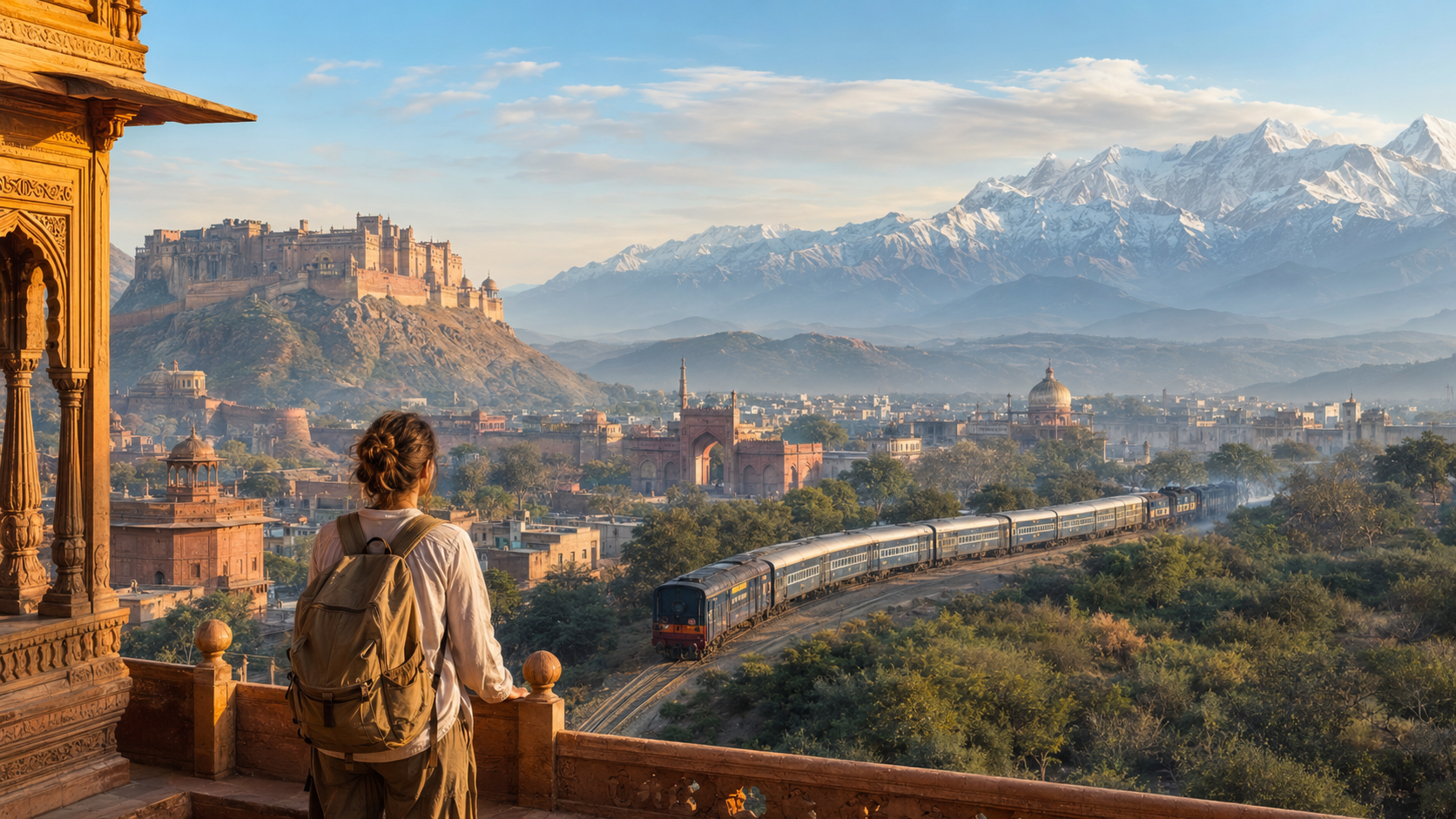
The first light in Old Delhi does not arrive quietly. Metal shutters rattle upwards, bicycle bells begin to ring, and the smell of frying kachori slips into lanes still cool from the night. A few hours away, the Taj Mahal changes from grey to pearl beside the Yamuna. Travel west and Rajasthan glows in sandstone, indigo and desert gold. Turn north instead, and the air thins among cedar forests, Buddhist monasteries and Himalayan passes.
This is the wonder of travelling through North India. It can feel like several journeys stitched together by railway tracks, old trading roads and shared cups of chai. Mughal tombs give way to Rajput forts. The plains rise into foothills, then into mountains so immense that even a busy mind becomes quiet.
It can also be overwhelming. North India covers a vast area, distances are deceptive, and trying to see Delhi, Rajasthan, Varanasi and the Himalayas in a single rushed holiday usually means remembering more traffic than travel.
This North India travel guide will help you choose a route that feels generous rather than exhausting. It covers the best places to visit, when to go, how long to spend, what to eat, how to travel between regions and how to experience this part of India with curiosity and respect.
North India at a glance
For a first trip, allow at least two weeks and concentrate on two neighbouring areas. Delhi, Agra and Rajasthan form the easiest classic route. Delhi paired with one Himalayan state creates a slower journey with more time outdoors. Ladakh deserves a separate trip, while Varanasi is best added by overnight train or a short flight rather than forced into an already crowded road itinerary.
| Region | Best for | Suggested time | Good first base |
|---|---|---|---|
| Delhi | History, street food and the first encounter with urban India | 3 days | New Delhi, South Delhi or a well-reviewed stay near a Metro station |
| Agra and Fatehpur Sikri | Mughal architecture and the Taj Mahal | 1 to 2 days | Agra |
| Rajasthan | Forts, palaces, desert landscapes, crafts and heritage stays | 8 to 12 days | Jaipur, then travel west |
| Varanasi | Living spirituality, river rituals and ancient lanes | 3 days | Near Assi Ghat or a quieter riverside lane |
| Amritsar and Punjab | Sikh heritage, hospitality and deeply satisfying food | 2 to 4 days | Amritsar |
| Uttarakhand | Yoga, pilgrimage towns, forested hills and accessible mountain escapes | 4 to 8 days | Rishikesh, Mussoorie or Nainital |
| Himachal Pradesh | Mountain towns, Tibetan culture, walking and longer Himalayan journeys | 7 to 12 days | Dharamshala, Shimla or Manali |
| Ladakh | High-altitude desert, monasteries, dramatic roads and remote valleys | 7 to 12 days | Leh |
| Jammu and Kashmir | Lakes, meadows, gardens and Kashmiri culture | Future planning only while major travel warnings remain | Check current official advice before considering travel |
What does North India include?
There is no single traveller’s definition of North India. In this guide, it includes Delhi, Rajasthan, Uttar Pradesh, Punjab, Haryana, Himachal Pradesh, Uttarakhand, Ladakh and Jammu and Kashmir. These places are connected geographically, but they are not one culture. Languages, food, faith, landscape and daily life can change noticeably within a few hours of travel.
That variety is the point. You do not come north merely to collect famous monuments. You come to notice how a breakfast changes after crossing a state border, how the stone of a fort mirrors the land around it, and how the noisy plains gradually surrender to pine, snow and silence.
Best time to visit North India
October to March is generally the most comfortable period for Delhi, Agra, Rajasthan, Varanasi and Amritsar. Days are cooler and walking is easier. December and January can bring cold nights and dense fog across the northern plains, which sometimes delays flights and trains. Rajasthan’s desert evenings can feel surprisingly sharp, so pack a warm layer even when the afternoon sun is strong.
March and April are lovely in the Himalayan foothills. Spring colour returns, daytime temperatures are often gentle, and lower walking routes begin to feel inviting. Holi can be joyful and visually extraordinary, but it is an intense public festival. Ask before throwing colour, protect your phone and camera, and choose a trusted local celebration if you would prefer a calmer experience.
May and June are very hot on the plains. Delhi, Agra, Jaipur and Varanasi can become physically draining in the middle of the day. This is when many Indian families head towards Shimla, Manali, Mussoorie and other hill stations, so mountain towns can be busy and accommodation prices can rise.
July to September brings the summer monsoon to much of the region. Rajasthan can look unexpectedly green, but humidity, heavy rain and local flooding may disrupt plans. Mountain roads in Himachal Pradesh and Uttarakhand are vulnerable to landslides. Ladakh sits in a rain shadow and is often visited in summer, although high-altitude weather and road conditions can still change quickly.
September and October can be glorious in the mountains. The monsoon begins to withdraw, skies often clear, and the Himalayan outline can appear startlingly close. It is a rewarding time for walking, photography and long mornings outdoors.
The best places to visit in North India
Delhi: begin with layers, not landmarks
Delhi is not a city you solve in a day. It is many cities resting on top of one another, sometimes elegantly and sometimes chaotically. Give it at least three days, including one slow day after an international flight.
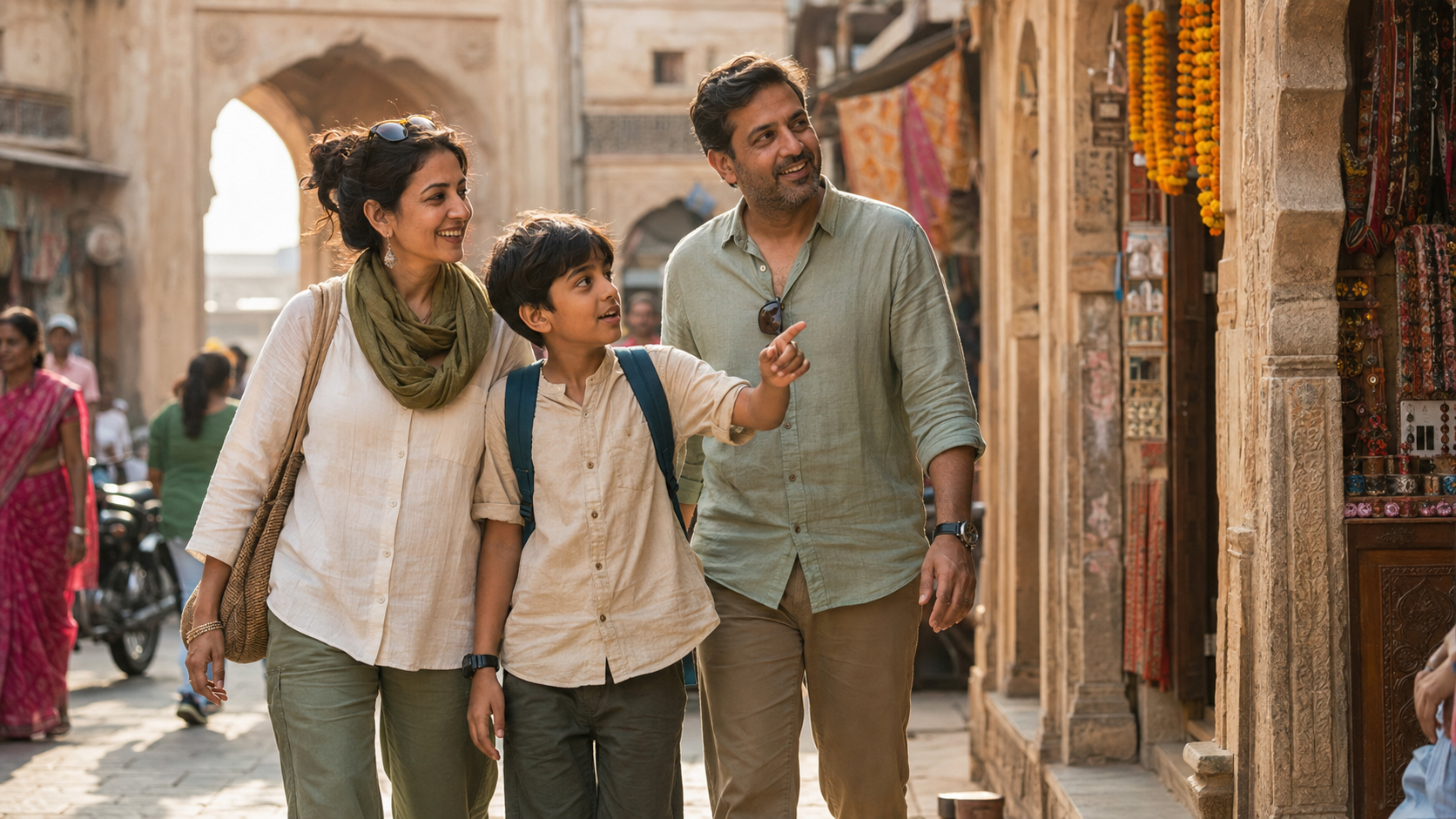
In Old Delhi, walk with a guide through lanes where spice sacks are stacked like walls and electrical cables knot above old havelis. Visit Jama Masjid respectfully, pause at a sweet shop, then find the calm courtyards of Gurudwara Sis Ganj Sahib. The Red Fort stands nearby, but the living city around it is just as revealing as the monument.
New Delhi feels broader. Trees shade the avenues, Lodi Garden offers space to breathe, and Humayun’s Tomb rises from a formal garden in balanced red sandstone and white marble. It is easy to see the architectural conversation that later reached its most famous expression at the Taj Mahal. Qutub Minar, the Lotus Temple and Gurudwara Bangla Sahib each reveal another chapter of the capital.
Delhi is also one of the finest places in India to eat. Try chole bhature for a hearty breakfast, crisp papdi chaat in the afternoon, buttery kebabs after dusk and kulfi when the heat lingers. Choose busy stalls where food is cooked fresh in front of you. The best street food experience should feel lively, not reckless.
Local tip: divide sightseeing by neighbourhood. Crossing Delhi repeatedly wastes time and energy. The Metro is useful, affordable and often faster than travelling by road.
Agra: look beyond the first glimpse of the Taj Mahal
You may have seen the Taj Mahal in thousands of photographs, but the first real view still has the power to stop you. The marble seems to hold the colour of the sky. At dawn it can appear soft and pale; later, under a stronger sun, every line becomes sharper.
Arrive early, carry only what the security rules permit and allow time to sit rather than rushing away after the obvious photograph. Then visit Agra Fort, where courtyards, pavilions and distant views of the Taj place the monument within a larger Mughal story.
If you have a second day, add the tomb of Itmad-ud-Daulah, the gardens across the Yamuna or Fatehpur Sikri, the atmospheric former imperial capital outside Agra. Taste the city’s famous petha, but also seek out its Mughlai cooking, especially slow-cooked meats, fragrant rice and breads lifted from the walls of a tandoor.
Agra works well between Delhi and Jaipur. One night is enough for a focused visit, while two nights let the city soften beyond its busiest hours.
Rajasthan: forts, lake light and desert roads
Rajasthan often looks like the India people imagined before they arrived, yet its beauty is never limited to palaces. It is in a block printer’s indigo-stained hands, the clink of tea glasses at a roadside stall, a shepherd moving across dry land and the shadow of a fort slowly covering a blue-painted neighbourhood.
Jaipur
Jaipur is the natural gateway. Amber Fort climbs above Maota Lake, the City Palace holds layers of royal history, and the delicate screen of Hawa Mahal catches the morning light. The old city’s bazaars remain wonderfully active, filled with textiles, jewellery, bangles and everyday trade.
Do not turn Jaipur into a race between monuments. Spend an afternoon learning about block printing, share a thali, or sit with masala chai while the Pink City’s traffic moves around you. Two full days is a sensible minimum.
Jodhpur
Mehrangarh Fort appears to grow directly from the rock above Jodhpur. Inside, carved screens and palace rooms preserve stories of power and artistry. Below, pockets of the old city retain their famous blue walls, best discovered early when doorsteps are being swept and breakfast is beginning to sizzle.
Jodhpur is a good place to try mirchi bada, mawa kachori and a cooling makhaniya lassi. Stay two nights, longer if you want to visit Bishnoi villages or slow down in a restored haveli.
Udaipur
Udaipur changes the rhythm. Hills gather around the lakes, whitewashed buildings descend towards the water, and evenings seem made for walking. The City Palace is magnificent, but the gentler pleasures stay with you: a boat crossing in fading light, temple bells carrying over a lane, or dinner on a rooftop as windows begin to glow across Lake Pichola.
Three nights feels comfortable. It gives you time for the old city, the palace, a cooking class or craft workshop, and perhaps a day trip to the temples at Eklingji and Nagda or farther towards Kumbhalgarh.
Jaisalmer
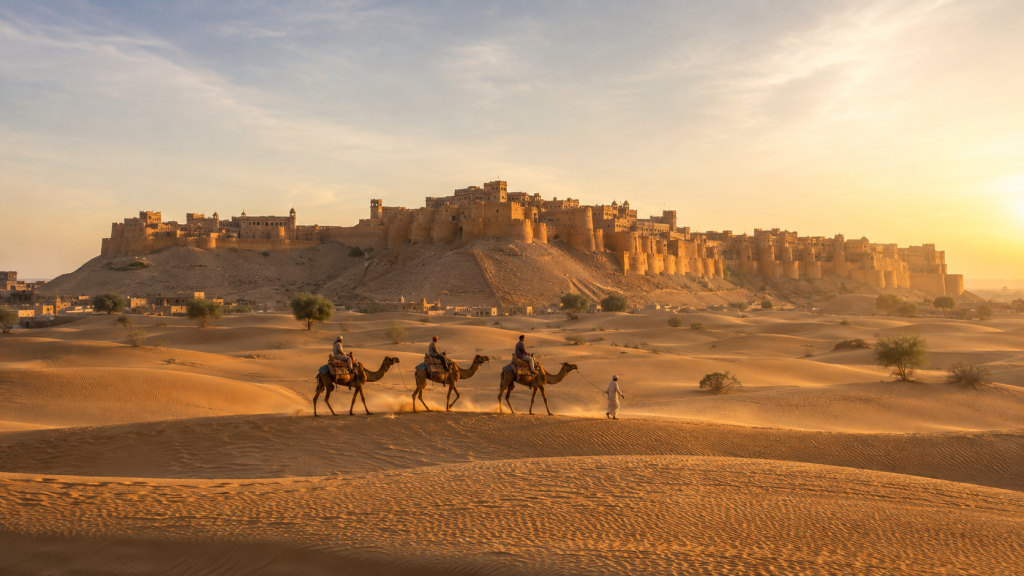
Jaisalmer rises from the Thar Desert like a sand-coloured ship. Its fort is still inhabited, with homes, temples, guesthouses and shops within the walls. That living quality makes it special, but it also creates pressure on fragile drainage and historic structures. Consider sleeping outside the fort and choosing businesses that handle water and waste responsibly.
A desert night can be beautiful when it is small and thoughtful. Look for a low-impact camp away from the busiest dune entertainment, and choose an operator that treats animals well and pays local musicians fairly. The memory you want is not a line of jeeps. It is the sound of a song carrying into the cold, open dark.
Pushkar, Bundi and the quieter alternatives
Pushkar offers a sacred lake, temple life, cafes and easy access from Jaipur or Ajmer. It becomes intensely busy around its annual fair. Bundi feels more intimate, with blue lanes, stepwells and a palace rising against the hillside. Bikaner, Shekhawati and rural heritage stays are rewarding when you want painted havelis and desert character without following the most familiar route.
How long for Rajasthan? Allow eight days for Jaipur, Jodhpur and Udaipur. Add three or four more for Jaisalmer. With two full weeks, you can include a smaller town and travel at a pace that leaves room for surprise.
Varanasi: approach the river with patience
Varanasi is difficult to describe without making it sound like a myth. Before sunrise, boats slide onto the Ganges while lamps still flicker along the ghats. Bathers descend the steps, priests prepare for prayer, laundry is slapped against stone and smoke lifts from cremation grounds farther along the river. Life and death are not hidden from one another here.
Stay for three nights. Take a dawn boat ride, walk from Assi Ghat through the riverside lanes, listen to classical music if you find a small performance, and attend an evening aarti without feeling that you must press into the largest crowd. A knowledgeable local guide can help you understand what you are seeing rather than merely looking at it.
Do not photograph cremations or grieving families. Some moments are not travel content. They belong entirely to the people living through them.
Start the day with kachori sabzi, try tamatar chaat in the evening and pause for a lassi served thick enough to eat with a spoon. Varanasi pairs naturally with Delhi by train or air, but geographically it sits far from the Rajasthan circuit. Add it only when you have the time.
Amritsar and Punjab: hospitality with a generous heart
The Golden Temple is at its most moving before the city fully wakes. The marble feels cool beneath bare feet, devotional music crosses the water, and the gilded sanctum seems to float in the first light. Visitors of every background are welcomed, provided they cover their heads, remove shoes, wash their feet and behave respectfully.
Make time for the community kitchen, or langar, where volunteers prepare and serve free meals to thousands of people. Sit with everyone else, accept what you can eat and return your plate when finished. It is not simply a free lunch. It is equality practised through hospitality.
The Partition Museum gives essential context to the human cost of 1947. Outside the historic centre, Amritsar’s food is rich and joyful: stuffed kulcha, chickpeas, lassi, grilled fish and seasonal vegetables glossed with ghee.
Border conditions can change. Do not build a journey around the Attari-Wagah ceremony without checking current official travel advice and confirming that the crossing area and ceremony are accessible.
Uttarakhand: rivers, forested hills and sacred journeys
Uttarakhand offers one of the gentlest transitions from the plains into the Himalayas. In Rishikesh, the Ganges is already cool and green, suspension bridges cross between temple neighbourhoods, and evening prayer gathers people beside the water. Yoga schools, cafes and rafting trips have made the town internationally popular, but its spiritual life is not a backdrop. Dress respectfully around temples and ghats, and choose established schools and licensed activity operators.
Nearby Haridwar feels more intensely devotional. Mussoorie is a classic hill station above Dehradun, while Nainital opens into the Kumaon hills around its lake. Almora, Ranikhet and smaller villages reward travellers who prefer mountain views, forest walks and unhurried days.
Farther into the state are the pilgrimage routes to Kedarnath, Badrinath, Gangotri and Yamunotri, as well as the Valley of Flowers and higher trekking country. These are not casual day trips from Rishikesh. Roads are long, weather matters, and some routes require registration, suitable equipment or local support. Plan them as journeys in their own right.
Himachal Pradesh: choose one valley and stay awhile
Himachal Pradesh can tempt you into constant movement. Shimla, Dharamshala, Manali, Kullu, Kinnaur and Spiti all sound close on a map, but mountain roads make distance slow. The best journey usually begins by choosing one area.
Shimla suits travellers interested in colonial-era architecture, easy walks and the historic mountain railway approach. Dharamshala and McLeod Ganj combine cedar-covered slopes with Tibetan Buddhist culture, monasteries and access to walks in the Dhauladhar range. Manali is a busy adventure hub, but quieter villages and trails around the Kullu Valley reveal a softer side. Spiti is a stark, high-altitude landscape of monasteries and villages, requiring more time, road resilience and careful acclimatisation.
Eat beyond cafe menus. Look for siddu, a steamed wheat bread often filled with nuts or pulses, a traditional Himachali dham when available, trout in the Kullu region and Tibetan dishes such as thukpa and momos around Dharamshala.
Road conditions can change after heavy rain or snow. Leave buffer days, avoid overnight mountain driving when possible and never pressure a driver to continue when conditions are poor.
Ladakh: let your body arrive before your itinerary begins
Ladakh feels elemental. Mountains rise without forest, white monasteries cling to ridges and the Indus threads green through a wide, brown valley. The light is hard and clear. Distances seem visible, yet every road takes longer than expected.
If you fly into Leh, the altitude is the first priority. District Leh instructs tourists to spend at least 48 hours acclimatising before travelling to higher areas such as Khardung La or Pangong Lake. Keep the first two days gentle. Walk slowly, rest, hydrate normally, avoid alcohol and do not disguise symptoms in order to preserve a booking. If you become unwell, seek qualified medical help.
Once acclimatised, explore Leh Palace, Shanti Stupa and the monasteries of the Indus Valley. Longer routes lead towards Nubra Valley, Pangong Lake, Tso Moriri and the old monastery landscapes around Lamayuru. Some protected or restricted areas have permit requirements that depend on nationality and route. Check the current official Ladakh Tourism portal and District Leh information before travel rather than relying on an old blog post.
Give Ladakh at least a week after arrival, preferably longer. It is expensive to reach and impossible to appreciate at speed. The deepest memories are often small: butter lamps in a monastery hall, apricot blossom in a village, or the sudden warmth of a bowl of thukpa after the sun drops behind the mountains.
Jammu and Kashmir: beautiful, but check whether you should travel
Kashmir is central to any honest picture of northern India’s landscape and culture. Srinagar’s Dal Lake, Mughal gardens and old neighbourhoods, the meadows of Gulmarg and Pahalgam, Kashmiri crafts, kahwa and the elaborate traditions of wazwan all deserve thoughtful attention.
However, safety advice must come before inspiration. At the time of this update in August 2026, the UK Foreign, Commonwealth and Development Office advises against all travel to the Union Territory of Jammu and Kashmir, with limited exceptions for Jammu city. The United States and Australia also advise against travel to the region. Travelling against official advice can invalidate insurance and restrict consular support.
For that reason, Kashmir is not included in the recommended itineraries below. Conditions and advice can change, so consult your own government’s current guidance, your insurer and reliable local sources before making any future plan. Ladakh is a separate union territory and is subject to different regional advice, although border zones and permit-controlled areas still require care.
Three realistic North India itineraries
7 days: Delhi, Agra and Jaipur
This is the classic Golden Triangle and the most manageable first taste of North India.
- Days 1 to 3: Delhi, including Old Delhi, Humayun’s Tomb, Lodi Garden and one flexible arrival day.
- Day 4: Travel to Agra, visit Agra Fort and stay overnight.
- Day 5: Visit the Taj Mahal early, then travel to Jaipur.
- Days 6 and 7: Jaipur, with Amber Fort, the old city and time for food or crafts.
If your flight home leaves from Delhi, add a final travel night or shorten one city. Do not rely on a long road transfer immediately before an international departure.
14 days: Delhi, Agra and the heart of Rajasthan
- Delhi: 3 nights
- Agra: 1 night
- Jaipur: 2 nights
- Jodhpur: 2 nights
- Udaipur: 3 nights
- Travel and departure buffer: 2 to 3 nights, depending on flights and connections
This route gives you the grand architecture without making every day a transit day. If Jaisalmer is essential, replace Udaipur or add at least three more nights. Rajasthan rewards commitment, but it punishes overpacked plans with long hours on the road.
21 days: cities, Rajasthan and one Himalayan pause
Begin with Delhi, Agra, Jaipur, Jodhpur and Udaipur over 13 to 15 days. Return towards Delhi by train or air, then choose one mountain extension:
- Rishikesh and the Uttarakhand foothills for a relatively easy rail and road connection, riverside life and shorter walks.
- Dharamshala for Tibetan culture, cedar forest and the Dhauladhar mountains.
- Shimla for a historic hill-station experience and a gentler mountain introduction.
Do not add Ladakh as a three-day finale. Its altitude, flight cost and scale deserve a separate week or a future journey.
How to travel around North India
By train
Trains are part of the experience, not merely transport. They connect Delhi efficiently with Agra, Jaipur, Jodhpur, Amritsar, Haridwar, Varanasi and many other cities. For daytime journeys, air-conditioned Chair Car can be comfortable. For overnight travel, many international visitors prefer 2AC or 3AC. Sleeper class is cheaper but non-air-conditioned, busier and less private.
Reserve popular routes early through the official IRCTC system or a reputable booking service. Keep your passport details consistent with the booking, verify the station name carefully and arrive with enough time to find the platform. Large cities often have several railway stations.
By private car and driver
A car with a driver can work beautifully across Rajasthan, especially when visiting forts, villages and smaller towns between railway lines. Agree what is included, such as fuel, tolls, parking, driver accommodation and daily distance. Use a recommended operator, inspect the vehicle and avoid an itinerary that requires repeated night driving.
Self-driving is rarely the easiest introduction to India. Road habits, animals, weather, mountain terrain and city traffic demand local experience.
By bus
Modern air-conditioned coaches link Delhi with Jaipur, Rishikesh, Dharamshala, Shimla and Manali. State transport is useful for shorter local journeys. On winding mountain routes, a daytime seat is usually more comfortable and lets you see changing conditions.
By air
Flying saves time when joining distant points such as Delhi and Udaipur, Varanasi, Srinagar or Leh. Build in flexibility during winter fog, monsoon disruption and periods of wider airspace uncertainty. Always check baggage allowances and use the airline’s own website to confirm the latest schedule.
Within cities
Delhi’s Metro is excellent for many journeys. Auto-rickshaws are convenient when fares are agreed or metered, while app-based cabs can reduce negotiation. In old centres such as Varanasi, Jaisalmer and Udaipur, walking often reveals more, but keep traffic in mind and carry the address of your accommodation in both English and the local script where possible.
What to eat across North India
North Indian food is not one menu repeated from Delhi to the mountains. Wheat breads and dairy are important in many areas, but desert cooking, Mughal kitchens, Punjabi agriculture, Himalayan grains and Tibetan influences create striking regional differences.
- Delhi: chole bhature, chaat, kebabs, nihari, paratha and kulfi.
- Agra and Uttar Pradesh: Mughlai dishes, bedai with potato curry and Agra petha.
- Rajasthan: dal baati churma, gatte ki sabzi, ker sangri, pyaaz kachori and laal maas.
- Varanasi: kachori sabzi, tamatar chaat, seasonal sweets and thick lassi.
- Punjab: Amritsari kulcha, sarson da saag in season, lassi and the simple vegetarian food served at langar.
- Himachal Pradesh: siddu, dham, madra, Kullu trout and Tibetan food around Dharamshala.
- Uttarakhand: kafuli, chainsoo, aloo ke gutke and dishes made with mountain grains.
- Ladakh: skyu, thukpa, momos, local breads, apricot products and butter tea.
- Kashmir: rogan josh, yakhni, haak, dum aloo, breads from the kandur bakery and fragrant kahwa.
Eat where there is a steady local turnover, choose food cooked thoroughly and served hot, and use sealed or properly filtered drinking water. Let your appetite be adventurous while your hygiene remains sensible.
Where to stay
North India has everything from hostel dorms and family guesthouses to palace hotels. The most memorable stay is not always the most expensive.
In Rajasthan, a restored haveli can place you inside the region’s architectural story. In the mountains, a locally run homestay may offer quiet, home cooking and knowledge that no large hotel can reproduce. In Delhi, location matters more than decorative charm. A clean, well-reviewed room near a Metro station can transform the first days of your trip.
Read recent reviews for cleanliness, noise, heating or cooling, hot water and approach roads. In winter, mountain rooms can be much colder than expected. In old cities, a beautiful rooftop may also mean steep stairs and no lift.
Responsible and respectful travel
North India’s famous places are also homes, workplaces and sacred spaces. A little awareness changes the quality of every encounter.
- Dress modestly at religious sites and follow instructions about shoes, head coverings and photography.
- Ask before photographing people, especially children, worshippers, artisans and rural communities.
- Never photograph cremations or private mourning rituals in Varanasi.
- Carry a refillable bottle with a reliable filtration method, but do not refill from an uncertain source.
- Choose wildlife experiences that do not involve touching, performing animals or coercive riding practices.
- Use water carefully in Rajasthan and Ladakh, where tourism adds pressure to naturally dry environments.
- Bargain with humour, not aggression. A small difference may matter more to the seller than to you.
- Support local guides, family-run stays, craftspeople and community enterprises where possible.
Safety and practical preparation
India is rewarding, but alert travel is wise. Keep valuables discreet, use registered or well-reviewed transport, and avoid arriving alone at an unfamiliar station very late at night. Share long-distance plans with someone you trust and keep digital copies of your passport, visa and insurance details.
Women travelling alone should choose accommodation with strong recent reviews, arrange reliable airport or station transfers, avoid isolated areas after dark and trust discomfort early. Politeness is never more important than personal safety.
Carry travel insurance that covers your actual activities and altitudes. Standard policies may exclude trekking, rafting, motorcycling or travel to areas under government warnings.
Visa and entry rules depend on nationality and can change. Use only the official Government of India e-Visa website or the relevant Indian mission, and beware of lookalike commercial sites. Check your passport validity, permitted entry points and visa conditions before booking non-refundable travel.
Common North India planning mistakes
- Trying to cover the whole region in two weeks. Choose two connected clusters and save the rest.
- Counting distance instead of travel time. A short line on a Himalayan map can represent a full day on the road.
- Leaving no buffer before a flight. Fog, rain, road closures and rail delays are part of realistic planning.
- Visiting only forts and palaces. Markets, neighbourhood walks, food, crafts and ordinary mornings create the emotional memory of a place.
- Rushing altitude. Especially in Ladakh, the body sets the schedule.
- Assuming all northern food is heavy or extremely spicy. Ask for local dishes and explain your preferred chilli level.
- Treating sacred spaces as photo sets. Observe first, ask when unsure and put the camera away when a moment is private.
North India travel guide FAQs
How many days do I need for North India?
Two weeks is a good minimum for Delhi, Agra and three cities in Rajasthan, or for Delhi paired with one Himalayan region. Three weeks gives you a more comfortable pace and room for an additional cluster. Seeing Delhi, Rajasthan, Varanasi, Punjab and the Himalayas properly requires several trips or a much longer journey.
What is the best month to visit North India?
November and February offer a strong balance for Delhi, Agra and Rajasthan, with generally comfortable daytime weather. For Ladakh and many high Himalayan routes, summer is more practical. The best month depends on whether your priority is desert cities, foothills, snow or high-altitude travel.
Is North India suitable for first-time visitors?
Yes. Delhi, Agra, Jaipur, Udaipur, Amritsar and Rishikesh have established visitor infrastructure and transport links. The intensity can be tiring, so book a reliable first stay, plan a gentle arrival day and avoid changing hotels every night.
Should I travel by train or hire a driver?
Use trains between major cities and consider a driver for rural Rajasthan, complex day trips or mountain areas where public connections are slow. Many good itineraries combine both. Flights are worthwhile when linking distant regions.
Can I combine Rajasthan and the Himalayas?
Yes, but allow at least three weeks. A practical trip might combine Delhi, Agra, Jaipur, Jodhpur and Udaipur with a few days in Rishikesh or Dharamshala. Ladakh should not be treated as a quick extension because acclimatisation alone requires the first 48 hours.
Is North India expensive?
It can suit a wide range of budgets. Trains, guesthouses and local meals keep costs moderate, while private drivers, domestic flights, heritage hotels and remote mountain transport increase them. Spend on safe transport, a well-located first hotel and knowledgeable local guides rather than trying to make every part of the trip as cheap as possible.
Final thoughts: travel north slowly
The temptation in North India is always to add one more city. The map offers another fort, another holy river, another road climbing towards snow. Resist just enough.
Leave an afternoon without a monument. Take the train instead of another flight. Stay for the second morning, when the lane outside your guesthouse is no longer strange and the chai seller recognises you. Let Rajasthan’s dry heat settle into a cool lake evening. Let Delhi be complicated. Let the Himalayas make you wait.
North India is not a single grand sight. It is a sequence of textures, flavours, voices and silences. Travel with time to notice them, and the journey will remain vivid long after the desert dust has left your shoes.